What Defines a Japanese Chef Signature Menu?
Updated: May 20
A memorable meal often begins before the first course arrives. It starts with trust in the chef, confidence in the sourcing, and the sense that each dish belongs to a larger point of view. That is the appeal of a Japanese chef signature menu - not simply variety, but authorship.
In premium Japanese dining, a signature menu is not a collection of crowd-pleasers arranged for convenience. It is a deliberate expression of taste, technique and judgement. The chef decides what deserves attention, what should remain restrained, and where a meal should surprise without losing composure. For guests, that creates something far more rewarding than choice alone. It creates coherence.
What a Japanese chef signature menu really means
A signature menu reflects the chef's identity on the plate. In Japanese cuisine, that identity is rarely expressed through excess. It is shown through selection, timing and balance. The question is not how many luxury ingredients can be assembled in one sitting. It is whether each course serves a purpose.
That distinction matters. In many restaurants, the term signature can be used loosely to describe the most popular dish or the most expensive set menu. In a serious Japanese setting, it means something more exacting. It signals that the chef has shaped the sequence personally, often around seasonality, premium sourcing and a particular philosophy of hospitality.
The result may include sushi, sashimi, cooked dishes, broth, grilled elements or small composed plates. Yet the strongest menus never feel scattered. They move with intention. A lighter opening may sharpen the palate. A richer middle section may add depth without becoming heavy. The finish should leave clarity, not fatigue.
The role of seasonality in a Japanese chef signature menu
Seasonality is not decorative in Japanese dining. It is structural. A chef-led menu should respond to the moment - the fish at its peak, the vegetables with the best texture, the temperature outside, even the mood a season naturally suggests.
Spring may call for delicacy and freshness, with gentler flavours and a sense of renewal. Autumn often permits greater depth, earthier notes and warmer compositions. Winter can invite richer broths, fattier cuts and a more enveloping pace. Summer tends to reward precision and restraint, where coolness and clean finish become part of the pleasure.
This is one reason signature menus carry prestige. They are harder to standardise. A chef who works seasonally must adjust, refine and occasionally remove dishes that no longer meet the right standard. For guests, that means the experience remains alive. It is not fixed in the way a static menu can be.
There is, of course, a trade-off. Guests who arrive hoping for a specific favourite may not always find it. But that is also the point. A chef signature menu asks for a degree of trust. In return, it offers something more current and more thoughtful than repetition.
Why restraint matters more than spectacle
Japanese fine dining is often misunderstood by diners who equate luxury with abundance. A strong chef signature menu does not need to perform loudly. It needs to be exact.
Restraint allows ingredients to retain their character. It also shows confidence. When a chef serves pristine fish with minimal intervention, or a broth that tastes deceptively simple but carries remarkable depth, the message is clear - quality does not need concealment. Technique is present, but not advertised too aggressively.
This can surprise first-time guests who expect complexity to appear as visual drama or heavy layering. In Japanese cuisine, complexity is often quieter. It may be found in rice temperature, knife work, vinegar balance, the timing of service, or how one bite prepares you for the next. Those details are easy to miss if a menu is built only to impress at first glance.
The elements guests should expect
A Japanese chef signature menu should feel curated rather than crowded. That usually begins with ingredient integrity. Fish quality must be beyond question. Rice should be seasoned with precision, never treated as a background element. Garnishes should contribute, not decorate for their own sake.
Texture is equally important. A well-composed menu balances softness, firmness, warmth, coolness and crispness across the progression of dishes. Acidity has a role. So does fat. So does silence on the plate, where nothing unnecessary interrupts the main ingredient.
Pacing matters more than many diners realise. A signature menu can fail even with excellent ingredients if the sequence feels poorly judged. Too much richness too early can flatten the palate. Too many similar bites in succession can dull attention. The best chefs understand rhythm as clearly as flavour.
Service is part of that composition. Premium Japanese dining relies on timing, discretion and confidence. Dishes should arrive when they are at their best, not according to a rigid system disconnected from the table. In that sense, hospitality is not separate from the menu. It completes it.
Signature menu versus omakase
The terms are sometimes used interchangeably, but they are not always identical. Omakase means placing trust in the chef's selection, often with an element of improvisation or daily adjustment. A signature menu may overlap with that idea, though it usually implies a more defined expression of the chef's established style.
The difference can be subtle. Some chefs build signature menus that shift with the market while preserving a recognisable structure. Others approach service more freely, responding course by course. Neither method is inherently better. It depends on the restaurant, the chef's philosophy and the level of interaction the guest wants.
For many diners, the signature format offers a helpful balance. It provides the confidence of curation without feeling impersonal. There is enough design to shape a complete experience, but enough sensitivity to season and sourcing to keep the meal distinctive.
Why chef authorship matters
A chef-led menu carries weight because it reflects judgement built over time. Anyone can list premium ingredients. Far fewer can arrange them into a meal that feels disciplined, elegant and complete.
Authorship becomes visible in small decisions. Which fish is served as sashimi rather than nigiri. When smoke should be used lightly and when it should be avoided. Whether a richer course needs acidity beside it or none at all. These choices reveal not only technical skill but taste.
For discerning guests, that is often what justifies the experience. They are not only paying for produce. They are paying for discernment. The menu represents a point of view sharpened by training, repetition and cultural understanding.
That is also why a signature menu suits occasion dining so well. Whether for a business dinner, a celebration or a private evening, it removes the friction of ordering while elevating the sense of care. The meal feels hosted rather than assembled.
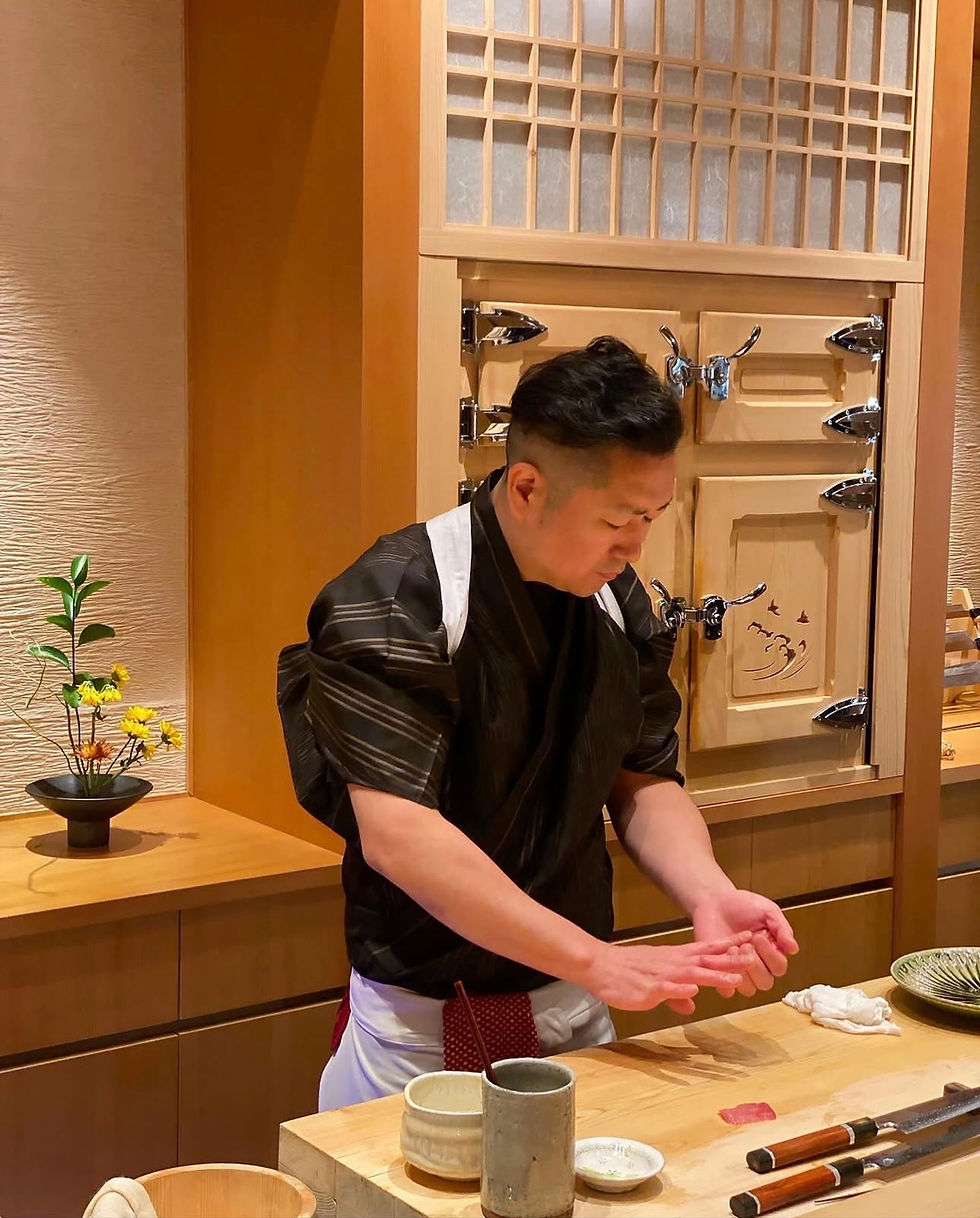
At Sushi Ayumu by Masa Ishibashi, that chef-led perspective is central to the appeal. Guests are not simply choosing Japanese food. They are choosing a refined dining experience shaped by authorship, precision and hospitality.
How to choose the right Japanese chef signature menu experience
Not every premium menu aims for the same effect. Some are intimate and minimalist, centred on sushi craftsmanship. Others include a broader range of cooked dishes and seasonal compositions. Neither is automatically superior. The right choice depends on the occasion and on what kind of attention you want the meal to command.
For a business dinner, a menu with polished pacing and broad appeal may be the better fit. It keeps the experience elegant without becoming overly challenging or theatrical. For a celebration, guests may prefer a more extended sequence with rarer ingredients and a stronger sense of occasion. For couples, subtlety often matters most - a room with calm service, beautifully judged courses and enough progression to make the evening feel distinct.
If you are new to chef-led Japanese dining, it helps to arrive open rather than overly prescriptive. A signature menu is most rewarding when approached as a complete experience, not as a checklist of expected dishes. Curiosity tends to be better rewarded than control.
The finest meals rarely announce their significance too loudly. They stay with you because every detail feels considered, from the first taste to the final course. A Japanese chef signature menu, at its best, offers exactly that - a composed expression of season, skill and restraint that leaves a lasting impression long after the table is cleared.



Comments