What Is Japanese Fine Dining?
A perfect slice of toro served at the right temperature, a quiet room with measured service, a progression of courses that feels intentional rather than excessive - this is usually where the question begins: what is Japanese fine dining? For many guests, it looks simple from the outside. In practice, it is one of the most disciplined forms of hospitality.
Japanese fine dining is not defined by luxury alone. It is defined by precision, restraint, seasonality, and respect - for ingredients, for technique, and for the guest. While the category can include sushi, kaiseki, kappo, and other chef-led formats, the common thread is curation. Every detail is considered. Nothing is there just to impress.
What Is Japanese Fine Dining in Practice?
Fine dining in the Japanese tradition is less about abundance and more about balance. The meal is designed to reveal quality through timing, texture, temperature, and sequence.
That means the rice matters as much as the fish. The knife work matters as much as the plating. A broth, a small seasonal vegetable, or a single bite served between richer courses can carry as much weight as the centerpiece of the meal. Guests are not simply ordering food. They are entering a chef's point of view.
This is why Japanese fine dining often feels quiet compared with other luxury restaurant formats. The experience is meant to sharpen attention, not compete for it. The room, pacing, and service support the meal rather than overshadow it.
The Core Ideas Behind Japanese Fine Dining
Seasonality is one of the clearest markers. A refined Japanese restaurant does not treat ingredients as static products. It treats them as moments. Fish, vegetables, garnishes, and even serving styles can shift with the time of year. The goal is not novelty for its own sake. It is to present something at its most expressive.
Restraint is equally important. In many Western luxury settings, extravagance is often visible: larger portions, richer sauces, more decoration. Japanese fine dining usually moves in the other direction. The chef removes what is unnecessary. Flavor is concentrated through clarity rather than weight.
Precision is the discipline that holds the whole experience together. Rice must be seasoned correctly. Fish must be cut with purpose. A warm dish must arrive warm, a chilled bite must arrive at the proper temperature, and the interval between courses must feel natural. These details may seem small, but they are the experience.
Then there is omotenashi, the Japanese approach to hospitality. In a fine dining setting, service is attentive without becoming performative. Staff anticipate needs, guide the guest with confidence, and preserve a sense of ease. The most polished service often feels almost invisible because it never asks for attention.
Fine Dining Is Not the Same as Expensive Sushi
Price alone does not answer what is Japanese fine dining. There are restaurants with high prices and imported ingredients that still feel transactional. Fine dining requires coherence. The cuisine, service, room, and pacing should all reflect the same standard.
A premium omakase can be fine dining, but not every omakase is. Some are intentionally casual, fast-paced, or narrowly focused on sushi alone. There is nothing wrong with that. In fact, some of those meals are excellent. But fine dining adds a wider layer of hospitality and intention. The guest should feel guided from arrival to departure.
The same applies to ingredients. Luxury products like uni, otoro can elevate a menu, but they do not create refinement by themselves. If every course pushes richness, the meal can become blunt. A skilled chef understands contrast. A delicate bite, a clean soup, or a lightly dressed vegetable can be what gives the richer course its meaning.
The Forms Japanese Fine Dining Can Take
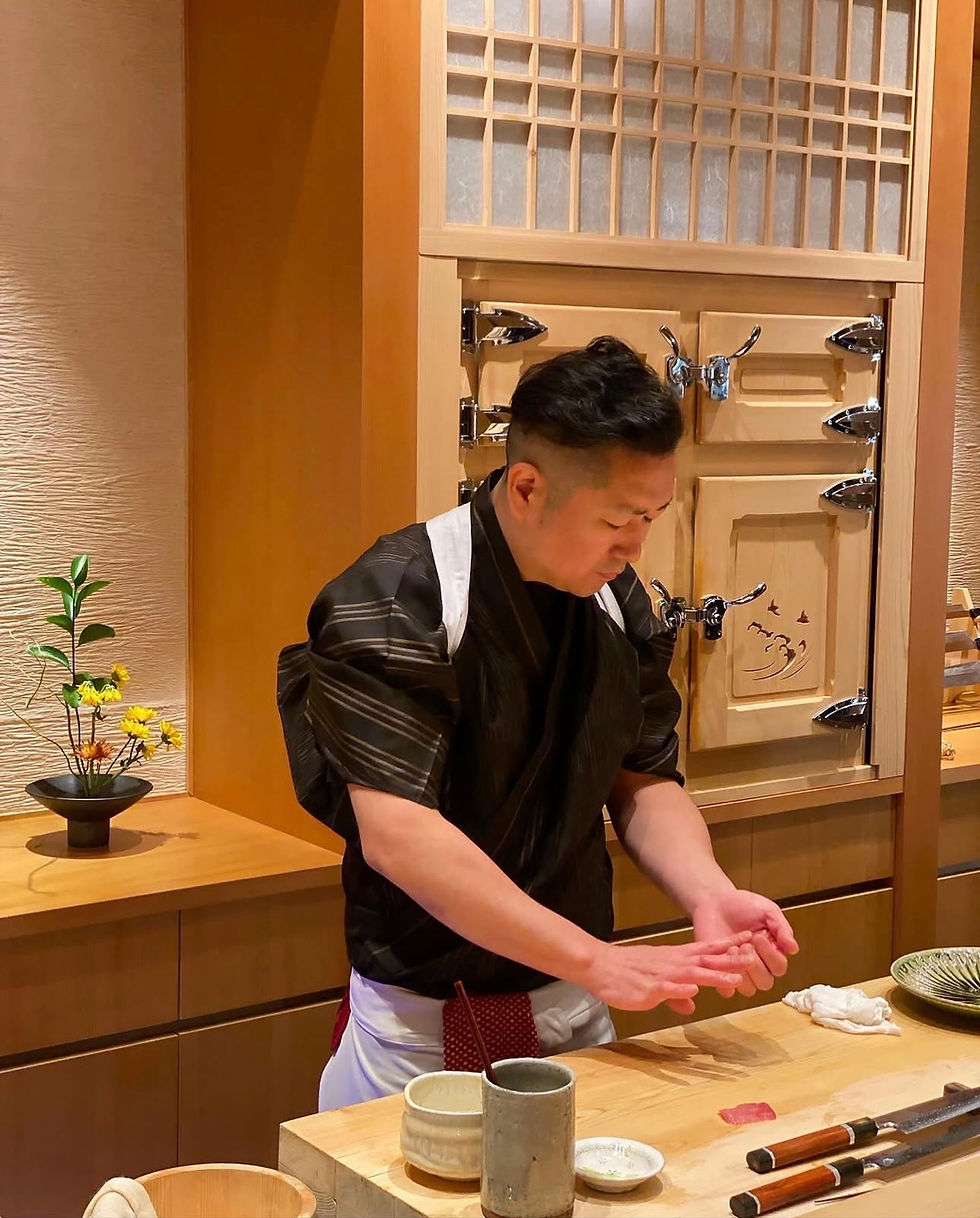
Omakase is the format most familiar to many guests. At its best, it is a chef-led tasting built on trust, often with sushi at the center. The guest leaves selections to the chef, who responds to the day's ingredients and the desired pace of the meal. Omakase can feel intimate and direct, especially at the counter, where technique is part of the experience.
Many chef-led Japanese restaurants blend traditions. A restaurant may offer an omakase structure with kaiseki sensibilities, or a broader menu within a fine dining setting. The label matters less than the integrity behind it.
What Guests Should Notice During the Meal
If you want to understand whether a restaurant is truly operating at a fine dining level, look past the obvious signals of luxury. Notice the rhythm of the evening. Courses should not feel rushed, but they should not stall. Service should be polished, but never stiff. The room should invite focus.
Notice how ingredients are handled. Good Japanese fine dining tends to present exceptional products with confidence and restraint. Seasoning is controlled. Garnishes are purposeful. Presentation is elegant, but it does not feel overdesigned.
The interaction matters too. In a chef-led setting, a few words about the fish, the course sequence, or the season can deepen the meal. But there is a balance. Fine dining should not require a lecture. Expertise should feel natural and assured.
For this reason, the best restaurants often leave a stronger impression through consistency than spectacle. One flawless bite served at the right moment can say more than a dozen elaborate flourishes.
Why Japanese Fine Dining Feels Different
Japanese fine dining asks the guest to pay attention in a different way. It is less about indulgence in the broad sense and more about perception. You notice the temperature of the rice, the texture of the fish, the slight acidity in the seasoning, the shift from one seasonal expression to the next.
That difference can surprise diners who expect luxury to announce itself loudly. Instead, the value often reveals itself through control. The chef is not showing you everything they can do in one moment. They are showing you judgment.
This is also why authenticity can be misunderstood. Authentic Japanese fine dining does not have to imitate every ritual exactly as it would appear in Japan. It does, however, need to preserve the underlying standards: respect for ingredients, disciplined technique, thoughtful service, and a coherent guest experience.
At a restaurant such as Sushi Ayumu by Masa Ishibashi, that standard is not just about serving premium sushi. It is about creating an environment where the food, hospitality, and setting work together with clarity.
Is Japanese Fine Dining Always Formal?
Not necessarily. Fine dining in this category can be serene and highly polished without feeling distant. Some of the best rooms are warm, intimate, and quietly welcoming. Others are more ceremonial. It depends on the chef, the concept, and the kind of evening the restaurant wants to create.
There are trade-offs. A counter omakase may feel more personal and immediate, but it may provide less privacy. A private dining room can offer discretion for celebrations or business dinners, though it changes the energy compared with sitting directly in front of the chef.
What matters is not that every guest wants the same thing. What matters is that the restaurant knows what it is trying to deliver and executes it with confidence.
How to Approach the Experience as a Guest
The best way to enjoy Japanese fine dining is to arrive open and attentive. Trust the pacing. Ask questions when appropriate. If you are booking omakase, understand that the chef's choices are central to the experience.
It also helps to set expectations correctly. This is not always the meal to choose if you want maximal variety, large portions, or constant customization. Fine dining of this kind is curated. The value lies in craftsmanship and sequence, not just quantity.
For many guests, that is exactly the appeal. A refined Japanese meal offers something increasingly rare: care you can feel in real time. Not excess. Not noise. Just precision, hospitality, and the confidence to let quality speak quietly.
The next time you ask what is Japanese fine dining, look for that quiet confidence first. It usually tells you more than the menu ever could.



Comments