Chef Crafted Nigiri Selection Explained
A chef crafted nigiri selection tells you a great deal before the first piece reaches the plate. It signals restraint, confidence and a kitchen willing to let ingredient quality speak without distraction. In a serious sushi setting, nigiri is not simply an assortment of fish over rice. It is a sequence of decisions about season, temperature, texture and timing.
That is why nigiri deserves more attention than it often receives. Many diners can recognise luxury by appearance alone - glossy tuna, bright uni, precise knife work - but the real distinction lies in judgement. Which fish should be served first, which should be brushed with nikiri, which should be scored, rested or lightly cured, and which should never be touched beyond slicing. These choices are what separate abundance from craft.
What defines a chef crafted nigiri selection
A true chef crafted nigiri selection is curated, not compiled. That difference matters. A compiled selection tends to chase recognisable favourites and visual variety. A curated one considers progression, contrast and coherence. It may include familiar cuts, but familiarity is never the point.
The rice is the foundation. If the shari is too cold, too firm or over-seasoned, even exceptional fish will feel blunt. Properly prepared rice should hold its form without becoming dense, with seasoning that lifts the neta rather than competing with it. The temperature should sit close to body warmth, allowing the fish to relax and the texture to register properly on the palate.
Then comes the fish itself, though fish is only part of the story. Nigiri may also feature shellfish, tamago or other carefully prepared toppings, each chosen for its place in the sequence. One piece might offer clean sweetness, the next minerality, the next richness. A composed selection creates rhythm. It does not ask every bite to perform in the same way.
Why curation matters more than quantity
More pieces do not necessarily make a better experience. In premium sushi, excess can flatten distinction. If every bite is rich, richness stops feeling precise. If every topping is treated as a headline, the meal loses shape.
A chef who curates well understands pacing. Leaner white fish or gently marinated pieces often appear earlier, while fattier cuts, stronger flavours or more textured shellfish arrive later. The order allows the palate to build naturally rather than being overwhelmed from the outset.
This is where trust enters the experience. Diners often arrive with preferences, and preferences matter. Yet the value of a chef-led nigiri selection lies in being shown something beyond habit. You may think you want the fattiest tuna first. In practice, beginning there can make subtler pieces seem muted afterwards. A thoughtful progression protects nuance.
There is also a question of seasonality. A strong selection responds to what is at its best, not what is merely available. That means the ideal line-up shifts. One month may favour translucent white fish and shellfish with a cleaner finish. Another may allow for deeper, oilier flavours. Consistency in a serious sushi restaurant does not mean rigid sameness. It means consistent standards applied to ingredients that naturally change.
The role of the chef's hand
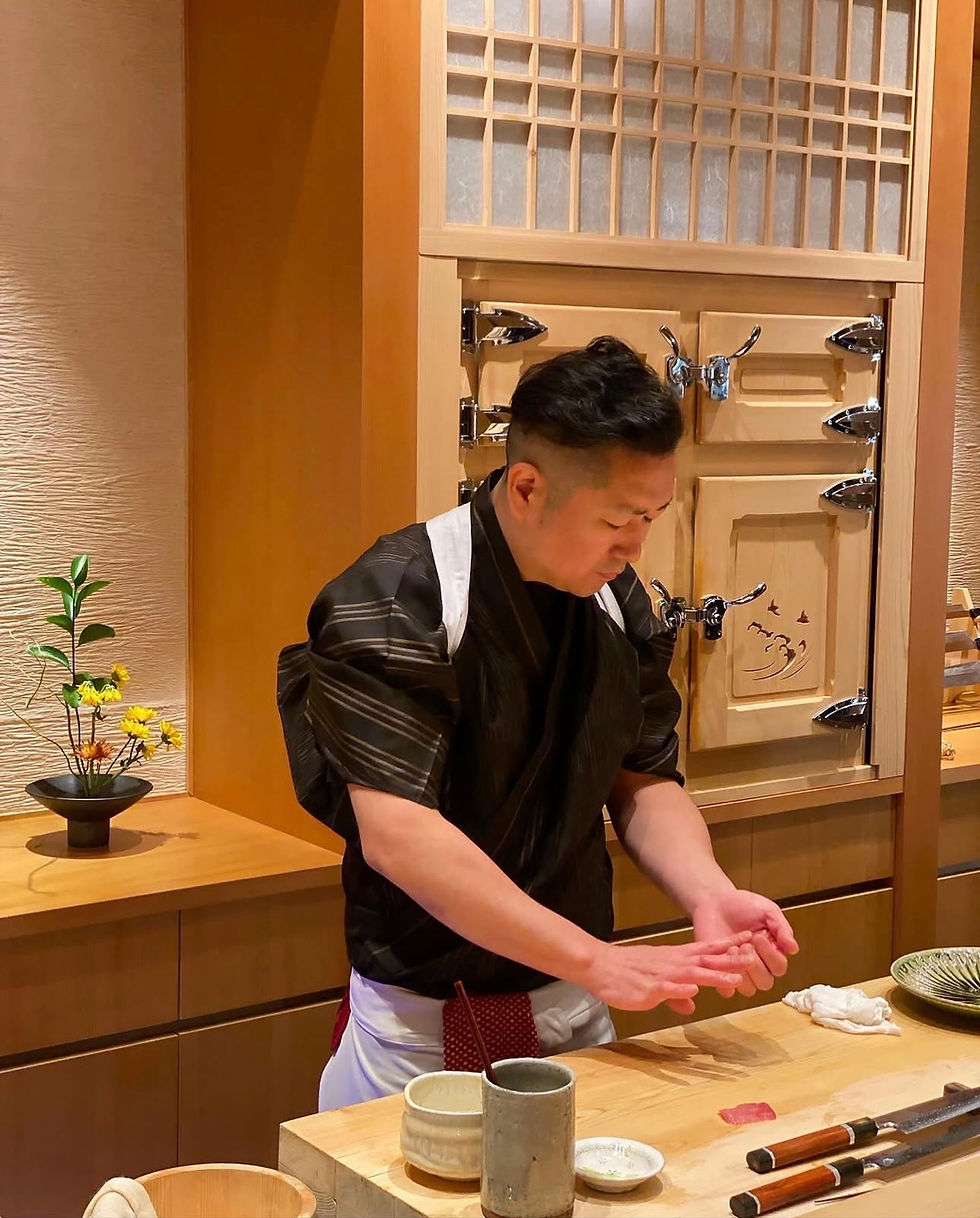
Nigiri often appears minimalist, but minimalism is not simplicity. The chef's hand is present in every small decision. Rice may be packed more softly for a delicate topping and slightly firmer for one with more structure. A slice may be cut thicker to emphasise chew, or thinner to let fat dissolve more quickly. Some pieces benefit from a brush of soy-based glaze; others are best left untouched except for a precise seasoning of salt or citrus.
This level of intervention should never feel theatrical. Good nigiri is measured. The chef is not trying to impress through complication, but through exactness. In an elegant dining room, that discipline is part of the pleasure. It creates the sense that each piece has been considered as an individual course rather than as one unit in a generic assortment.
There are trade-offs here. Diners who prefer heavy sauces, abundant toppings or dramatic rolls may initially find nigiri understated. That is fair. Nigiri asks for attention to detail rather than immediate intensity. Its reward is clarity. When done properly, the balance between rice, topping and seasoning feels complete in a single bite.
Reading quality in a nigiri selection
The first sign of quality is balance. The topping should not dwarf the rice, and the rice should not feel like a filler beneath it. When lifted, the piece should hold together just long enough to reach the mouth, then release cleanly.
The second sign is temperature. Chilled fish on cold rice tastes flat. Proper nigiri has life because the rice is warm enough to animate aroma and texture. This single detail is often what makes restaurant nigiri feel entirely different from a tray kept too cold for too long.
The third sign is appropriateness of seasoning. Not every piece requires soy. In fact, adding the same amount to everything can erase the chef's intention. Some nigiri are already dressed. Some rely on the natural salinity of the ingredient. Some need only the faintest support. Knowing when not to add more is part of dining well.
A refined selection also avoids monotony in texture. Soft, rich pieces should be offset with something firmer or brighter. Scallop may follow white fish beautifully, but two buttery cuts back to back can feel repetitive. The pleasure lies in variation shaped with purpose.
Chef crafted nigiri selection in the dining room
In a polished restaurant setting, nigiri works best when treated as a paced experience rather than a quick order. That does not mean formality for its own sake. It means allowing room for timing, temperature and attention. A chef crafted nigiri selection should arrive in a way that respects the condition of the rice and the intention behind the order.
For couples, business diners and small groups, this matters more than many realise. Nigiri can carry a meal with quiet confidence, offering enough depth for conversation without becoming showy. It suits occasions where food quality needs to be evident, but never loud.
For a slower evening, or a meal designed around hospitality, the difference becomes more apparent. In that setting, a chef-led selection shows its full value.
At Sushi Ayumu by Masa Ishibashi, that distinction aligns naturally with the broader dining experience: chef authorship, measured service and a sense that quality is being directed rather than merely presented. Nigiri fits that philosophy especially well because so little can be hidden.
How to enjoy nigiri with more confidence
You do not need specialist knowledge to appreciate a fine selection. A little attention goes a long way. Begin with the order presented rather than rearranging it around favourites. If a piece appears seasoned, taste it first as served. Eat nigiri promptly. Rice changes quickly, and delay dulls the contrast the chef intended.
It is also worth resisting the instinct to compare every piece by richness alone. Some of the most memorable nigiri are not the fattiest or most lavish. They are the ones where texture, temperature and seasoning align so precisely that the bite feels effortless.
If you are ordering for guests, it helps to think in terms of experience rather than status. The most expensive line-up is not always the most satisfying. A better question is whether the selection offers range, seasonality and balance. That is where sophistication often reveals itself.
Nigiri remains one of the clearest expressions of Japanese culinary discipline because there is nowhere for weak judgement to hide. Rice, fish, hand pressure, temperature and timing all sit in plain view. When those elements are aligned, the result feels calm, exact and complete. That is the quiet power of a chef crafted nigiri selection - not spectacle, but precision you can taste.



Comments