Best Sushi for First Timers: What to Order
Updated: May 20
Walking into a serious sushi restaurant for the first time can feel slightly exposing. The menu may read like a language test, the counter may seem full of unspoken etiquette, and one careless order can leave you convinced sushi simply is not for you. The truth is simpler. The best sushi for first-timers is not the rarest fish or the most theatrical roll. It is the selection that introduces texture, balance and quality without overwhelming the palate.
A good first experience should feel composed rather than challenging. You want clean flavours, gentle richness and enough familiarity to make each piece approachable. That usually means beginning with a few carefully chosen nigiri and avoiding the urge to order the most adventurous item on the page purely for effect.
Best sushi for first-timers starts with balance
For a first meal, balance matters more than bravery. The aim is to understand what sushi does well: warm seasoned rice, precise cuts of fish, and restraint. When the first order is too rich, too smoky or too unfamiliar, the entire cuisine can seem harder than it is.
The most approachable choices tend to have mild flavour, tender texture and a clean finish. Salmon is often the easiest entry point because it is buttery without being heavy. Prawn, especially when lightly cooked, offers sweetness and familiarity. Tuna can also work beautifully, though lean tuna is usually a better place to begin than the richer cuts.
This is also why simplicity often beats excess. A carefully made piece of nigiri tells you more about the chef and the ingredient than a roll crowded with sauces. For first-timers, that clarity is useful. You taste the fish, the rice and the seasoning in proportion.
What to order on your first visit
If you want the safest and most rewarding introduction, start with white fish nigiri. It is soft, rich in a measured way and rarely aggressive in flavour. Even diners who are cautious around raw fish often finds it easy to enjoy.
Prawn nigiri is another strong choice, especially for guests who are still adjusting to the idea of raw seafood. Because prawn is commonly served cooked, it provides a gentle bridge into sushi without losing the elegance of the format.
Tuna nigiri deserves a place as well, but choose a straightforward cut. Lean tuna has a clean, almost mineral character that feels refined rather than intense. Fatty tuna, while exceptional in the right hands, can be too lush as a first impression.
Handroll or maki may seem modest, yet they are useful orders for the table. They reset the palate, add freshness and give hesitant diners something familiar between richer bites. A simple kanpyo roll can also work well if nigiri feels too direct.
If the restaurant offers tamago, the savory Japanese omelette is worth considering. It is not seafood, but it says a great deal about care and technique. For some guests, tamago provides a comfortable pause before returning to fish.
The best sushi for first-timers is usually nigiri, not novelty rolls
Many first-time diners assume the safest route is a heavily filled roll. In practice, the opposite is often true. Rolls covered in spicy mayonnaise, fried toppings or sweet sauces can blur flavour and leave you unsure what good sushi is meant to taste like.
Nigiri is often a better teacher. One piece of fish over seasoned rice gives you proportion, texture and temperature exactly as intended. It is easier to understand and, in a refined restaurant, usually more revealing of quality.
That said, there is no need to become doctrinaire. If a simple maki roll makes you more comfortable, order it. The only caution is against making your entire first meal about crunch and sauce. When everything is loud, nothing is clear.
What first-timers may want to avoid at the start
There is a difference between avoiding something forever and avoiding it for your first round. Uni, for instance, has a custard-like texture and deep marine flavour that many experienced diners adore, but it is rarely the ideal opening note. Mackerel can be excellent, though its oiliness and stronger character can divide opinion. Eel is delicious, yet its sweetness and glaze can pull the meal towards something richer and heavier.
Octopus and squid are another matter of texture. When prepared well, both are elegant. For newcomers, however, the chew can be less immediately appealing than the softness of buri or tuna.
How to order with confidence
The most polished approach is also the simplest. Order a small range rather than too much at once. Begin with four to six pieces across two or three types, then add more if you wish. Sushi is best enjoyed in measured stages, not as a test of volume.
If you are uncertain, say so plainly. A good restaurant will guide you. Asking for a few mild, elegant pieces for a first visit is not unsophisticated. It is sensible. In fact, it often leads to a better meal than ordering by guesswork.
There is also no shame in preferring some cooked items alongside raw fish. A first sushi meal does not have to prove anything. It should establish trust.
A note on soy, wasabi and ginger
First-time diners often use too much of all three. Soy sauce should support, not drown. If you are dipping nigiri, a light touch is enough. Flooding the rice can upset the balance and cause the piece to fall apart.
Wasabi is best treated with care. Its purpose is lift and clarity, not punishment. If the chef has already added it between rice and fish, there is usually no need to add more.
Pickled ginger is not a topping. It is there to refresh the palate between different pieces. Used that way, it helps you notice the differences between one fish and the next.
Why quality matters more for beginners
A hesitant diner is more likely to be won over by excellent sushi than by average sushi dressed up with extras. Good fish tastes clean. Good rice is delicately seasoned and served at the right temperature. Good technique makes even the simplest piece feel complete.
That is why a first sushi experience should happen somewhere that values craftsmanship. In a chef-led setting, the meal is often paced more thoughtfully, the ingredients are better handled, and the guidance is more considered. For someone learning what they enjoy, that difference is significant.
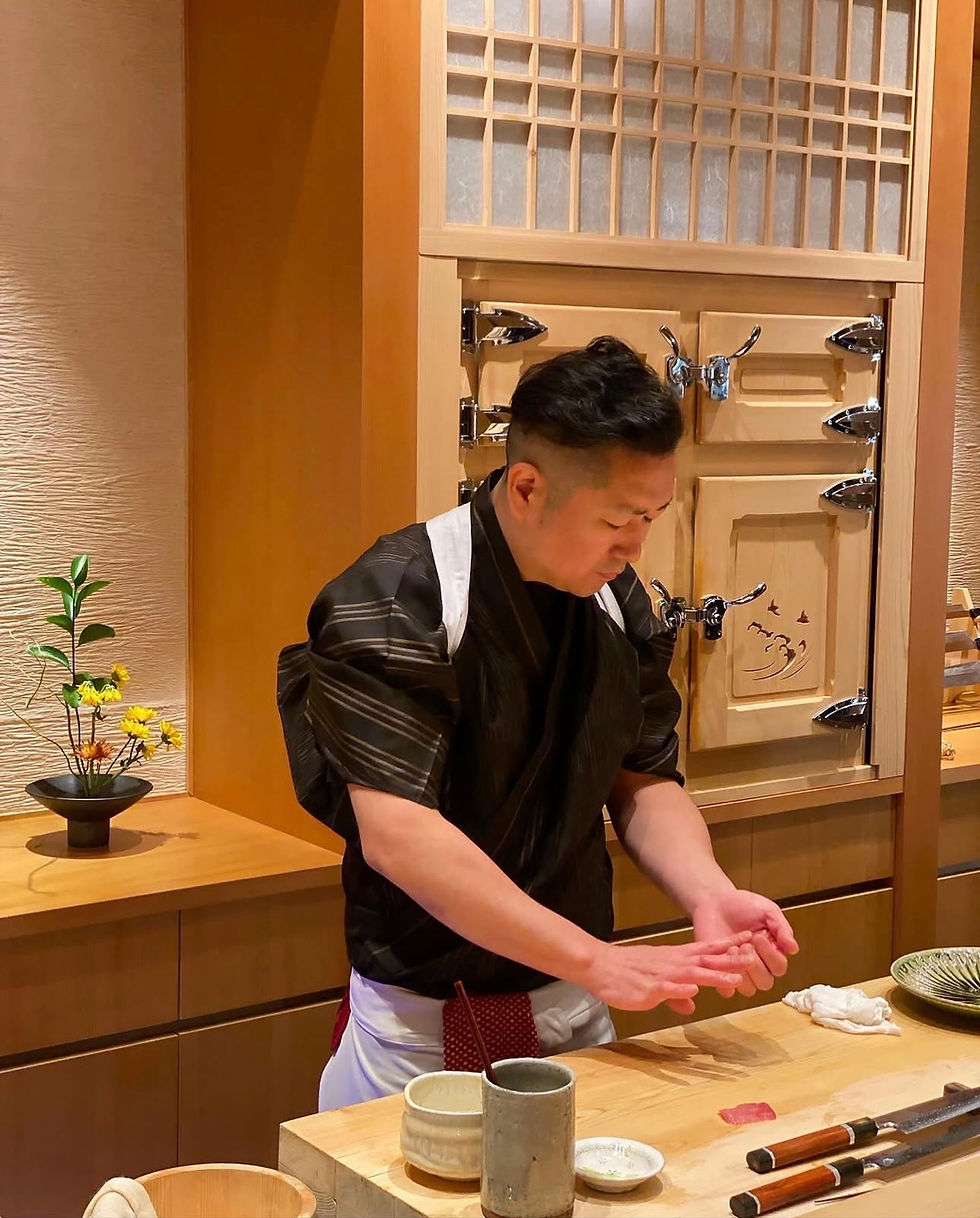
At a restaurant such as Sushi Ayumu by Masa Ishibashi, where the experience is built around precision and hospitality, first-time diners are far more likely to understand why sushi can be so compelling. The setting matters, but the confidence of the kitchen matters even more.
A simple first order that rarely fails
If you want a clear place to begin, omakase or leaving it to the chef is the way to go. The combination of different types of seasonal fish, small dishes and ending the course with tamago or fruits gives you softness, sweetness, clean savoury notes and enough contrast to keep the meal interesting.
Sushi rewards attention, and your preferences will become clearer quite quickly.



Comments