Japanese Dining Etiquette Guide for Guests
Updated: May 12
A refined meal can be unsettled by one small moment - rubbing disposable chopsticks together, drowning sushi in soy, or reaching across the table before others are served. None of these mistakes are unforgivable, but they do change the tone of the experience. This Japanese dining etiquette guide is designed for guests who want to enjoy the meal with ease and show proper respect to the chef, the room and the company they keep.
Japanese dining manners are not about stiffness. They are about awareness. The best way to understand them is to see etiquette not as a set of traps, but as a quiet form of consideration. In a serious dining setting, that distinction matters.
Why a Japanese dining etiquette guide still matters
In British and wider Western dining culture, confidence often means informality. In Japanese dining, confidence is usually expressed through restraint. You do not need to know every custom to dine well, but recognising the intention behind a few key practices will immediately make the experience feel more natural.
This is especially true in higher-end restaurants, where the meal is paced with care and each course arrives with purpose. Etiquette supports that rhythm. It protects the integrity of the food, respects the work of the chef and helps the table remain calm rather than performative.
There is also a practical point. Some customs vary by setting. A relaxed neighbourhood lunch allows more latitude than an omakase counter or private dining room. It depends on where you are, what is being served and how formal the occasion is. Good judgement matters as much as memorising rules.
Before the meal begins
Punctuality is a courtesy in any restaurant, but in Japanese dining it carries extra weight. Reservation-led service often runs to a precise tempo, particularly when multiple guests are being served in sequence. Arriving late can affect not only your meal but the flow of the room.
Once seated, you may be offered an oshibori, a warm or cool hand towel. Use it lightly for your hands, then fold it neatly and set it aside. It is not intended for your face or neck in a refined setting, even if that might feel instinctive after a long day.
If others are joining you, wait until everyone has been served before beginning, unless invited otherwise. A simple expression of thanks before eating is customary in Japan. You are not expected to speak Japanese fluently, but a quiet, respectful manner is always appreciated.
Seating and the rhythm of the table
At more formal meals, the host or most senior guest may be seated in the position of honour, often furthest from the entrance. In many British contexts this will not be rigidly observed, yet it is useful to be aware of if you are entertaining clients or attending a business dinner.
More broadly, allow the restaurant to guide the pace. If the chef or server presents a dish with specific advice, follow it. Some items are intended to be eaten immediately. Others are served in a sequence that builds gradually in flavour and texture. Asking an occasional thoughtful question is welcome. Over-directing the meal is not.
Chopstick manners that guests notice first
If there is one part of this Japanese dining etiquette guide most diners worry about, it is chopsticks. The good news is that perfection is not required. Care is.
Never point with chopsticks, wave them for emphasis or spear food if another method is possible. Passing food from one pair of chopsticks directly to another should also be avoided, as it echoes a funerary custom. If sharing from a common plate, use the serving utensils provided. If none are offered, turning your chopsticks to use the clean reverse end may be acceptable in some informal settings, but not always in very polished service. Again, it depends on the restaurant.
One mistake remains particularly conspicuous: leaving chopsticks standing upright in a bowl of rice. This has a strong ceremonial association and should be avoided. When not in use, rest them on the chopstick holder or neatly beside your dish.
Rubbing wooden chopsticks together after separating them is another habit best left behind. It suggests poor quality utensils, which is discourteous in a restaurant that has paid attention to detail.
Sushi etiquette: less interference, more trust
Sushi is often handled too aggressively by well-meaning guests. The instinct is to customise - more soy, more wasabi, more ginger between every bite. In a chef-led setting, a lighter hand is almost always the better choice.
Nigiri may be eaten with fingers or chopsticks. Both are correct when done neatly. If dipping in soy sauce, turn the piece so the fish, not the rice, touches the soy. Rice absorbs quickly and can fall apart, while too much soy masks the balance the chef intended.
Wasabi is usually already considered in the preparation. Adding more is not forbidden, but in premium sushi it can overpower subtle fish and disrupt the seasoning. The same goes for mixing wasabi into a dish of soy sauce. That is common in casual settings, yet less appropriate when the sushi has been carefully composed.
Ginger is a palate cleanser, not a topping for sushi. Eat it between pieces rather than placing it on top. Small distinctions like this may seem minor, but they preserve the progression of the meal.
Soyu sauce, sake and seasoning
Seasoning in Japanese cuisine is often deliberate and complete before the plate reaches you. This is one of the clearest differences from many Western dining habits, where guests are invited to adjust salt, pepper or condiments to taste.
That does not mean you must never add anything. It means you should pause first. Taste the dish as served. If extra soy or citrus is clearly intended, use it sparingly. If not, trust the chef's judgement. In an elevated room, confidence often looks like restraint.
With sake, the same principle applies. If you are unfamiliar, ask for guidance rather than defaulting to the coldest or strongest option. Different styles suit different dishes. A clean, considered pairing will usually do more for the meal than a dramatic one.
Small courtesies that shape the experience
Conversation should suit the table. Enthusiasm is welcome. Excess volume is not. In Japanese dining, atmosphere is part of hospitality, and each guest contributes to it.
If sharing dishes, take modest portions first so others may do the same. Avoid reaching across the table when a simple pause or polite request will do. Keep your mobile phone off the table where possible, especially at a counter where the interaction with the chef is part of the experience.
Photos fall into the same category. Some restaurants are relaxed about them, others prefer discretion. One quick photograph may be fine. A prolonged shoot with rearranged plates and repeated flashes changes the mood for everyone nearby.
Formality, flexibility and reading the room
The most useful etiquette is not rigid. It is responsive. A business meal or a celebratory omakase and a private dining evening each carry a different level of formality. Good guests understand that the standard is not the same in every case.
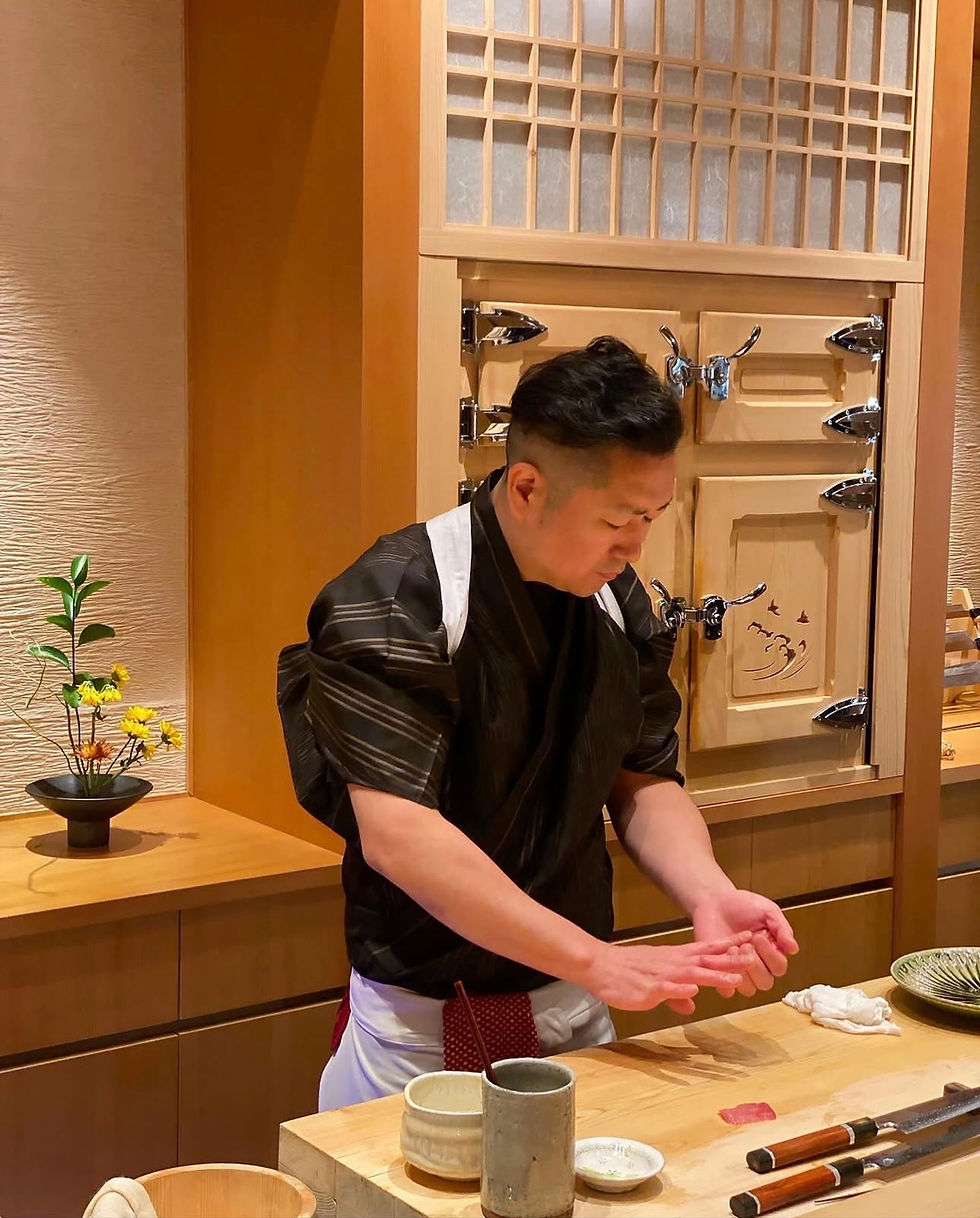
At a premium restaurant such as Sushi Ayumu by Masa Ishibashi, small acts of attentiveness go a long way. Listen when guidance is offered. Taste before altering. Handle each course with care. If you make a mistake, correct it quietly and move on. Polished dining is not about performance. It is about respect that never needs to announce itself.
The best approach is simple: arrive on time, stay present, and let the food lead. When you do, etiquette stops feeling like a test and becomes part of the pleasure.



Comments