Sushi Takeaway Online Order Done Properly
Updated: May 6
There is a clear difference between simply getting food delivered and placing a sushi takeaway online order with care. Sushi is precise. Temperature, timing, rice texture and balance all matter. When those details are respected, takeaway can still feel considered, polished and deeply satisfying.
For guests who already value quality dining, online ordering is not a lesser option by default. It is a different format. The best experience comes from understanding what travels well, what should be eaten promptly and how to order with the same judgement you would bring to a restaurant table.
What makes a sushi takeaway online order worth placing
Good sushi is built on restraint. The rice should still hold warmth and definition. The fish should taste clean and calm, never dulled by poor storage or excessive handling. Garnishes should support, not distract. A proper sushi takeaway online order depends on a kitchen that understands this balance and packs accordingly.
That matters more with premium sushi than with heavier takeaway food. Sauces cannot hide mistakes. Fried coatings do not mask tired ingredients. Every element is exposed. If the standard is high in the kitchen, takeaway can preserve much of what guests appreciate in the dining room - clarity of flavour, careful composition and confidence in the ingredients.
The trade-off, of course, is immediacy. Sushi served moments after preparation will always have a slight advantage. Rice is at its best when its texture is alive, and crisp elements are strongest at once. But for many guests, convenience and quality are not opposites. They simply need to be handled properly.
How to order sushi takeaway online without compromising quality
The first decision is timing. Sushi should not be ordered as an afterthought if you want the best result. Choose a delivery or collection window that allows you to eat soon after the order is prepared. If dinner is for eight o'clock, ordering for half six and leaving it on the kitchen counter defeats the point.
Collection often gives you a little more control. Travel time is shorter, and the handover is more direct. Delivery can still work very well, especially from a disciplined restaurant, but distance and traffic matter. If you live far away, choose items that are more forgiving in transit rather than the most delicate pieces on the menu.
Then consider balance. An online basket filled with only rich rolls and heavily dressed dishes may look generous, but it can become monotonous. The better approach is to order with contrast in mind. Pair clean sashimi with a composed roll. Add something warm, perhaps a grilled or cooked element, if the meal needs depth. Let pickles, ginger and wasabi play their supporting role rather than turning every bite into a contest of intensity.
Portion judgement matters as well. Premium sushi is satisfying in a quieter way than casual takeaway. Guests often over-order because the visual format looks small. A more measured order usually feels more elegant and avoids waste.
The items that travel best
Some styles are naturally better suited to takeaway. Maki and hand-cut rolls generally travel reliably when they are made with restraint and packed well. Sashimi can also travel beautifully because it avoids the textural shift that rice sometimes experiences. Cooked dishes, such as grilled fish or carefully prepared sides, often hold their structure better over a longer journey.
Nigiri is more exacting. When done well, it is one of the finest things to eat. It is also the form most vulnerable to time. Rice can firm up, and the relationship between topping and rice can lose some of its delicacy in transit. That does not mean you should avoid it altogether. It means nigiri is best ordered when travel time is short and the meal will begin soon after arrival.
Crisp items require realism. Tempura and similar dishes can still be enjoyable, but they rarely arrive exactly as they leave the kitchen. If crispness is essential to your enjoyment, order lightly and eat it first.
The details discerning diners notice
Packaging is not a minor issue. Premium takeaway should feel composed, not improvised. Fish and rice should be protected without being compressed. Sauces should be separated where necessary. Garnishes should arrive fresh rather than soggy. Even the layout inside the box says something about the standards of the kitchen.
The menu design also tells a story. A concise menu often signals confidence. It suggests that the restaurant is focused on what it can execute properly, whether on the plate or in a takeaway format. An overextended menu can mean compromise. With sushi, breadth is rarely as impressive as discipline.
Ingredient treatment is another sign. You should be able to recognise when a restaurant values the fish itself rather than relying on mayonnaise, sweetness or decorative excess. That is especially relevant online, where glossy menu descriptions can make everything sound luxurious. The better test is whether the offering appears edited, intentional and rooted in taste rather than novelty.
Choosing for the occasion
A sushi takeaway online order for a solo weekday supper should not be approached in the same way as a meal for guests. One of the advantages of online ordering is precision. You can shape the meal to the moment.
For a quiet evening, simplicity often wins. A small sashimi selection, a refined roll and one warm dish can feel complete without being excessive. For couples, contrast works well - a shared assortment with a few distinct textures and one or two signature choices. For small gatherings, ordering a broad but disciplined spread is usually more successful than chasing volume.
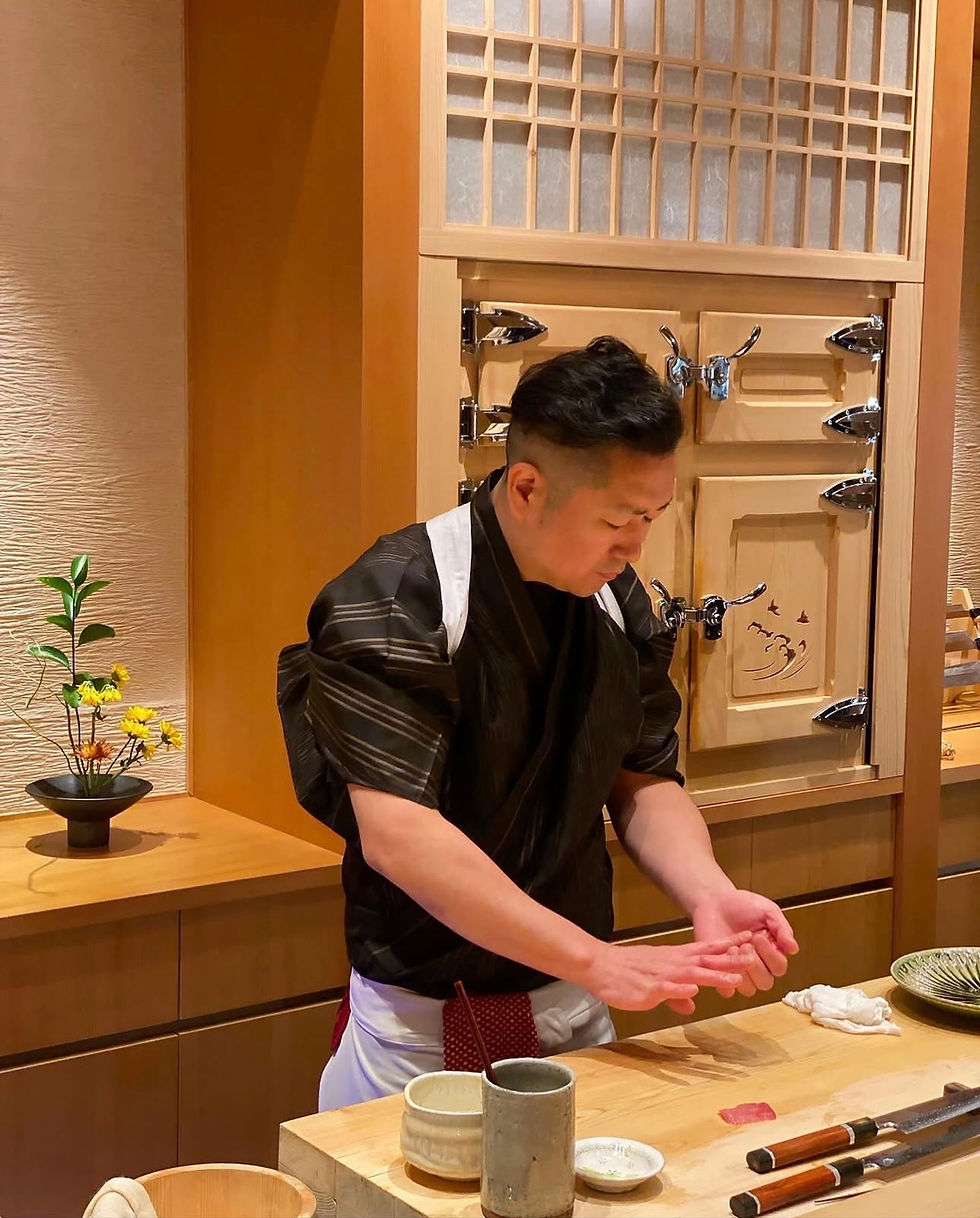
This is where chef-led restaurants tend to stand apart. Their menu structure often reflects how people actually want to eat. Instead of forcing guests into generic combination sets, they offer a selection that allows a meal to feel curated even outside the restaurant. At Sushi Ayumu by Masa Ishibashi, that sensibility is part of the appeal: convenience does not need to abandon authorship.
When takeaway is the right choice - and when it is not
There are evenings when takeaway is exactly the right decision. Perhaps you want the standard of a serious Japanese kitchen without the formality of dining out. Perhaps you are working late, hosting quietly at home or choosing comfort without lowering your expectations. In those cases, online ordering offers freedom without requiring compromise.
There are also moments when the dining room remains the better setting. Omakase-style progression, delicate nigiri served in sequence and the full pace of chef-guided hospitality belong more naturally in person. The atmosphere, timing and interaction are part of the experience. Takeaway can deliver quality, but it cannot reproduce every dimension of a restaurant.
That distinction is useful rather than limiting. It allows guests to choose the format that suits the evening. Premium hospitality today is not only about tableside service. It is also about offering different ways to enjoy the same standards.
How to enjoy sushi takeaway at home
Once your order arrives, avoid the common mistake of treating it like ordinary delivered food. Do not leave it untouched while you answer emails or finish a call. Set the table, even simply. Open everything carefully. Check what should be eaten first. If there are hot and cold items together, separate them immediately.
Sushi should generally be eaten promptly and not straight from a cold fridge unless there is a specific reason to store it. Chilled fish can lose some of its nuance if it becomes too cold, and rice suffers quickly in refrigeration. If you need to wait a short while, keep the order in a cool room and out of direct heat, but do not let it linger.
Use soy sparingly. Too much soy overwhelms the rice and conceals the fish. Wasabi should sharpen, not dominate. Ginger is there to refresh the palate between bites, not to sit on top of the sushi. These may sound like small points, yet they shape the entire experience.
Drinks deserve thought as well. Clean sake, dry sparkling wine or green tea can complement sushi beautifully. Heavy, tannic red wine rarely does. If the meal is refined, the pairing should be as restrained.
The quiet value of ordering well
A premium sushi takeaway experience is not really about speed. It is about confidence. Confidence that the kitchen understands what can travel, confidence that the ingredients justify a lighter touch, and confidence that the guest will receive something worthy of the name sushi.
That is why the best online orders feel calm rather than convenient in the usual sense. They remove friction, yes, but they also preserve intent. You are not merely buying dinner. You are choosing a standard, then trusting it to carry beyond the restaurant.
If you order with a little discernment - timing carefully, choosing thoughtfully and eating promptly - takeaway can hold far more of the restaurant experience than many people expect. The difference lies in respecting the food from the first click to the first bite.



Comments