Japanese Private Dining Room: What to Expect
Updated: May 6
Some dinners need more than a good table. A client conversation that should stay private, a family milestone that deserves calm rather than background noise, or a gathering where every detail matters calls for a different setting. A Japanese private dining room offers exactly that - discretion, focus and a more considered way to dine.
For guests who value Japanese cuisine at its most refined, privacy is not simply a practical extra. It changes the pace of the evening. Service feels more attentive, conversation becomes easier, and the meal can unfold with a sense of occasion that is difficult to achieve in a busy main dining room.
Why a Japanese private dining room feels different
The appeal begins with atmosphere, but it goes deeper than that. In Japanese dining culture, the setting is part of the meal. Restraint, balance and attentiveness shape the experience just as much as the food itself. A private room reflects those values particularly well because it removes distraction.
That matters for business entertaining, where polished service and a quiet environment can leave a stronger impression than overt formality. It matters just as much for birthdays, anniversaries and small celebrations, where guests often want intimacy without losing the pleasure of restaurant dining. The room becomes a frame for the meal rather than a separate feature.
There is also a practical advantage. In a private setting, timing can be managed with greater precision. Courses arrive with less interruption, speeches or toasts feel natural, and groups can settle into conversation without competing with the energy of the wider restaurant.
What defines a Japanese private dining room
Not every separate room delivers the same experience. A genuine Japanese private dining room is usually defined less by excess and more by control. The best versions are calm, uncluttered and intentional, with design that supports rather than overwhelms the meal.
Lighting is often softer. Acoustics are quieter. The room may feel minimalist, but that simplicity is deliberate. It places attention on craftsmanship - the quality of the fish, the rice at the correct temperature, the composition of each course, the rhythm of service. For diners seeking authenticity, this approach often feels more luxurious than decorative opulence.
In premium restaurants, the private room should also preserve the standards of the main dining experience rather than function as a secondary space. The food must remain the central point. If privacy is offered without the same culinary precision, the room becomes little more than a hireable space. For discerning guests, that distinction is immediate.
Privacy without isolation
A well-run private room should feel sheltered, not detached. Guests want separation from the dining room, but they do not want to feel forgotten. The strongest private dining experiences balance discretion with attentive hospitality.
That balance shows in small details. Service should be present at the right moments and invisible when it ought to be. Courses should move at a measured pace. Staff should understand when a business discussion requires space and when a celebratory table would welcome more warmth and interaction.
When a private dining room makes sense
There are obvious occasions for booking a private room, but the best use of one is not always the largest event. In many cases, it suits smaller groups who care deeply about quality and atmosphere.
Business dining is a clear example. A private setting supports confidential conversation and signals discernment without becoming theatrical. For client entertainment, that can be far more effective than a louder, trend-driven venue.
It also works beautifully for intimate celebrations. Engagement dinners, milestone birthdays and family gatherings often benefit from a room that feels self-contained. Guests can relax into the occasion without the usual pressure of a crowded restaurant floor.
For food-led groups, a private room can sharpen the dining experience itself. With fewer distractions, guests tend to notice more - the progression of flavours, the knife work, the temperature contrasts, the precision of plating. In that setting, Japanese cuisine reveals its quieter strengths.
What to ask before you book
Choosing a private room should be approached with the same care as choosing the restaurant itself. The room may be beautiful, but the practical details shape the evening.
Guest count comes first. Some rooms are designed for intimate groups, others for larger parties, and the atmosphere changes depending on how well the size suits the occasion. A room that feels comfortably full is usually preferable to one that feels sparse.
Menu format is equally important. Some restaurants offer the full menu, while others provide a set experience for private dining. Neither is inherently better. A curated menu can create a more polished service flow, especially for celebrations or corporate dinners, but flexibility may matter if the group has varied preferences or dietary requirements.
Timing is worth discussing early. A private dinner may need a precise start for business guests, or a slower pace for a family event. The more clearly this is handled in advance, the more natural the evening will feel.
It is also sensible to ask how the room is serviced. Is there dedicated staff attention? How is beverage service managed? Can speeches or presentations be accommodated discreetly? Premium hospitality often reveals itself in these operational details.
The role of menu curation
In a Japanese private dining room, a curated menu often improves the experience. Rather than asking a group to navigate too many choices, a carefully structured sequence can create rhythm and cohesion.
That said, it depends on the purpose of the dinner. A business group may prefer a controlled progression that keeps the evening smooth and efficient. A celebratory gathering may want a little more flexibility. The strongest restaurants can advise on the format that best suits the occasion, rather than forcing every event into the same mould.
Why privacy enhances premium sushi
Sushi is often discussed in terms of ingredient quality, seasonality and technique, and rightly so. Yet environment matters more than many diners realise. Precision cuisine benefits from a room where attention is not divided.
In a quieter setting, guests can better appreciate the subtleties that define serious sushi - the grain and temperature of the rice, the clean finish of properly cut fish, the balance between acidity, texture and aroma. These are not loud pleasures. They reward concentration.
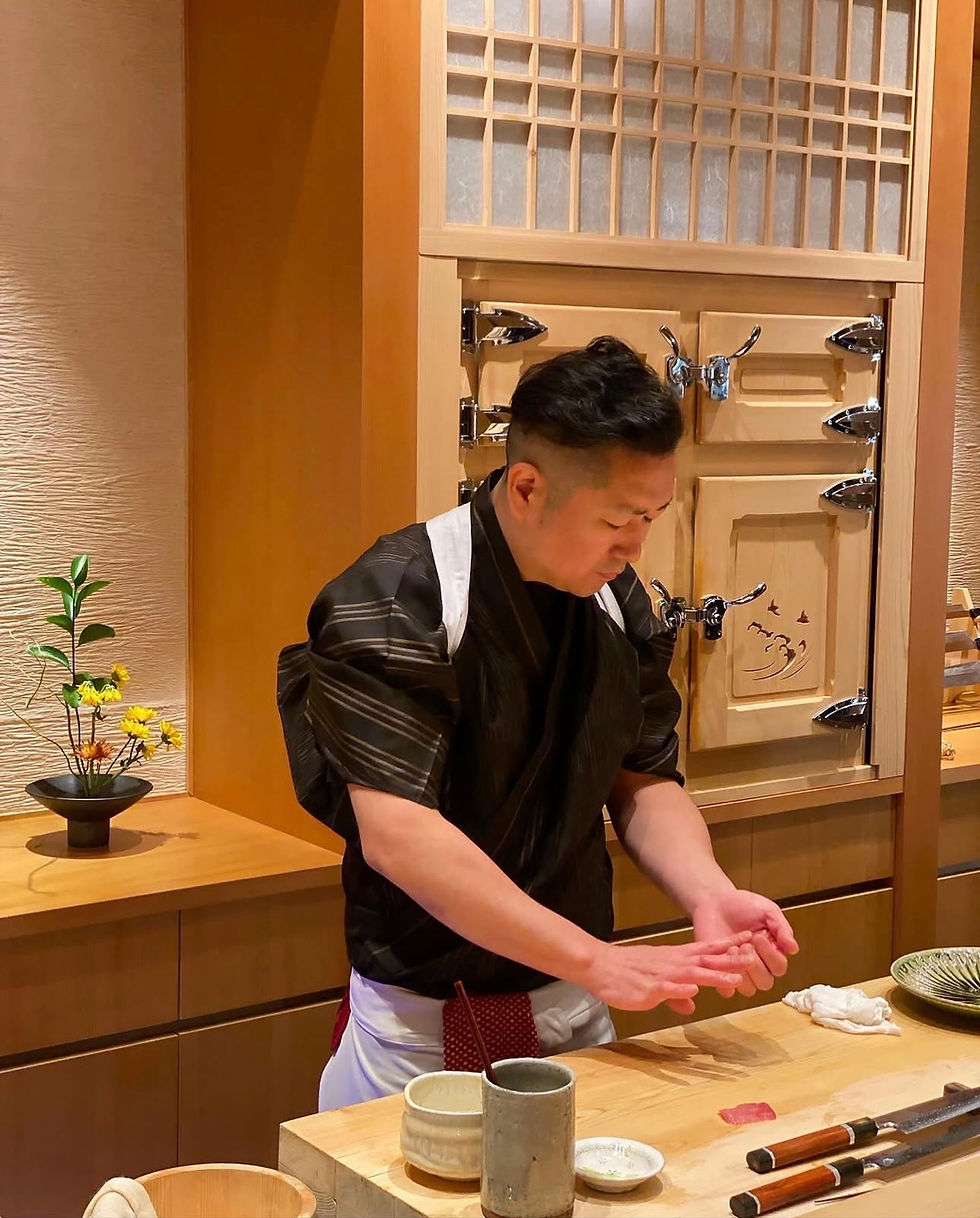
A private room also supports the kind of hospitality that premium sushi deserves. Courses can be paced with greater care. Pairings can be explained more naturally. The meal feels less transactional and more composed. At Sushi Ayumu by Masa Ishibashi, that sense of authorship and restraint is part of what gives the experience its character.
The trade-off to consider
Private dining is not automatically the right choice for every guest. Some diners prefer the atmosphere of the main room - the visible energy, the connection to the broader restaurant, the pleasure of being part of a lively service. For a casual dinner or a spontaneous evening out, that setting may feel more appropriate.
A private room is best when the occasion benefits from structure, intimacy or discretion. It usually asks for a little more planning, and in premium restaurants it may involve minimum spends or set menu expectations. For many guests, that is a fair exchange for a more tailored experience. But it is still worth deciding based on the purpose of the evening, not the prestige of the room alone.
How to choose the right Japanese private dining room
The best choice is rarely the one with the most obvious luxury cues. It is the room that aligns with the kind of evening you want to host.
If the priority is client entertainment, look for quiet confidence - strong food, measured service, and a room that allows conversation to lead. If the occasion is personal, consider whether the setting feels warm as well as polished. If the group cares most about cuisine, choose a restaurant where the private room is an extension of the chef’s vision rather than an add-on.
A strong Japanese private dining room should feel composed from the moment guests arrive. Booking should be straightforward, expectations should be clear, and the evening should unfold with very little friction. That ease is not accidental. It is the result of a restaurant that understands hospitality at a higher level.
The finest private meals are often remembered for what they made possible: an important conversation handled well, a celebration given proper shape, or a dinner where exceptional food was allowed the setting it deserved. When the room, the service and the cuisine are all in balance, privacy becomes more than a feature. It becomes part of the craft.



Comments