Choosing a Private Room Japanese Restaurant
Updated: May 6
A private room Japanese restaurant changes the pace of an evening before the first course arrives. The door closes, the room settles, and conversation finds its proper level. For a client dinner, a family celebration, or a gathering that asks for discretion as much as quality, privacy is not an extra. It is part of the experience.
Japanese dining, at its best, has always understood atmosphere as carefully as flavour. The arrangement of a room, the rhythm of service, the distance between tables, and the sense of calm all shape the meal itself. In a private setting, those details become even more meaningful. You are not simply reserving seats. You are choosing how the occasion will feel.
Why a private room Japanese restaurant suits important occasions
There are restaurants that offer private dining as a practical add-on, and there are restaurants where privacy feels naturally aligned with the cuisine. Japanese dining often belongs to the latter. Precision, restraint, and attentiveness are already central to the meal, so a private room can heighten what makes the experience memorable rather than merely separate your party from the main floor.
For business entertaining, that distinction matters. A private room allows conversation to remain focused and comfortable, without the interruptions of a crowded dining room. It offers a level of polish that feels considered rather than showy. When the food is equally serious, the setting communicates judgement - not extravagance for its own sake, but discernment.
The same is true for personal occasions. Birthdays, anniversaries, and small family gatherings often benefit from intimacy more than spectacle. A private room gives the evening shape. Guests can relax into the moment, speak freely, and enjoy the meal without competing with the wider room for attention.
What to look for in a private room Japanese restaurant
Privacy alone is not enough. The quality of the room matters, but so does the quality of everything around it. A beautiful enclosed space cannot compensate for indifferent sushi, uneven service, or a menu that feels designed for convenience rather than care.
Begin with the food. In a Japanese restaurant, quality reveals itself quickly. Rice should be properly seasoned and held at the right temperature. Fish should taste clean and precise. Hot dishes should arrive with the same discipline as cold ones. If the cooking lacks confidence, a private room simply makes that more visible.
Service is just as important. Private dining should feel attentive without becoming intrusive. Guests should not need to chase for drinks, menu guidance, or pace adjustments, but neither should the room feel over-managed. The best service reads the table accurately. It knows when to explain, when to pause, and when to allow the evening to unfold on its own.
Then there is the room itself. Size matters, but proportion matters more. A private room should feel composed for the group it serves. Too large, and the energy falls flat. Too small, and refinement gives way to discomfort. Lighting, acoustics, and table layout all play a role. A room can be technically private yet still feel exposed if sound carries poorly or staff traffic is constant.
The difference between exclusivity and comfort
Many diners hear the phrase private room and assume formality first. Sometimes that is accurate. Sometimes it is a mistake.
A strong private room Japanese restaurant balances exclusivity with ease. The experience should feel elevated, but never stiff. Guests should feel looked after, not managed. This is especially important when the group includes people with different levels of familiarity with Japanese cuisine. A room that feels too ceremonial can create hesitation, while one that is quietly confident invites enjoyment.
That balance often comes from tone rather than décor. Understated design, calm service, and a clear menu can create far more confidence than obvious luxury. In Japanese dining, restraint usually says more than ornament. The room should support the meal, not compete with it.
A private room for business dining
For professionals, privacy changes more than noise levels. It changes how the table functions.
A business dinner in the main dining room can still be excellent, but it comes with compromises. Sensitive conversations are softened or delayed. Introductions can feel slightly public. The evening may be elegant, yet never fully at ease. In a private room, the purpose of the dinner becomes clearer. Guests can discuss terms, build rapport, or simply speak openly without checking the room around them.
Japanese cuisine is particularly well suited to this kind of hospitality. It conveys seriousness and taste without forcing the occasion. A carefully prepared sushi and omakase-led meal feels thoughtful, measured, and internationally fluent. For client hosting, that can be more effective than something louder or more performative.
The practical side matters too. A business group often values timing, dietary flexibility, and service that understands pace. Some dinners need to move efficiently. Others need space to linger. The right restaurant can accommodate both, adjusting the progression of the meal without losing composure.
A private room Japanese restaurant for celebrations
Not every celebration calls for a crowded room and a raised voice. Some of the best evenings are smaller, quieter, and more exacting.
A private room suits milestone dinners because it gives the occasion definition. Guests feel gathered with purpose. There is room for speeches if wanted, but no obligation towards performance. The food remains central, which is often exactly right for hosts who care more about quality than spectacle.
Japanese dining also offers range. A celebration can be built around pristine sushi, elegant small plates, warm dishes for sharing, or a more curated chef-led progression. That flexibility allows the evening to reflect the group. A couple marking an anniversary may want intimacy and precision. A family gathering may prefer breadth and a little more variety. A private room should support both, provided the restaurant has the confidence to tailor the experience.
Questions worth asking before you book
Even at a refined restaurant, private dining is not one fixed model. Some rooms are best for a quiet six-person dinner. Others are designed for larger groups. Some menus are fully bespoke, while others rely on set formats. None of this is necessarily a problem, but it is worth understanding before you commit.
Ask about minimum spend rather than assuming a flat hire fee. In premium dining, this is often the more natural structure. Ask whether the menu can be shaped around the occasion and whether dietary requirements can be handled without reducing the quality of the experience. If the evening matters, ask who will be guiding the booking and how the pacing of the meal is usually managed.
It is also sensible to ask what kind of atmosphere the room offers. Privacy can mean complete separation, or it can mean a semi-enclosed space with more ambient sound. One is not automatically better than the other. It depends on whether you want confidentiality, celebration, or simply a calmer setting.
When the room is part of the cuisine
The best private dining does not feel detached from the restaurant's identity. It feels like a natural extension of it.
At a chef-led restaurant, that is especially important. If the dining room is built around craftsmanship, ingredient quality, and measured hospitality, the private room should carry the same values. It should not feel like an events space attached to a restaurant. It should feel like one of the most considered places to experience the cooking.
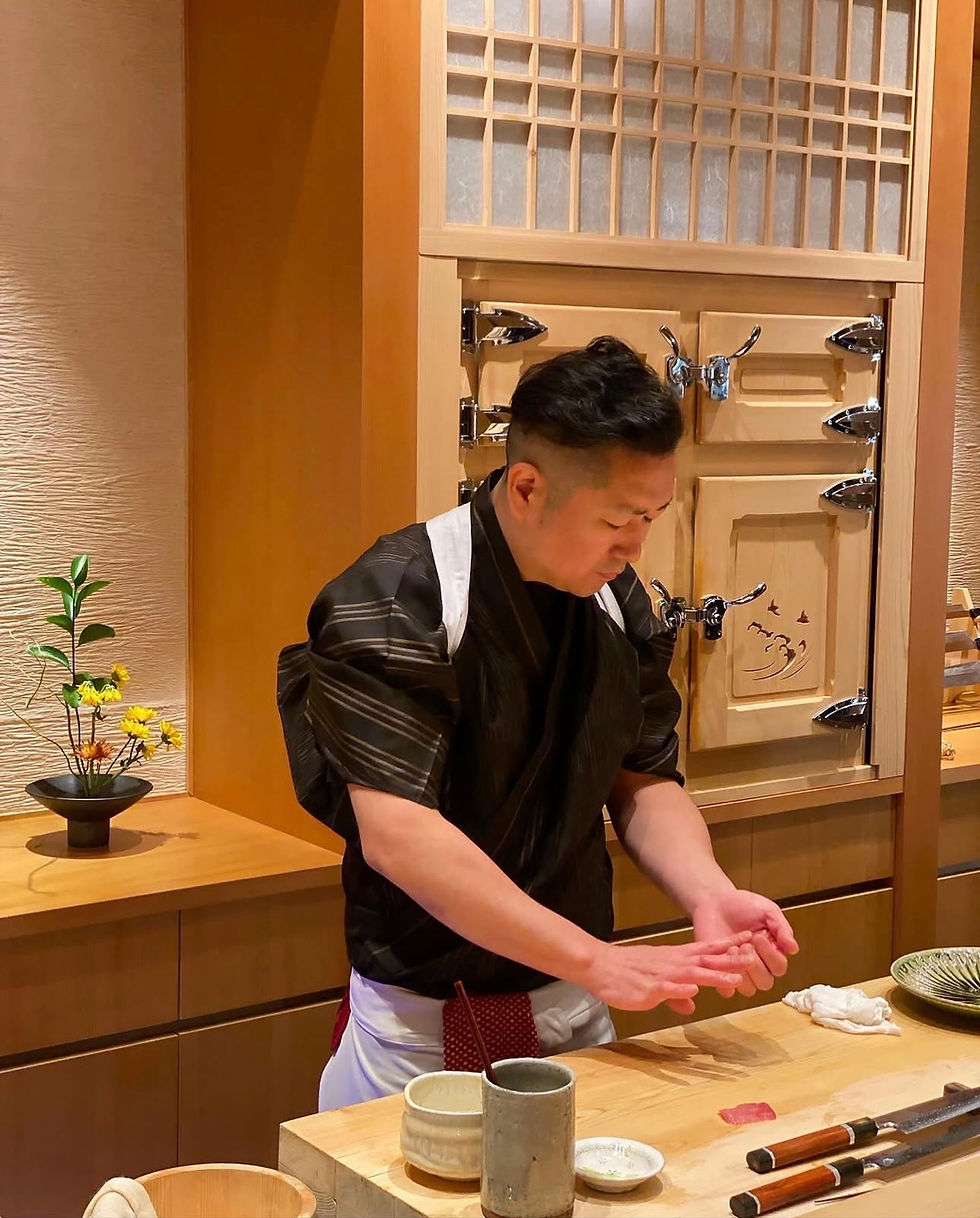
This is where a restaurant such as Sushi Ayumu by Masa Ishibashi stands apart when it approaches private dining with the same discipline as the rest of the guest experience. The appeal is not only seclusion. It is the confidence that privacy will be matched by culinary rigour.
Choosing well matters
A private room Japanese restaurant can make a dinner feel calmer, sharper, and more memorable. But the room is only as strong as the kitchen and service behind it. Choose somewhere that understands privacy as part of hospitality, not as a rental feature with food attached.
When the setting is right, guests notice it immediately. Conversation softens. Attention returns to the plate. The evening acquires a sense of intention that no crowded dining room can quite reproduce. For moments that matter, that kind of quiet confidence is often exactly what makes the meal last in the memory.



Comments