What Makes an Omakase Dining Experience
Updated: May 6
The first piece arrives almost quietly. No menu decision, no negotiation, no rush to choose. In an omakase dining experience, the meal begins with trust - in the chef, in the pace of the evening, and in the discipline behind each course.
That trust is what sets omakase apart from ordinary restaurant dining. The word itself is often understood as leaving the choice to the chef, but the practice carries more depth than that simple translation suggests. Omakase is not a tasting menu in the broad, fashionable sense. At its best, it is a direct expression of judgement, seasonality and technique, presented in a sequence designed for that service, that counter and that guest.
What an omakase dining experience really means
An omakase dining experience is chef-led in the fullest sense. Rather than ordering freely from a list of familiar dishes, the guest accepts a curated progression chosen according to what is best that day. That may reflect the quality of a particular fish, the balance of richer and lighter flavours, or the chef's decision about how a meal should unfold.
This is why omakase can feel deeply personal even when every guest at the counter receives a similar sequence. The chef is not simply serving food. He is making a series of decisions in real time - when to present something delicate, when to introduce a stronger note, when to finish with restraint rather than excess. Precision matters, but so does rhythm.
In refined sushi restaurants, omakase often centres on nigiri, interspersed with small composed dishes that sharpen the appetite or reset the palate. The progression may look minimal, yet each element has a purpose. Rice temperature, knife work, curing, ageing and seasoning are not details added for effect. They are the meal.
Why the counter matters
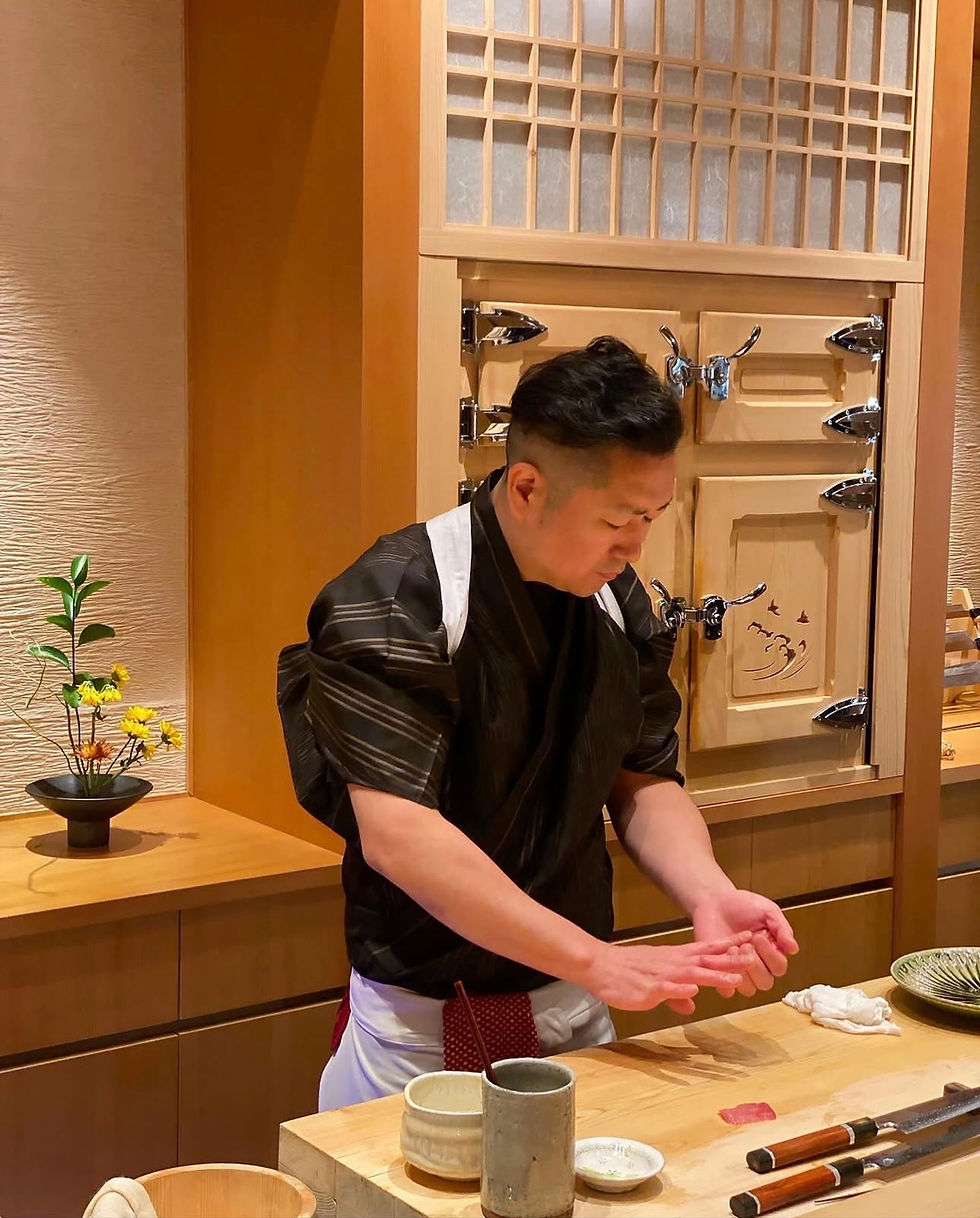
The setting changes the experience. At a traditional sushi counter, the distance between chef and guest is reduced to almost nothing. You see the movement of the hands, the attention given to each cut, and the calm economy that defines high-level craft. The meal feels immediate because it is immediate.
That closeness also explains why omakase rewards attention. A piece of nigiri is often meant to be eaten promptly, when the rice is still at the intended temperature and the structure has not settled. Leave it waiting while you continue a conversation or reach for a photograph, and the balance shifts. In a more casual meal, that may not matter. In omakase, it does.
There is also a certain discipline to the room itself. The atmosphere need not be stiff, but it should support concentration. Good omakase service is polished without becoming performative. The most memorable evenings often feel composed rather than theatrical.
The role of seasonality in an omakase dining experience
Seasonality gives omakase its integrity. A chef-led meal should not feel fixed or repetitive if it is genuinely responsive to the market and the season. Different fish show their best character at different points in the year. Texture, fat content and flavour shift subtly, and a serious chef works with those changes rather than against them.
This is one reason two omakase meals in the same restaurant may feel related but not identical. Certain signatures may remain, yet the sequence evolves. A spring meal may feel brighter and more delicate, while winter can invite deeper, richer notes. The point is not novelty for its own sake. The point is serving each ingredient when it deserves attention.
For guests, this is part of the appeal. Omakase offers something rarer than abundance - discernment. Instead of a menu built to satisfy every possible preference at all times, it presents what is right now, treated with respect.
Craft over spectacle
There has been a tendency in some markets to frame omakase as luxury theatre. Sometimes that means dramatic ingredients, inflated pricing or a performance style that overwhelms the meal itself. While there is certainly a place for indulgence, spectacle is not the heart of omakase.
The stronger expression is quieter. It rests on rice prepared properly, fish handled with knowledge, and seasoning applied with restraint. A guest may remember a lavish ingredient, but what stays with them is usually the consistency of the whole experience - the sense that nothing was there by accident.
This matters when choosing where to dine. High prices alone do not create authenticity. Nor does a sparse room, a hushed playlist or imported terminology. The better question is whether the chef's choices feel coherent. Does the meal show confidence? Is there care in the pacing? Do the ingredients speak clearly, without disguise? Those are stronger signs of quality than performance cues.
How guests should approach omakase
For diners new to the format, the best approach is simple: arrive on time, come hungry, and allow the meal to unfold. Omakase is not a test of knowledge. You do not need specialist vocabulary or a rehearsed understanding of etiquette to appreciate it. A respectful, open manner goes much further than display.
That said, there are practical considerations. If you have allergies or serious dietary restrictions, these should be communicated in advance. Omakase depends on planning as well as spontaneity, and the kitchen needs proper notice to accommodate safely and gracefully. Strong dislikes are more complicated. Some flexibility is part of the format, so guests who avoid most raw fish or expect extensive substitutions may find an à la carte meal more suitable.
It is also worth adjusting expectations around quantity. An omakase meal is designed for balance, not excess. Some are substantial; others are more restrained. The satisfaction comes from progression and precision rather than sheer volume. For many guests, that is exactly the attraction.
When omakase is the right choice
Not every dinner calls for omakase. If the evening is built around quick decisions, varied appetites or the comfort of familiar dishes, a conventional menu may suit the moment better. Omakase asks for a certain mood - attention, time and willingness to follow the chef's lead.
When that mood is present, however, it can be the most rewarding way to experience a serious Japanese restaurant. It suits milestone dinners, business occasions that call for discretion rather than noise, and couples who value a shared experience shaped with care. It also suits guests who understand that luxury is not always loud. Sometimes it is a room with the right light, a chef with command of his craft, and a meal that never once loses its line.
At a restaurant such as Sushi Ayumu by Masa Ishibashi, that distinction matters. The appeal is not merely premium sushi, but a considered setting in which the chef's point of view can be felt from the first course to the last.
What distinguishes a great omakase dining experience
A great omakase dining experience does not depend on rarity alone. It depends on proportion. Rice should support the fish, not disappear beneath it. Seasoning should heighten flavour, not announce itself too loudly. Service should guide the guest without interrupting the intimacy of the counter.
The best meals also have emotional control. They know when to surprise and when to simplify. They resist the urge to overstate every course. That restraint is not austerity. It is confidence.
Guests often notice this only in retrospect. They leave remembering not one dish but the shape of the evening - how naturally it moved, how carefully it held their attention, how complete it felt without ever appearing crowded. That is the mark of a chef who understands omakase not as a trend, but as a discipline.
There is, of course, room for variation. Some chefs are more conversational, others more formal. Some menus lean deeply traditional, while others allow measured contemporary influence. Neither approach is automatically better. What matters is integrity. The style should reflect the chef honestly, and the meal should feel whole.
For guests seeking more than a meal, omakase remains one of the clearest expressions of hospitality and craft. It asks for trust, but it rewards that trust with something increasingly rare - an experience shaped by judgement rather than volume, and by care rather than display. If you choose it, choose it for that reason.



Comments