What Defines Authentic Japanese Sushi?
Updated: May 6
The difference is rarely loud. Authentic Japanese sushi does not rely on towering rolls, heavy sauces or novelty. Its character is quieter than that - precise rice at body temperature, fish cut to suit its texture, measured seasoning, and a sense that every element has been placed for a reason.
For diners who care about craft, authenticity is not a marketing phrase. It is something you can taste, observe and feel throughout the meal. The room, the pace of service, the chef’s decisions and the quality of the ingredients all play a part. True sushi culture is built on discipline and restraint, not excess.
What authentic Japanese sushi really means
Across many international cities, sushi is often used as a broad term for almost any Japanese-style dish involving rice or raw fish. In Japan, the definition is more exact. Sushi begins with seasoned rice. The topping matters deeply, but the rice is not a supporting detail. It is the foundation.
That point is easy to miss because premium fish tends to receive most of the attention. Yet a beautiful cut of tuna placed on poorly prepared rice will never feel complete. Authentic Japanese sushi depends on balance - the acidity of the rice, the temperature of the fish, the pressure of the chef’s hand, and the proportion between topping and base.
It also depends on context. Edomae sushi, the style that informs much of modern high-end sushi, developed in Tokyo with techniques designed to preserve and heighten flavour. Marinating, curing, brushing with nikiri, and lightly torching are not decorative gestures. They are deliberate methods with a culinary purpose.
The rice is the first test of authentic Japanese sushi
If you want to judge sushi well, begin with the rice. It should be glossy, gently seasoned and formed with enough structure to hold together, yet soft enough to loosen easily in the mouth. Rice that is too cold, too dense or too sharp with vinegar tells you something important about the level of care in the kitchen.
This is where many imitations fall short. They may offer expensive seafood, but if the rice has been refrigerated, overworked or prepared in bulk without proper attention, the entire piece loses its harmony. Authentic Japanese sushi asks for precision that is repeated throughout service, not assembled mechanically.
Seasoning also varies by house and by chef. Some prefer a slightly deeper vinegar note, others a softer profile that allows delicate white fish to speak more clearly. Neither approach is inherently better. What matters is coherence. The rice should support the neta, not compete with it.
Fish, shellfish and seasonality
The second marker is ingredient judgement. Authenticity is not simply about serving the most expensive species available. It is about understanding seasonality, sourcing with intelligence, and preparing each ingredient in the way that best suits it.
Fatty tuna has its place, certainly, but a serious sushi experience is rarely built on luxury alone. Kohada, sayori, squid, gurnard, mackerel, eel or shellfish can reveal far more about a chef’s ability. These ingredients demand sensitivity in curing, scoring, ageing or seasoning. They show technique rather than spectacle.
Seasonality matters here. A menu that shifts with the time of year reflects a Japanese culinary mindset rooted in shun - serving ingredients when they are at their best. That does not mean every fish must be local, nor does it mean imported seafood is less valid. It means the chef chooses with purpose, rather than offering a fixed range designed only for familiarity.
There is also a trade-off. Some diners equate authenticity with rigid traditionalism, but Japanese cuisine has always evolved. Responsible adaptation is not the issue. The question is whether the adaptation respects the ingredient and the form, or merely chases attention.
Knife work, temperature and timing
A skilled sushi chef is shaping more than appearance. Knife work changes texture, release of flavour and the way the fish meets the rice. Squid may be cut finely to soften its bite. Tuna might be sliced differently depending on the cut. Silver-skinned fish may be treated to sharpen or mellow their character.
Temperature is equally revealing. Rice should not feel chilled. Fish should not be so cold that its flavour is muted. In authentic Japanese sushi, these details are calibrated so the piece arrives alive rather than inert.
Timing is part of that discipline. Sushi is best eaten promptly after it is served. It is made to be experienced in a particular state, not left to sit while conversation catches up. In refined settings, the pace of service is often intentional for this reason. Each piece is offered when it is ready, not when it is convenient.
Why restraint matters
One of the clearest signs of authentic Japanese sushi is what is left out. Excess mayonnaise, cream cheese, truffle oil and sweet sauces can overpower the structure of sushi. They are not automatically forbidden, but they move the dish away from the traditional logic of balance and towards a more engineered effect.
Restraint should not be mistaken for austerity. The meal can still feel generous, luxurious and memorable. The point is that quality is expressed through precision rather than accumulation. A brush of soy, a touch of citrus, a measured amount of freshly grated wasabi - these are enough when the underlying work is strong.
This is often where experienced diners find the greatest pleasure. Nothing is trying too hard. The craftsmanship is evident, but never theatrical for its own sake.
The room matters too
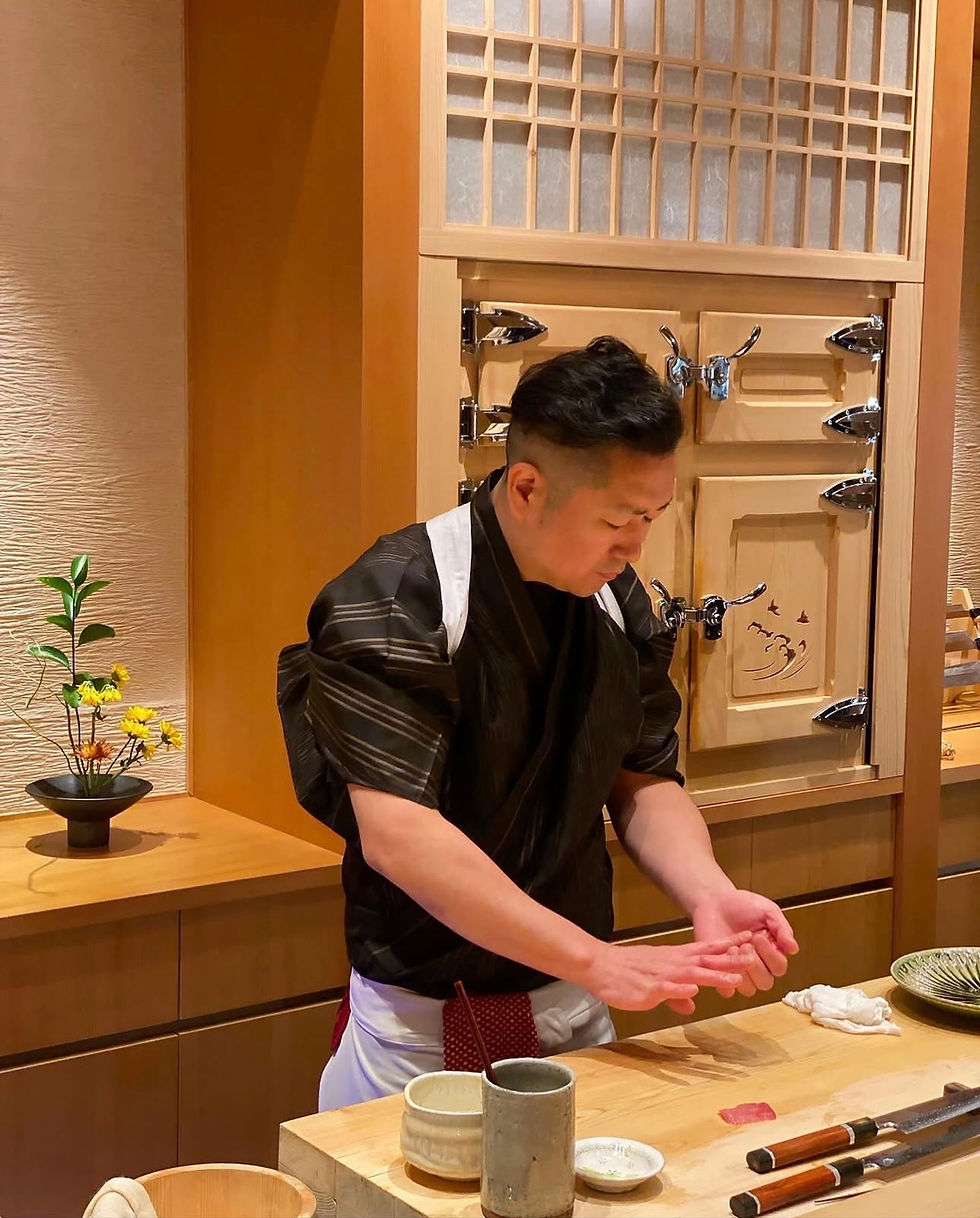
Authenticity does not end at the sushi counter. Japanese hospitality places equal value on atmosphere, rhythm and attentiveness. The environment should allow the food to be experienced properly. That may mean calm lighting, composed service and a sense of order that supports the meal rather than distracting from it.
For business dinners, celebrations or quiet evenings where detail matters, this setting becomes part of the appeal. The meal feels curated. There is confidence in the pacing, the presentation and the interactions between guest and staff.
That is one reason serious diners often prefer a chef-led restaurant to a generic sushi outlet. Authorship matters. When the identity of the chef is present, there is usually a clearer standard behind the menu, the sourcing and the guest experience. At Sushi Ayumu by Masa Ishibashi, that chef-led approach is central to how authenticity is expressed - not as theatre, but as discipline on the plate and composure in the room.
Authentic Japanese sushi and takeaway
A common question is whether authentic Japanese sushi can travel well. The answer depends on the item. Some styles are at their peak the moment they are formed and are best enjoyed in the restaurant. Others can be prepared thoughtfully for takeaway without compromising quality too heavily.
This is where honesty matters. A refined restaurant should understand which items retain their integrity off-site and which are better reserved for dine-in service. High standards are not about forcing every format to do the same job. They are about respecting the nature of the food.
For diners, that means choosing with intention. A reservation offers the most complete expression of the craft - especially for nigiri and omakase-style experiences.
How discerning diners can recognise quality
You do not need to be an expert to identify authentic Japanese sushi. Look for a menu with clarity rather than clutter. Notice whether the rice tastes considered on its own. Observe whether each piece feels proportionate and deliberate. Pay attention to whether the seasoning is measured or whether sauce is doing most of the work.
It is also worth noticing what the restaurant chooses to emphasise. If the language centres entirely on large portions, discounts and novelty rolls, authenticity is unlikely to be the main pursuit. If the focus is on ingredients, seasonality, craftsmanship and hospitality, that is usually a stronger sign.
Price, of course, is part of the conversation. Authentic sushi made with care is rarely cheap, because the ingredients, labour and skill involved are significant. That said, high price alone proves nothing. Value comes from integrity, not positioning.
The finest sushi leaves an impression of ease, even though the work behind it is exacting. It feels calm, assured and complete. For diners seeking more than a casual meal, that quiet confidence is often the clearest mark of all.
If you are choosing where to dine, look beyond the obvious cues. The most memorable authentic Japanese sushi is not the loudest version of the experience. It is the one that feels considered from the first bite to the last.



Comments