What Defines an Authentic Japanese Experience?
Updated: Apr 14
The difference is often clear within moments. The room is calm rather than theatrical. Service feels attentive without interruption. The food arrives with purpose, not excess. An authentic Japanese experience is rarely built on novelty alone. It is built on judgement, restraint and a quiet confidence that does not need to announce itself.
That distinction matters, particularly for diners who want more than a familiar idea of Japanese food. In many cities, sushi is easy to find. What is far less common is a dining experience shaped by the principles that give Japanese cuisine its depth - seasonality, balance, precision and hospitality that anticipates rather than performs. Authenticity, in this context, is not about imitation or spectacle. It is about whether the experience reflects the values behind the cuisine.
What makes an authentic Japanese experience
Many diners use the word authentic to mean traditional, but the two are not always identical. A meal can be contemporary and still feel deeply Japanese if it respects the discipline of the craft. Equally, a restaurant can borrow visual cues from Japan while serving food that has little to do with Japanese culinary thinking.
An authentic Japanese experience begins with intent. Ingredients are chosen for flavour and condition, not simply prestige. Preparation is precise because detail affects outcome. Rice is treated with as much seriousness as fish. Texture, temperature and timing are considered together. Nothing is included merely to make a plate appear fuller.
This same principle extends beyond the food. The pacing of the meal, the layout of the room, the tone of service and the clarity of the menu all contribute. Japanese hospitality, or omotenashi, is often discussed too loosely, but at its best it means care that feels natural and unobtrusive. The guest is considered throughout, yet never overwhelmed.
Why authenticity in Japanese dining is often misunderstood
Outside Japan, authenticity is frequently reduced to surface markers. People look for minimalist interiors, imported ingredients or a list of familiar dishes and assume that is enough. These details can matter, but they are not the whole story.
One common misunderstanding is that authenticity must mean strict adherence to one fixed style. In reality, Japanese cuisine contains regional differences, modern interpretations and varied levels of formality. An intimate omakase counter, a refined kaiseki meal and thoughtfully prepared takeaway can all feel authentic for different reasons. What connects them is discipline and integrity.
Another misconception is that luxury alone guarantees authenticity. Premium ingredients certainly elevate a meal, but expense without judgement can feel hollow. Bluefin tuna, uni and wagyu have value, yet they only become memorable in the hands of a chef who understands balance. Excess is not refinement. Precision is.
This is why serious diners often remember the smallest details most vividly. Perfectly seasoned rice. A clear broth with depth rather than heaviness. A room that encourages conversation instead of competing with it. These choices signal confidence. They suggest that the restaurant knows what to emphasise and what to leave out.
The role of the chef in an authentic Japanese experience
In Japanese dining, authorship matters. Guests are not simply buying a category of food. They are placing trust in a chef's taste, standards and judgement. That trust is earned through consistency and through a point of view that can be felt in every part of the meal.
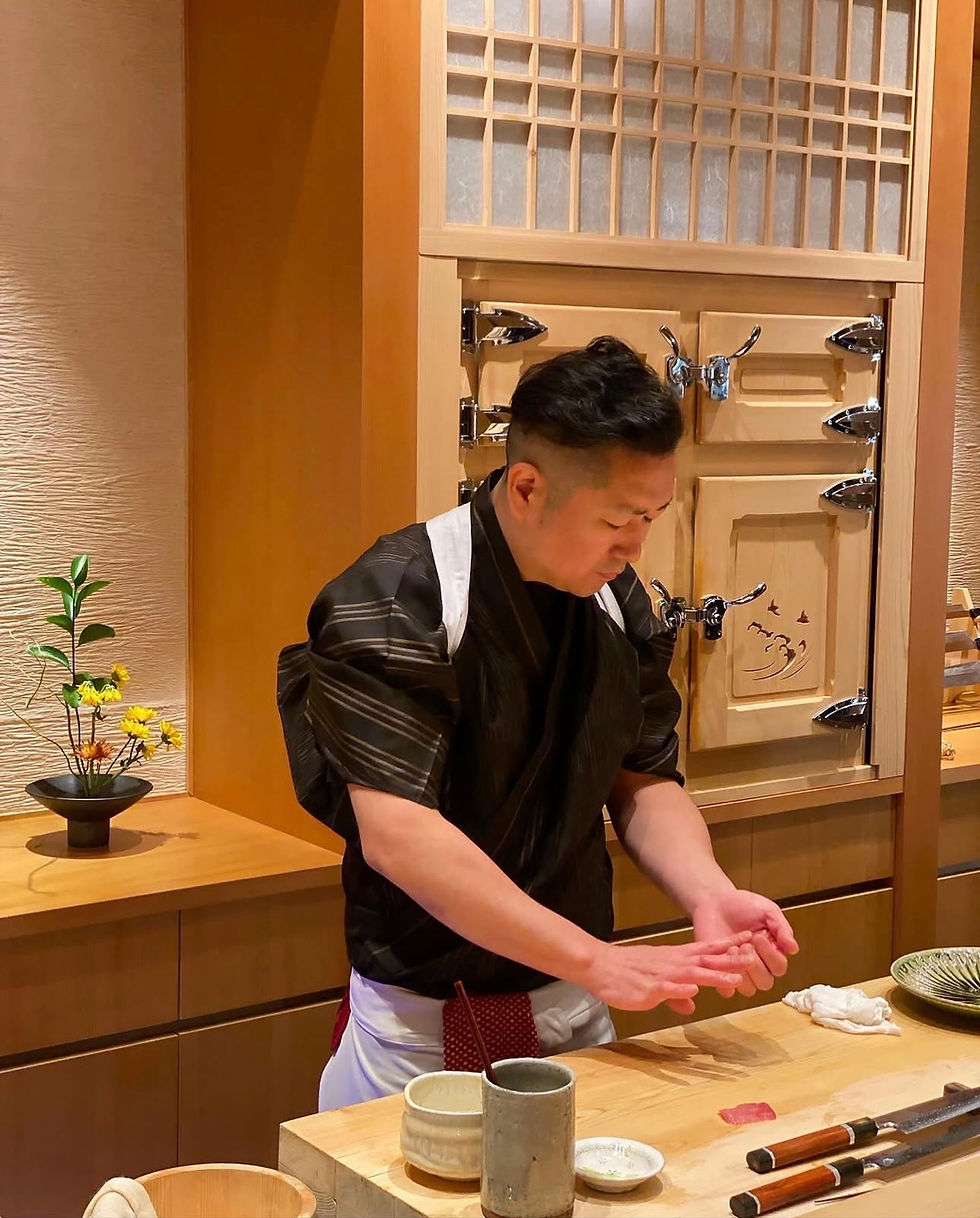
A chef-led restaurant carries a different weight because it reflects personal discipline rather than a generic formula. Knife work, seasoning, sourcing and progression are not abstract ideas. They are daily decisions. Even where the menu appears minimal, that simplicity usually rests on years of training.
For the guest, this changes the nature of the meal. Dining becomes less transactional and more curated. The value lies not only in what is served, but in how each choice has been considered. That is especially true in sushi, where apparent simplicity leaves nowhere to hide. The quality of fish matters, but so do the cut, the rice temperature, the pressure of the hand and the moment it reaches the guest.
An authentic Japanese experience therefore has a human centre. It is shaped by expertise, but also by judgement. The chef decides what deserves attention and what should remain understated. When this is done well, the result feels composed rather than busy.
Authentic Japanese experience in the dining room
The dining room is often where a restaurant reveals its true character. Authenticity does not require rigid formality, but it does require coherence. Every element should support the meal rather than distract from it.
A refined Japanese restaurant usually understands the value of space. Tables are arranged to create privacy without isolation. Lighting is soft enough to flatter the room yet clear enough to honour the food. Sound is managed carefully. The aim is not silence, but ease.
Service follows the same logic. There is attentiveness, but no sense of intrusion. Staff should know when to guide and when to step back. For business dinners, this matters greatly. For couples and celebrations, it matters just as much. Good hospitality protects the mood of the occasion.
Private dining also deserves mention here. In Japanese hospitality, intimacy and discretion are part of luxury. A private room is not merely an upgrade for larger groups. It creates the conditions for a more focused experience - whether the evening is centred on conversation, celebration or client entertainment. When designed properly, it allows the standards of the main dining room to continue in a more personal setting.
Can takeaway still feel authentic?
It depends on the restaurant and on the guest's expectations. Some parts of Japanese dining are inseparable from the room itself - the timing, the service, the immediate handover from chef to guest. Those elements cannot be replicated fully at home.
Yet authenticity is not lost the moment a meal leaves the restaurant. If the food is designed thoughtfully for takeaway, quality can travel remarkably well. This requires discipline. Items must be selected with care. Packaging should protect temperature and texture rather than simply prioritise convenience. Portions should remain balanced. Presentation should still reflect respect for the guest.
For busy professionals or those seeking a quieter evening at home, premium takeaway can offer a genuine expression of the kitchen's standards. It is not the same as dine-in, and it should not pretend to be. But it can still carry the same values of quality, balance and craft.
That distinction is useful. Authenticity does not mean forcing every format into one mould. It means understanding what each format can deliver at its best.
How to recognise the real thing
For diners seeking an authentic Japanese experience, the most reliable signals are often the least theatrical. Look first at focus. Does the restaurant seem clear about what it is trying to do, or is it chasing every trend at once? Breadth is not always a strength.
Pay attention to how the menu is written. A confident kitchen does not need to overstate itself. Notice whether the offering suggests care in sourcing and preparation, and whether the structure feels considered. Observe the room. Refinement is usually evident in restraint.
It is also worth considering how the restaurant handles different occasions. A place that can host a polished dinner for two, a business meal and a private gathering without losing its identity is usually working from strong foundations. Authenticity is not a decorative layer added for atmosphere. It is the consistency of standards across every guest touchpoint.
For that reason, a chef-led destination such as Sushi Ayumu by Masa Ishibashi speaks to diners who value more than familiarity. The appeal is not simply Japanese food. It is the promise of thought, craft and hospitality working in concert.
Why this still matters
There is no shortage of dining options, and most people are short on time. When guests choose a premium restaurant, they are choosing how they want an evening to feel. They are choosing what kind of attention, quality and atmosphere they believe is worth paying for.
An authentic Japanese experience offers something increasingly rare: clarity. It does not rely on volume, clutter or overstatement. It values precision over abundance and confidence over display. That can feel quietly luxurious, especially in an urban setting where so much competes for attention.
For the diner, the reward is not only a better meal. It is a sense that every detail has been considered by people who understand the craft and respect the guest. When that standard is met, authenticity stops being a marketing phrase and becomes something far more convincing - an experience felt in the room, on the plate and in the lasting impression after the meal is over.
If you are choosing carefully, look for the place that does less, better.



Comments