Japanese Tasting Menu Review for Serious Diners
Updated: Jul 31
The most revealing moment in a Japanese tasting menu review is rarely the first piece of toro or the most theatrical course. It is the point at which the meal becomes quiet: a piece of fish, correctly tempered, placed over rice with exacting balance. There is nowhere for excess to hide. That restraint is the standard by which a serious menu should be judged.
A fine Japanese tasting menu is not simply an extended sequence of premium ingredients. It is a chef’s point of view, expressed through seasonality, knife work, temperature, pacing and hospitality. The best meals feel composed rather than assembled. Each course earns its place, then leaves space for the next.
What a Japanese Tasting Menu Review Should Examine
Luxury is easy to recognise. Caviar, uni, truffle and prized cuts of wild blue fin tuna announce themselves clearly. Craft is more discreet. A considered review looks beyond the headline ingredients and asks whether they have been used with purpose.
In Japanese dining, value is not always measured by abundance. A smaller portion of exceptional shellfish at its peak may carry more meaning than an overloaded plate of familiar indulgences. The question is whether the chef has protected the ingredient’s character or obscured it.
This is especially true in an omakase-style experience, where trust is central. The guest places the direction of the meal in the chef’s hands. In return, the chef must demonstrate judgement: when to serve something raw, when to grill it, when to offer a warmer course, and when to pause.
Seasonality should guide the menu
A menu with a Japanese sensibility should respond to the season rather than repeat the same luxury shorthand all year. Spring may favour delicate white fish, young vegetables and bright acidity. Summer can call for clearer, cooler flavours and firmer-textured fish. Autumn brings depth, while winter invites richer preparations and more comforting temperatures.
Seasonality need not be announced at every course. It should be felt in the progression. A meal that begins with precision and freshness, gathers depth at the centre, then resolves with clarity has an internal logic that diners remember.
Rice is not a supporting player
At a sushi counter, rice is one of the clearest measures of a chef’s discipline. Its seasoning should support the fish without making every piece taste alike. Its temperature should be intentional. Its texture should be distinct, with individual grains still present rather than compressed into a dense, cold base.
A Japanese tasting menu review that discusses only the fish has missed a major part of the craft. Even an exceptional slice of seafood loses definition when the rice is heavy, under-seasoned or poorly timed. Conversely, well-prepared shari can give modestly flavoured fish remarkable lift.
The balance will vary by chef. Some prefer a more pronounced vinegar profile; others aim for softness and quiet sweetness. Neither approach is inherently superior. What matters is consistency and whether the rice creates a complete bite.
The Difference Between Variety and Progression
A long tasting menu can be generous without being memorable. More courses do not automatically create a better experience. The distinction lies in progression.
A strong menu changes the diner’s attention as it unfolds. An opening snack may establish texture or salinity. Sashimi can show the unadorned quality of a fish. A steamed course introduces warmth. Sushi then becomes more expressive because the palate has been prepared for it. By the time a hand roll or soup appears, it should feel like a deliberate release rather than an additional obligation.
Repetition is not always a weakness. Several preparations of one ingredient can be compelling when each reveals something different: sweetness, smoke, firmness, fat or fragrance. But repetition becomes indulgent when it merely signals cost. The finest menus understand that a memorable final course is often one the diner still has room to appreciate.
Temperature, texture and timing
Japanese cuisine is often described as minimalist, but minimalism demands precision. Small shifts in temperature can alter a course completely. Fish served slightly cool may show cleaner flavour; lightly warm fish may reveal more fat and perfume. Crisp nori must arrive crisp. A hot broth must be properly hot. Fried elements should be served before steam softens their surface.
These details also expose the quality of service. At a chef’s counter, timing is visible. In the dining room, it is felt through the rhythm of the table: plates arriving at the right moment, beverages refreshed without interruption, and explanations offered with confidence but without performance.
Service should never make the guest feel examined. The most polished hospitality notices preferences, dietary requirements and pace, then responds with ease. For a business dinner, that may mean discretion and clean timing. For a celebration, it may mean allowing the occasion to breathe.
How to Read the Chef’s Signature
Authenticity is not achieved by copying a fixed set of dishes. Japanese cuisine has regional traditions, seasonal practices and deeply established techniques, but a chef’s identity still matters. The aim is not sameness. It is coherence.
A chef’s signature may appear in the vinegar blend used for rice, a preference for ageing certain fish, a distinctive approach to dashi, or the order in which the meal moves from delicate to rich. It may also be visible in what the chef chooses not to add. When seasoning is restrained, every decision becomes easier to perceive.
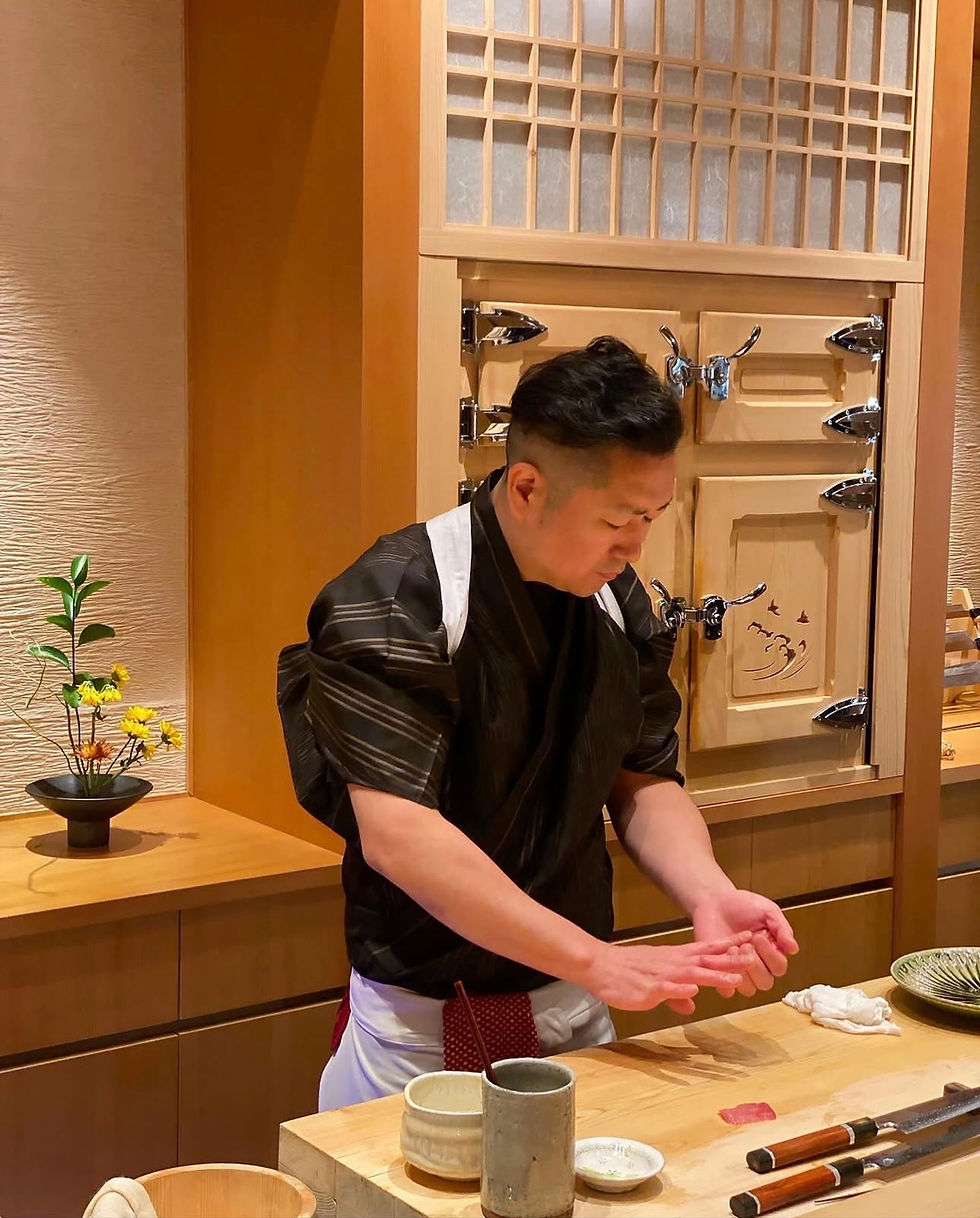
At Sushi Ayumu by Masa Ishibashi, that chef-led perspective is central to the experience. A serious Japanese menu should feel authored in this way, not designed by committee or built around social-media spectacle.
There is, of course, room for modern expression. Imported ingredients, local produce and contemporary presentation can all sit comfortably within an elevated Japanese meal. The trade-off is clarity. If a garnish, sauce or imported luxury ingredient overwhelms the fish, the cooking has shifted from interpretation to distraction.
Judging Value Beyond the Price
Premium tasting menus require a substantial investment, and diners are entitled to assess value carefully. Yet value is not the same as quantity. It is found in ingredient sourcing, technical skill, the number of considered decisions behind each course and the quality of the setting in which it is served.
A menu may be expensive and still feel incomplete if the pacing is careless, the room is inattentive or the chef relies too heavily on recognisable luxuries. Equally, a concise menu can feel generous when each piece is beautifully chosen and served with purpose.
For some guests, the counter is the essential experience because it offers direct contact with the chef’s work. Others will value a private room, where conversation and celebration take precedence. Neither format is automatically better. The right choice depends on whether the occasion calls for observation, privacy or a more formal style of hospitality.
Beverage pairing deserves the same thoughtful consideration. Sake can sharpen, soften or extend a flavour, but it should not be treated as a compulsory supplement. Wine, tea and non-alcoholic pairings can be equally persuasive when selected with the menu’s changing temperatures and textures in mind. A good team guides rather than pressures.
The Lasting Test of a Fine Meal
The most successful Japanese tasting menus do not leave diners recalling only the rarest ingredient. They remember a sequence of precise impressions: the warmth of the rice, the clean savour of a bowl of soup, a piece of fish that needed nothing more, and the sense that every course arrived when it should.
That is the lasting standard. Choose a menu that values judgement over display, and allow enough time at the table for the details to reveal themselves.



Comments