Why Sushi Rice Matters More Than Fish
The first thing most guests notice in sushi is the fish. The first thing a sushi chef judges is the rice (a.k.a. shari). That gap in perception explains why sushi rice matters so much. Beautiful tuna may catch the eye, but if the rice is too firm, too wet, under-seasoned or served at the wrong temperature, the entire piece falls out of balance.
In serious sushi, rice or shari is not a backdrop. It is the foundation. It carries the seasoning, sets the texture, and determines how each piece meets the palate. Fish may provide character, but rice gives sushi its structure, rhythm and finish.
Why sushi rice matters in every piece
Sushi is often described as a celebration of seafood, yet the word itself points to seasoned rice. That matters. Rice is the element that turns sliced fish into sushi rather than sashimi. It does more than hold ingredients together. It frames flavour.
A well-made piece should arrive as one composed bite. The rice should be tender but defined, lightly warm, gently seasoned, and shaped with enough precision to hold its form until the moment it is eaten. If it crumbles too soon, the texture is messy. If it is packed too tightly, the bite feels heavy and mechanical. Neither result serves the fish.
This is where craft becomes visible to the diner, even if only subconsciously. You may not name the fault at once, but you will feel it. Sushi that looks immaculate can still seem flat if the rice lacks life.
The role of texture
Texture is one of the clearest reasons why sushi rice matters. Good sushi rice should have cohesion without gumminess. Each grain should remain distinct enough to create lightness, yet the mound should still hold together under the topping.
That balance is delicate. Rice that is overcooked loses definition and becomes pasty. Rice that is undercooked resists the bite and distracts from the topping. Even a small error changes the experience. With nigiri especially, the goal is not simply softness but controlled softness.
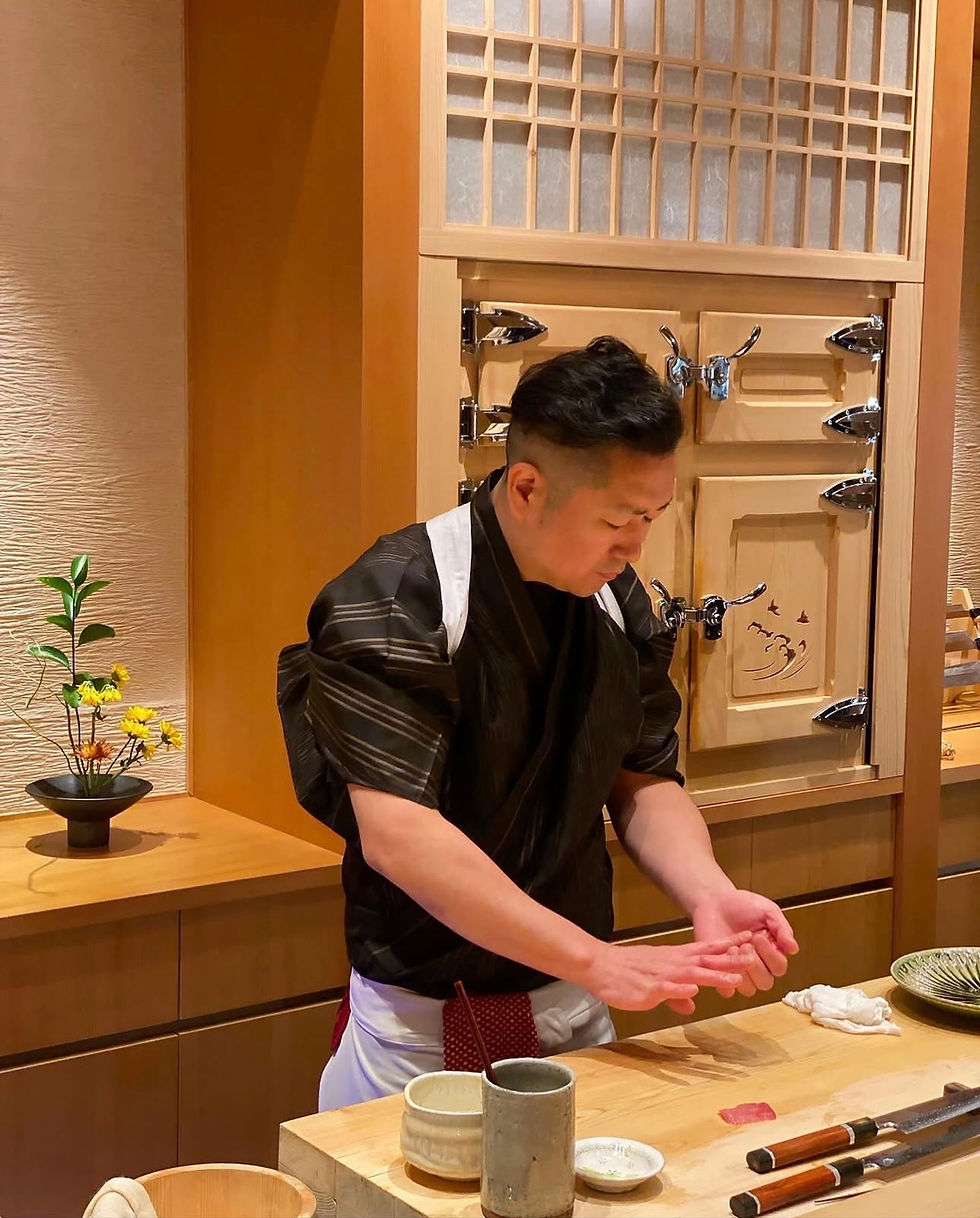
There is also the matter of pressure. Shaping rice by hand is not a theatrical gesture. It affects the density of the piece and the way air is kept within the rice. Too much pressure produces a compact, dull mouthfeel. Too little and the piece lacks integrity. A chef adjusts this according to the topping, because a richer fish and a leaner fish do not sit on rice in quite the same way.
Seasoning is not an afterthought
The seasoning of sushi rice is often reduced to vinegar, but the reality is finer than that. The blend of vinegar, sugar and salt must support the fish without pulling attention away from it. The rice should taste complete on its own, yet never aggressive.
This is where restraint matters. Excess sweetness can flatten delicate seafood. Too much vinegar can sharpen the profile to the point that subtler flavours disappear. Too little seasoning and the piece tastes vague, as though something has been omitted.
Different chefs favour different balances. That is part of authorship. One may lean towards a cleaner, brighter acidity. Another may seek roundness and depth. Neither approach is automatically superior. What matters is harmony between the rice, the fish, and the style of service.
Temperature changes everything
One of the less discussed answers to why sushi rice matters is temperature. Rice should not be cold in the way refrigerated takeaway rice often is. Nor should it be hot. Proper sushi rice is usually served around body temperature or slightly warmer, which allows it to feel supple and aromatic.
Cold rice tightens and dulls. Its texture becomes firmer, and the seasoning recedes. The fish above it may also seem more separate from the whole. When the rice is held at the correct temperature, the piece feels integrated. The fish relaxes on the palate, and the seasoning opens more naturally.
This is one reason high-quality dine-in sushi can feel notably different from sushi eaten much later. Time and temperature are unforgiving. Rice is at its best within a narrow window.
Rice creates balance, not just bulk
There is a common misunderstanding that the rice exists mainly to make sushi filling. In refined sushi, the opposite is true. The rice moderates richness, supports minerality, carries acidity, and gives contrast to soft, oily or delicate toppings.
Take a rich cut of toro. Without properly seasoned rice, it can feel almost too luxurious, with nowhere for the palate to reset. The rice provides that counterpoint. With white fish, rice contributes lift and definition, helping subtle flavour feel more intentional. With eel or marinated toppings, it keeps sweetness and savouriness from becoming heavy.
The ratio also matters. Too much rice overwhelms. Too little leaves the topping exposed, with no proper base. The chef is constantly managing proportion so that the bite lands as one thought rather than several separate ingredients.
Why great fish cannot rescue poor rice
Premium seafood is expensive, and diners often assume it is the decisive measure of quality. It is certainly crucial, but it cannot compensate for poor rice. Exceptional fish placed on mediocre rice becomes a compromised piece. The fish may still be recognisably fine, but the sushi itself is diminished.
This distinction matters in any serious restaurant. Ingredient quality is only one part of excellence. Technique, timing and seasoning complete it. Rice reveals whether a kitchen understands sushi as craft or simply as assembly.
That is why experienced diners often judge a sushi counter early, sometimes from the first bite of a simple nigiri or even from the plain rice itself. Rice leaves nowhere to hide. Its quality reflects discipline.
The quiet signature of the chef
Fish sourcing can be discussed in obvious terms - origin, season, fat content, cut. Rice is more discreet. Yet it is often where a chef's identity is most clearly expressed.
Choice of rice variety, polishing, water ratio, resting time, seasoning blend, fanning technique, holding temperature and shaping pressure all influence the final result. None of these decisions is random. Together they create a house style.
In a chef-led restaurant such as Sushi Ayumu by Masa Ishibashi, that attention is not decorative. It is part of what gives the meal coherence. Guests may arrive expecting beautiful fish, and rightly so. What often lingers, though, is the precision of the whole piece - how effortlessly it held together, how lightly it sat, and how complete it tasted.
Learning to notice the difference
You do not need technical training to recognise good sushi rice. Start with a few simple observations. Does the rice feel lively or heavy? Is it seasoned enough to be interesting, but not so much that it dominates? Does it hold together until the bite, then release cleanly? Is it at a pleasant temperature? Most importantly, does it make the fish taste better?
When the answer is yes, the sushi feels composed. Nothing fights for attention. The piece arrives, lasts a moment, and disappears with clarity.
That is the real lesson in why sushi rice matters. It is not a secondary ingredient waiting behind the headline act. It is the element that allows sushi to become more than fine fish on rice. Once you notice it, you begin to understand the chef more clearly, and you are unlikely to settle for careless rice again.



Comments