Private Dining Planning Guide for Refined Events
A memorable private dinner rarely announces its effort. The room feels settled, the meal arrives at the right pace, and every guest understands why they were invited. This private dining planning guide is designed for hosts who want that sense of quiet assurance, whether the occasion is a client dinner, a milestone celebration or a gathering of close friends.
Begin with the purpose of the table
Before choosing a date or discussing a menu, decide what the evening needs to achieve. A dinner for prospective clients should allow space for conversation and discretion. A birthday may call for a little more ceremony. A family celebration may need a flexible pace, particularly when guests span generations.
This decision shapes every later choice: the room, guest count, menu format, seating plan and timing. It also prevents a common mistake - treating a private dinner as simply a restaurant booking with more people. It is a hosted experience, and the host’s intention should be felt without being over-explained.
Consider the balance between occasion and formality. A highly structured evening can be ideal for a professional gathering, but may feel stiff for old friends. Conversely, an open-ended evening can be warm and relaxed, yet less suitable when guests have onward commitments. There is no universal formula; the right format depends on the people at the table.
Build the guest list around the room
A private room offers something a main dining room cannot: attention without interruption. That advantage is strongest when the guest list is purposeful. Invite people who will be comfortable together, and avoid allowing numbers to rise simply because the space permits it.
Ask the venue about the room’s ideal capacity rather than its maximum capacity. A room set for twelve may technically hold sixteen, but the difference can affect comfort, service access and conversation. The best private dinners leave enough room for guests to settle, for dishes to be presented properly and for service to remain almost unnoticed.
Plan the seating, not just the numbers
Seating arrangements matter most when guests do not know one another well. For a business dinner, place hosts where they can guide conversation naturally, rather than grouping all senior guests at one end. For a celebration, consider personalities as carefully as relationships. The most talkative guest does not always belong beside the quietest.
Round tables encourage group discussion, while a long table creates a more formal rhythm and often suits a chef-led meal. If there is a guest of honour, decide whether their place should be visually central or simply among friends. Subtlety is usually more elegant than ceremony for its own sake.
Choose a menu with confidence and care
Japanese dining rewards thoughtful simplicity. A private menu should feel curated, not overloaded. Rather than trying to accommodate every possible preference with too many choices, work with the restaurant to create a progression that reflects the occasion and the season.
For an intimate group, an omakase-style experience can create a strong shared narrative. Each course arrives as part of a considered sequence, allowing guests to experience the chef’s judgement and the quality of the ingredients without needing to make repeated decisions. This is particularly effective for food-focused guests and celebrations where the meal itself is central to the evening.
For client dinners or groups with varied familiarity with Japanese cuisine, a more defined menu may be the better choice. It gives hosts clarity in advance and can make guests feel more at ease. A combination of refined seasonal small dishes, sushi and sashimi selections, a warm course and a composed finish offers variety without losing direction.
Handle dietary requirements early
Dietary requirements should be collected when guests confirm attendance, not in the final days before the meal. Ask specifically about allergies, intolerances, vegetarian or vegan preferences, pregnancy considerations and foods guests do not eat for religious or personal reasons.
Share this information with the restaurant clearly and early. It is not only a matter of courtesy; it allows the kitchen to protect the integrity of the menu while planning appropriate alternatives. Last-minute substitutions are sometimes possible, but they can disrupt the intended flow and may not offer the same level of choice.
The same principle applies to drinks. Sake can bring delicacy and dimension to sushi, while Champagne, mineral-driven white wine or restrained non-alcoholic pairings may suit a broader range of palates. A drinks pairing creates a more guided occasion, but a well-chosen selection served by the bottle may be preferable when conversation is the priority.
Give the evening a measured rhythm
Private dining should feel unhurried, not indefinite. The most successful events have a clear beginning, a generous middle and an easy close. Share the arrival time with guests, then build in a short welcome period before everyone is seated. This gives late arrivals a little margin and allows the table to come together without delay.
For a working dinner, two to two-and-a-half hours is often sufficient. For a celebration, three hours may be more appropriate, particularly with a tasting menu or paired drinks. If speeches, a cake or a gift presentation are planned, tell the restaurant in advance so service can pause at the right moment.
Avoid filling every minute. Guests need quiet intervals between courses, especially after the opening energy of arrival. A thoughtful dining room knows when to allow conversation to lead and when to reintroduce the meal. The host can support that rhythm by keeping formal remarks short and resisting the urge to turn dinner into a packed programme.
Confirm the practical details with precision
A refined experience depends on details that guests may never see. Confirm the final attendance number by the venue’s deadline, understand any minimum spend or cancellation terms, and clarify whether a service charge is included. If you are hosting on behalf of a company, establish the payment process before the evening rather than at the table.
Discuss arrival arrangements, coats, accessibility and any special requests in one clear exchange. If flowers, place cards or a discreet celebration cake are appropriate, ask what the room can accommodate. A private room often needs very little decoration. One restrained gesture is generally more effective than several competing ones.
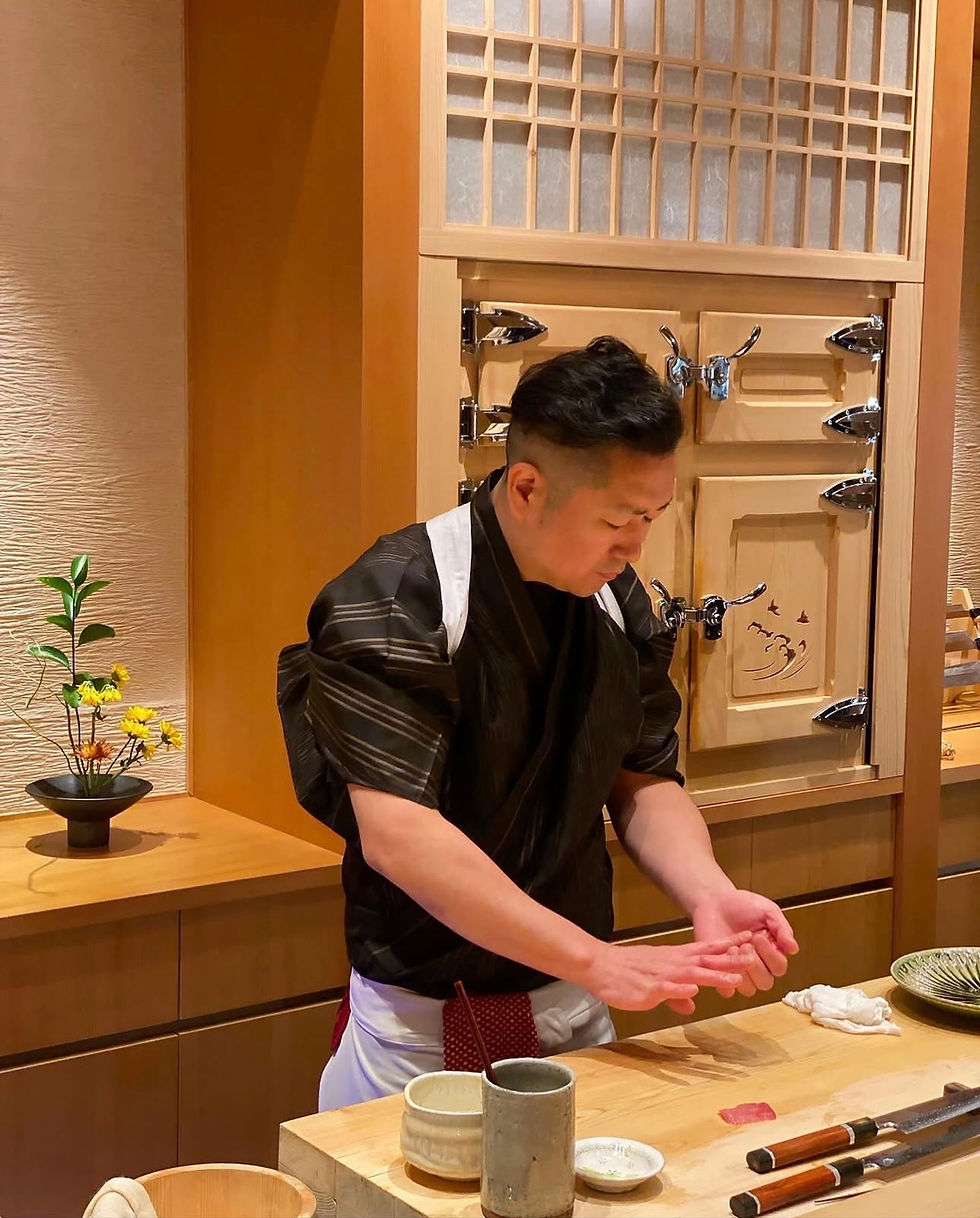
For a chef-led setting such as Sushi Ayumu by Masa Ishibashi, the most valuable request is often the simplest: allow the team to guide the experience. Clear information about your group and occasion gives the kitchen and service team the context they need to make thoughtful decisions.
Communicate with guests elegantly
An invitation should set the tone before anyone arrives. Include the date, arrival time, location, dress expectation if relevant, and a request for dietary information. For business guests, a concise personal message is usually more appropriate than an elaborate invitation. For a celebration, warmth is welcome, but clarity still matters.
Send a short confirmation a few days beforehand. It is a considerate way to reduce no-shows and collect any final dietary details. If the evening has a particular purpose, such as marking a retirement or welcoming an overseas colleague, mention it lightly. Guests should arrive informed, not briefed.
Let the room do its work
The host’s role is not to manage every moment. Welcome each guest, make introductions where needed, and trust the setting, food and service to carry the evening forward. A private dinner becomes memorable when guests feel looked after rather than orchestrated.
Choose the people carefully, give the meal the attention it deserves, and leave enough space for conversation to become the occasion itself.



Comments