12 Sushi Counter Etiquette Tips That Matter
A sushi counter can feel intimate in a way few dining rooms do. You are not simply waiting for plates to arrive. You are seated within sight of the chef’s hands, the fish, the rice, the pace of service, and the quiet decisions that shape the meal. That is why sushi counter etiquette tips are less about formality for its own sake and more about understanding how to enjoy the experience properly.
For many guests, the uncertainty comes from not wanting to do the wrong thing. The good news is that good manners at the sushi counter are not theatrical or rigid. They are discreet. They show respect for the chef, consideration for other guests, and attention to the food at the moment it is served.
Sushi counter etiquette tips before the first piece arrives
The experience begins before you eat. If you have booked a counter seat, arrive on time. In a refined sushi setting, timing affects more than your own table. The chef may be pacing service across the counter, particularly during omakase, and a late arrival can interrupt that rhythm.
Strong perfume or aftershave is best avoided. Sushi relies on delicate aroma as much as flavour, and heavy scent can interfere with your own meal as well as someone else’s. This is one of the least discussed rules, yet one of the most appreciated.
If there are dietary restrictions, allergies, or ingredients you do not eat, mention them clearly when booking if possible, and again politely on arrival if needed. Last-minute changes are harder to accommodate at a sushi counter than in many other restaurants because preparation is often highly precise and ingredient-led.
It also helps to know what kind of meal you are having. Omakase invites trust in the chef’s sequence and judgement. À la carte gives you more choice, but the same principles of courtesy still apply.
How to sit, speak and engage at the counter
A sushi counter is close by design. That does not mean it is casual in the usual sense. Keep bags, phones, and personal items tucked away neatly. The counter should feel clear and composed, not crowded.
Conversation is welcome, but volume matters. A lively exchange is perfectly fine. A loud running commentary across the room is not. The best counter atmosphere tends to be warm, attentive, and measured.
Speaking with the chef can enhance the meal, especially if you are curious about a fish, a preparation, or the progression of the menu. The key is to read the moment. If the chef is plating several pieces in sequence or serving multiple guests at once, that is not the time for a long question. Short, thoughtful interaction is usually appreciated. Demanding performance is not.
Photography depends on the restaurant, the pace of service, and the moment. One discreet photograph may be acceptable in some settings. Repeated shooting with flash, extended filming, or delaying the next course for social media rarely is. The fish is at its best when eaten promptly.
Ordering with confidence
One of the most useful sushi counter etiquette tips is simply to let the room guide you. In a chef-led setting, ordering every item at once without regard for seasonality or progression can feel abrupt. If you are unsure, ask for guidance. A good chef or server can help shape a meal that moves with balance rather than excess.
If you choose omakase, commit to the spirit of it. That does not mean you lose all agency. You may state a genuine dislike or allergy in advance. But once the meal begins, frequent substitutions or comparisons to what another guest has received can undermine the experience.
With à la carte, pacing still matters. Ordering in stages is often wiser than filling the counter with too much food at once. Sushi is not improved by sitting. Rice changes temperature and texture quickly, and delicacy can be lost within minutes.
As for condiments, restraint is usually the right approach. If the chef has seasoned a piece already, adding more soy sauce or wasabi without tasting first can be a missed opportunity. Not because rules forbid it, but because the balance may already be complete.
Eating sushi properly without overthinking it
The ideal moment to eat sushi is soon after it is placed before you. This is especially true for nigiri. The rice is intended to be at a particular temperature and texture, and the fish is presented with that timing in mind. Letting several pieces accumulate while you continue a conversation is one of the easiest ways to diminish the meal.
Hands or chopsticks are both generally acceptable for nigiri, depending on the restaurant and your comfort. Sashimi is best eaten with chopsticks. If you use your hands for nigiri, do so neatly and with intention, not casually.
A common point of anxiety is soy sauce. If a nigiri piece needs any at all, the fish side - not the rice - should make contact lightly. Dipping the rice directly can cause it to absorb too much soy, fall apart, or overwhelm the seasoning. In many high-end settings, however, the chef has already applied the proper amount, so no dipping is needed.
Ginger is another area where guests often overdo it. It is best treated as a palate refresher between pieces, not a topping to place on the sushi itself. Used sparingly, it clears the way for the next flavour.
Wasabi is not a test of courage. More is not better. Some pieces are already balanced with it, and adding a large amount can flatten nuance rather than enhance it.
What to avoid at the sushi counter
There are certain habits that disrupt the experience more than diners realise. Rubbing disposable chopsticks together is one. It suggests they are cheap or splintered, which in a premium setting can read as discourteous. If chopsticks are provided, simply use them as they are.
Asking for every fish to be seared, covered in sauce, or altered beyond recognition can also miss the point of a serious sushi counter. Preferences do matter, and no good restaurant wants a guest to feel uncomfortable. But there is a difference between a thoughtful request and refusing the style of the restaurant altogether.
Avoid wearing impatience. Counter dining often has a deliberate tempo. The meal unfolds piece by piece for a reason. If you need a faster dinner, that is entirely understandable, but a sushi counter may not be the right format that evening.
And while sake, wine, or champagne can beautifully complement sushi, excessive drinking quickly dulls the meal. It also changes the atmosphere for those around you. Moderation tends to suit the setting.
The finer points of sushi counter etiquette tips
The most polished guests are not necessarily the ones who know the most terminology. They are the ones who pay attention. They notice whether the chef has seasoned a piece already. They understand when to ask a question and when to let the sequence continue. They are present.
It is also worth remembering that etiquette is not a costume. You do not need to perform expertise. If you are unfamiliar with a fish, ask. If you are unsure whether to use your hands, observe or enquire quietly. Sincerity is more elegant than pretending.
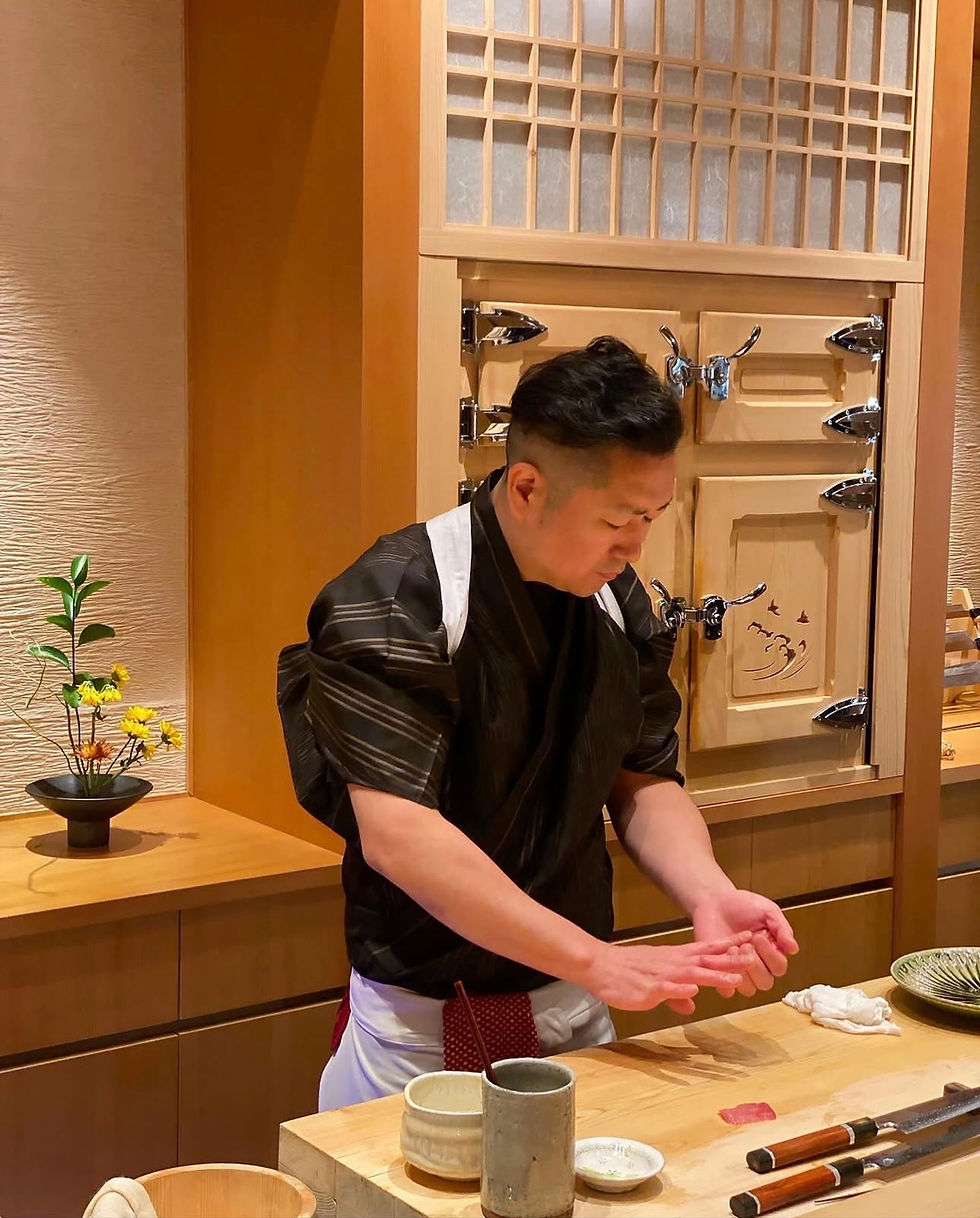
At a restaurant such as Sushi Ayumu by Masa Ishibashi, where the experience is shaped by authorship and precision, that attentiveness becomes part of the pleasure. The guest’s role is not passive, but it is refined. You meet the chef’s care with your own.
There is, of course, some flexibility. Different sushi restaurants have different levels of formality. Some welcome more conversation. Some are more relaxed about photographs. Some encourage broader experimentation with ordering. Etiquette is not identical everywhere. The underlying principle, however, remains stable: respect the food, respect the craft, and respect the shared space.
Paying, thanking and leaving well
The end of the meal deserves the same composure as the beginning. If you have enjoyed a particular piece or aspect of the service, a brief and genuine word of thanks is enough. Effusive speeches are unnecessary. Quiet appreciation carries well in this setting.
If gratuity is customary where you are dining, handle it discreetly. The same goes for settling the bill. A sushi counter works best when the close of the meal feels smooth rather than transactional.
When you leave, leave promptly but not abruptly, especially if another seating is due. The final impression should mirror the rest of the experience - calm, considered, and gracious.
The best sushi counter etiquette tips are not really about rules. They are about being fully present for something precise and fleeting. When you bring attention, restraint, and curiosity to the counter, the meal gives more back.



Comments