What Defines a Premium Sushi Restaurant?
Updated: May 20
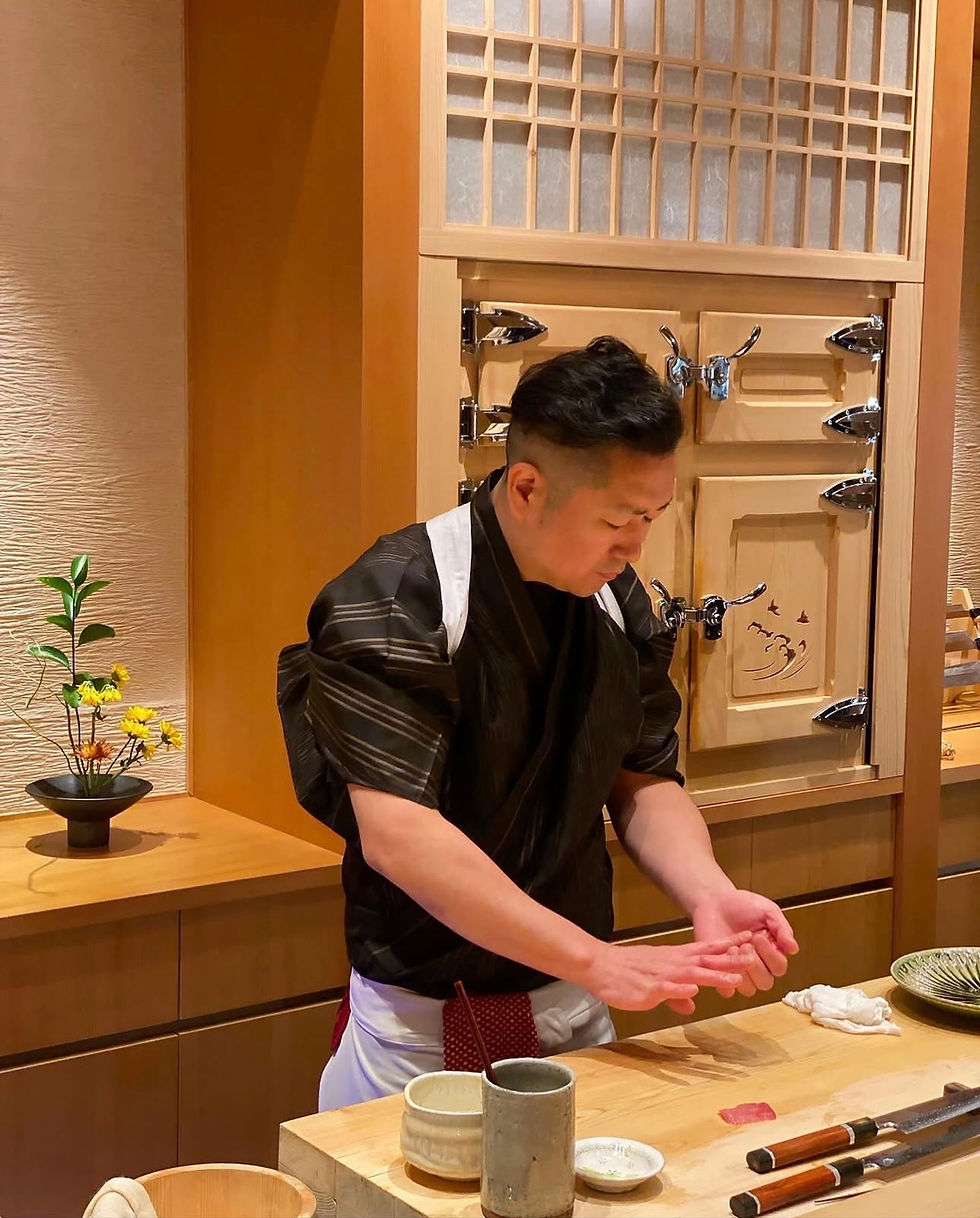
A counter seat can tell you almost everything. The pace of service, the temperature of the rice, the restraint of the menu, the confidence of the chef - these details separate a premium sushi restaurant from one that simply charges more.
For diners who value craft, the distinction matters. Premium sushi is not a matter of decoration or fashion. It is a discipline built on ingredient judgement, technical precision and hospitality that feels composed rather than performative. The best restaurants make that standard look effortless. It rarely is.
What a premium sushi restaurant should get right
At the highest level, sushi is an exercise in balance. Fish alone is not enough. Even exceptional tuna or uni can feel flat if the rice is poorly seasoned, if the cut lacks precision, or if the sequence of the meal feels careless. A premium sushi restaurant understands that excellence lives in the relationship between parts.
Rice is often the clearest marker. It should be properly seasoned, gently warm and formed with purpose rather than pressure. If the rice is too cold, too dense or too sharp with vinegar, the entire piece loses harmony. Guests do not always identify the fault immediately, but they feel it.
Then there is sourcing. Premium restaurants tend to work with a narrower, more deliberate range of ingredients instead of trying to offer everything. That restraint is a strength. Seasonality matters. So does provenance. Working with exclusive Suppliers that only supply to the best restaurants is invaluable. The point is not to impress with excess, but to serve fish at the moment it is most expressive.
Knife work also reveals standards quickly. The way a chef cuts hirame is not the way they should approach chutoro. Texture changes from species to species, and premium sushi respects that. A piece should feel considered before it ever reaches the plate.
Premium sushi restaurant standards beyond the fish
Many diners focus on the produce first, and understandably so. Yet the setting, timing and attentiveness around the meal often determine whether the experience feels genuinely elevated.
Service in a premium room should be present but never intrusive. Tea is topped up without fuss. Courses arrive with rhythm. Guests who know sushi well are not overexplained to, while those less familiar are guided with confidence and tact. That balance is harder to achieve than many restaurants admit.
Ambience matters too, though not in the obvious way. Premium does not have to mean theatrical. In fact, the finest rooms often feel restrained. Clean lines, measured lighting and a sense of calm allow the food to remain central. When a restaurant leans too heavily on spectacle, it can suggest insecurity rather than quality.
The menu design is another signal. A tightly edited offering usually reflects conviction. There may be a distinction between omakase, à la carte selections and sashimi presentations. There may also be considered options for private dining, provided the standards remain intact across each format. That consistency is what serious diners notice.
Why authenticity is more than appearance
Authenticity in Japanese dining is often reduced to surface cues - a minimalist interior, Japanese phrases on the menu, imported ceramics. None of those elements are meaningless, but none of them are enough.
A premium sushi restaurant expresses authenticity through method. That includes respect for seasonality, attention to rice, appropriate use of wasabi, control of soy, and an understanding that not every piece requires embellishment. It also includes knowing when adaptation is sensible. A restaurant serving an urban British audience may refine pacing, beverage pairings or reservation structure without compromising culinary integrity.
This is where chef authorship becomes especially important. When a restaurant is led by a chef with a clear point of view, the experience tends to feel more coherent. Choices around menu composition, sourcing and service are not random. They reflect training, judgement and a standard that can be felt throughout the room.
For discerning guests, that coherence creates trust. You are not simply ordering sushi. You are placing yourself in the hands of a kitchen that knows why each detail matters.
The role of omakase, à la carte and occasion dining
Not every premium meal needs to take the same form. One of the marks of a strong restaurant is its ability to serve different occasions without diluting its identity.
Omakase remains the clearest expression of a chef-led approach. It allows the kitchen to control sequence, temperature and balance across the meal. For guests who want the most complete picture of a restaurant's standards, it is often the right choice.
À la carte dining has its own value. It suits business dinners, couples who know their preferences, and regular guests returning for specific favourites. In a premium setting, à la carte should never feel secondary. It should carry the same care, simply with more flexibility.
Private dining introduces another consideration. A separate room can offer discretion and comfort for celebrations, client hosting or small group occasions. Yet privacy alone does not make the experience premium. The room must still receive the same culinary focus as the main dining space. Otherwise, exclusivity becomes cosmetic.
Takeaway presents an even more delicate trade-off. Sushi can travel well in some formats and poorly in others. A thoughtful restaurant recognises this and builds its takeaway offer accordingly. Simpler nigiri, maki and selected sashimi may hold their integrity. More temperature-sensitive or timing-dependent pieces may be better reserved for dine-in service. Premium means knowing the difference rather than promising everything.
How discerning diners judge value
Price is part of the conversation, but it is rarely the whole story. Guests choosing premium sushi are not simply paying for rarity. They are paying for judgement.
That judgement appears in sourcing, of course, but also in editing. A restaurant that refuses to overcomplicate a plate often shows greater confidence than one that adds garnish, truffle or unnecessary sauces to signal luxury. Restraint can be expensive because it leaves nowhere to hide.
Value is also measured in reliability. If a restaurant delivers a composed experience on a Wednesday business supper as well as on a Saturday celebration, guests remember. If reservation handling is smooth, if the room feels polished, if takeaway is packed with care, the premium promise extends beyond the plate.
This is why affluent diners often return to places that feel consistent rather than merely fashionable. Novelty has its appeal. Trust has more staying power.
Choosing the right premium sushi restaurant
For guests deciding where to book, a few questions are worth keeping in mind. Is the restaurant chef-led, or is the concept doing most of the work? Does the menu appear curated or inflated? Is the dining room designed for comfort and focus, or mainly for photographs? These are not superficial distinctions. They often predict the quality of the meal.
It is also worth considering what kind of evening you want. A quiet counter experience, a polished dinner for two, a business meal with discretion, or an elegant private room each ask for something slightly different. The best restaurants understand these differences and accommodate them without losing their centre.
Sushi Ayumu by Masa Ishibashi reflects that approach well - refined dining, considered reservations, private room hospitality and takeaway that respects the standards of the kitchen. That breadth is valuable when it is anchored by genuine craft.
Ultimately, a premium sushi restaurant is defined by discipline made visible. Not loud luxury. Not an overloaded menu. Not trend-driven presentation. The real signal is care - in the rice, in the cut, in the timing, in the room, and in the quiet confidence that runs through the entire experience.
When those elements align, dinner feels less like a transaction and more like being expertly looked after. That is usually the reason guests return.



Comments