Nigiri vs Sashimi Difference Explained
Order omakase or study a sushi menu for the first time, and one question appears almost immediately: what is the nigiri vs sashimi difference? The distinction is simple once you see it, yet it matters. It affects texture, balance, pacing, and even how a chef intends a piece to be eaten.
At a refined sushi counter, these are not interchangeable terms. Nigiri and sashimi may feature the same fish, but they offer very different experiences on the palate. Understanding that difference helps you order with greater confidence and appreciate the craft behind each plate.
Nigiri vs sashimi difference at a glance
The clearest nigiri vs sashimi difference is this: nigiri includes rice, while sashimi does not. Nigiri is a formed piece of vinegared sushi rice topped with seafood, often finished with a touch of wasabi or a light brush of nikiri. Sashimi is sliced raw fish or seafood served on its own, without rice.
That sounds straightforward, but the contrast runs deeper than ingredients alone. Nigiri is about harmony between rice and topping. Sashimi is about direct, unfiltered appreciation of the ingredient itself.
What nigiri is
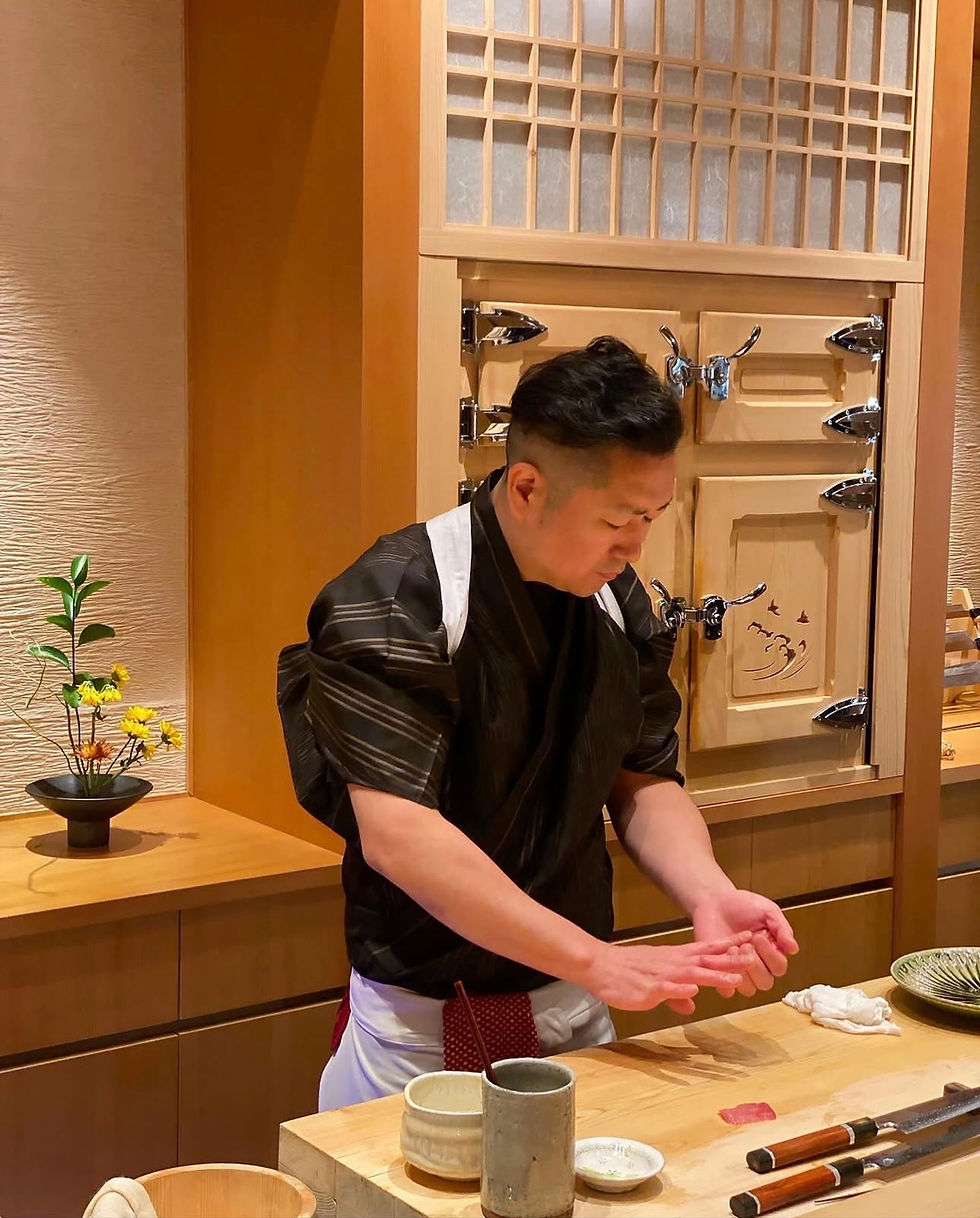
Nigiri is one of the most recognised expressions of sushi. The word refers to a hand-formed mound of seasoned rice, shaped with care and topped with fish or seafood. A proper piece looks spare, almost minimal, yet it requires precision. The rice must hold together lightly, the topping must sit neatly, and the proportion between the two must feel exact.
In many cases, the chef adds a small amount of wasabi between the fish and the rice. Some pieces are served as gunkan, if the topping is soft or difficult to secure, such as eel or uni. Others may be brushed with soy-based glaze, citrus, or a subtle seasoning that means extra soy is unnecessary.
Nigiri is not simply fish placed on rice. It is a composed bite. The rice temperature, seasoning, pressure of the hand, cut of the fish, and timing of service all matter.
Why rice changes everything
Rice is not a neutral base. Sushi rice has acidity, warmth, and structure. It softens richness, balances between sourness and sweetness, and gives the bite a measured shape. Fatty tuna on its own feels lush and expansive. Fatty tuna as nigiri becomes more balanced, because the rice introduces lift and restraint.
This is why nigiri often feels more complete as a single mouthful. The chef is composing flavour, not only presenting fish.
What sashimi is
Sashimi is sliced raw fish or seafood served without rice. In the best settings, it is a study in purity. There is less mediation between the ingredient and the guest, so quality and knife work are even more exposed.
A sashimi course may include tuna, sea bream, salmon, yellowtail, scallop, squid, or other seasonal seafood. It is often accompanied by garnishes such as shredded daikon, shiso, fresh wasabi, or a small amount of soy. These are there to support the fish, not distract from it.
Because there is no rice, the texture and flavour of the seafood are more immediate. You notice firmness, oil content, minerality, sweetness, and finish with greater clarity. If nigiri is a composed dish, sashimi is a direct expression of the ingredient.
The role of knife work in sashimi
With sashimi, slicing technique matters enormously. The angle, thickness, and direction of the cut influence texture as much as flavour. A firmer fish may be sliced differently from a softer, fattier one. Squid can be scored to improve tenderness. Tuna may be cut thick for depth or finer for elegance.
This is one reason sashimi often appeals to diners who want to understand fish more closely. There is very little to hide behind.
Nigiri vs sashimi difference in taste and texture
The easiest way to understand the nigiri vs sashimi difference is to think in terms of balance versus purity.
Nigiri delivers contrast. You have the gentle warmth of rice, the coolness of the topping, the faint acidity of seasoning, and the texture shift between grain and flesh. A good piece feels layered even when it looks simple.
Sashimi is more concentrated. The fish occupies the full frame. Without rice, its natural character becomes more pronounced. Rich fish taste richer. Lean fish feel cleaner and more mineral. Shellfish show more sweetness.
Neither is inherently better. It depends on what you want from the meal. If you are in the mood for structure and balance, nigiri often satisfies more deeply. If you want focus and clarity, sashimi is usually the stronger choice.
Which is more traditional?
Both have deep roots in Japanese cuisine, but they belong to slightly different dining experiences. Sashimi reflects the broader Japanese reverence for pristine ingredients and precise knife work. Nigiri emerged as a more specific sushi form, where seasoned rice became central to the experience.
In modern dining, they often appear together, especially in omakase or tasting formats. A chef may begin with sashimi to introduce the quality and seasonal character of the seafood, then move into nigiri to show how that same ingredient behaves in relation to rice.
That progression makes sense. First, the ingredient in its pure state. Then, the ingredient as part of a composed bite.
Common misunderstandings
One of the most common misconceptions is that sashimi is simply "sushi without rice". That shorthand is understandable, but imprecise. In a strict sense, sushi refers to the vinegared rice itself and the dishes built around it. Sashimi stands apart.
Another misunderstanding is that all raw fish served in Japanese restaurants is sashimi. Not always. If it comes over seasoned rice, it is nigiri. If it is rolled with rice and nori, it is a maki roll. The fish may be similar across dishes, but the form changes the classification.
There is also a practical assumption that sashimi is always lighter than nigiri. Sometimes it is. Yet richness depends on the ingredient. Several slices of otoro sashimi can feel more indulgent than a few pieces of lean white fish nigiri. Context matters.
How to choose between nigiri and sashimi
If you are deciding what to order, the best choice depends on appetite, occasion, and curiosity.
Nigiri is often ideal when you want a rounded sushi experience. It feels more substantial because of the rice, and it showcases the chef's skill in seasoning and proportion. For many diners, it is also the more approachable choice, especially if they are still building confidence with raw seafood.
Sashimi suits those who want to focus on ingredient quality above all else. It can be an elegant place to start a meal, particularly if you are interested in comparing different fish or enjoying a more restrained first course. It also works well if you prefer to avoid rice, though that should not be the only reason to order it. The appeal lies in precision, not deprivation.
For a fuller experience, both can belong on the same table. Begin with sashimi to taste the fish cleanly. Follow with nigiri to enjoy how rice reshapes the same flavours.
What chefs pay attention to
From a chef's perspective, nigiri and sashimi demand different decisions. With nigiri, attention goes to rice temperature, grain texture, pressure of shaping, and how the topping drapes over the rice. A piece that is packed too tightly feels heavy. Too loose, and it collapses before it reaches the palate.
With sashimi, the chef focuses even more on the condition of the fish and the exact cut. Since there is no rice to bring acidity or structure, the fish must stand entirely on its own. That can make sashimi both more revealing and less forgiving.
This is why excellent sushi counters often treat simplicity with such seriousness. The fewer the elements, the more each one matters.
Ordering with confidence
If you are dining in a premium Japanese restaurant and feel unsure, there is no need to overcomplicate it. Asking for nigiri means you want rice and fish together. Asking for sashimi means you want sliced seafood without rice. Beyond that, trust the chef or server to guide you towards seasonal choices and sensible pacing.
If you enjoy a curated meal, an omakase format is often the best setting in which to understand both forms properly. You can experience how the same species may be served first as sashimi and later as nigiri, each highlighting something different. At a restaurant such as Sushi Ayumu by Masa Ishibashi, that distinction is part of the pleasure.
The more you eat, the less the question becomes which one is correct. Nigiri and sashimi are not rivals. They are two ways of honouring the same ingredient - one through composition, the other through clarity. Knowing that makes the menu feel quieter, and far more interesting.



Comments