A Guide to Sushi Course Menus
- adminayumu
- Jun 15
- 6 min read
A sushi counter reveals itself course by course. What appears simple on the plate is often highly structured behind the scenes, with temperature, sequencing, texture and pace all carefully considered. This guide to sushi course menus is designed for diners who want to understand that structure and enjoy it with confidence.
For many guests, a course menu feels more formal than ordering à la carte. In practice, it is often the clearest way to experience a chef’s point of view. Rather than choosing individual pieces in isolation, you are following a composed progression. The meal has rhythm. Richer bites are balanced by cleaner ones. Warm dishes set up cooler ones. Even the order of the fish matters.
What a sushi course menu is really designed to do
A well-judged sushi course menu is not simply a larger meal. It is a curated sequence. The chef considers seasonality, the condition of the fish that day, the ideal moment to serve each preparation, and the way one course affects the next. That is why the experience can feel unusually precise.
In a strong menu, the early courses often sharpen the palate rather than overwhelm it. You may begin with a small appetiser, a clear soup, or a composed dish that introduces the season. Sashimi may appear before nigiri, allowing you to taste a fish in a more direct form before rice enters the conversation. Grilled or steamed elements can add warmth and contrast. Nigiri tends to arrive later, when the chef can build momentum piece by piece.
This progression is not rigid. It depends on the restaurant, the style of service and the chef’s intent. Some menus lean minimalist and sushi-led from the outset. Others include more kaiseki influence, with cooked courses woven through the meal. Both approaches can be excellent. What matters is coherence.
Guide to sushi course menus by type
The most common distinction is between omakase and set-course dining, though the line can blur.
Omakase usually means placing yourself in the chef’s hands. The selection may shift daily, and the experience is often shaped in real time around the ingredients at their peak. This format tends to feel more intimate and more chef-led. It suits diners who value trust, seasonality and a certain degree of surprise.
A set-course menu is generally more defined in advance. It may still change with the market, but the structure is clearer and the pacing more predictable. For a business dinner, a celebration, or a first visit to a premium sushi restaurant, this can be especially comfortable. You know the framework even if the details vary.
There are also shorter tasting menus, which offer the discipline of a course format without the length of a full evening experience. These are ideal when you want refinement without committing to an extended meal. A longer menu, by contrast, allows the chef to create greater contrast and nuance, but only works if you are happy to settle in and let the meal unfold.
What to expect from the sequence
While every restaurant has its own style, certain patterns appear for good reason.
You may begin with sakizuke, a small opening bite that sets the tone. This is less about fullness than focus. It draws your attention to delicacy, season and restraint. Soup may follow, often to warm the palate gently. If sashimi appears early, it usually highlights clarity and texture before stronger flavours arrive.
Cooked dishes often serve a strategic purpose. A grilled fish, chawanmushi, or a lightly dressed seasonal plate can create depth without interrupting the flow. Then comes nigiri, often the centre of the meal. Here the chef controls far more than the topping. Rice temperature, pressure, wasabi placement, soy balance and serving order all become part of the experience.
The progression of nigiri itself is usually deliberate. Lighter white fish and shellfish may appear before richer cuts such as tuna belly. Silver-skinned fish can introduce brightness or salinity. Eel or a sweetened egg omelette may come towards the close. Some menus finish with miso soup or fruit, ending on calm rather than excess.
How to choose the right menu for the occasion
The best choice depends less on appetite than on intent. If you are entertaining clients, a well-structured set menu can provide assurance. It creates a polished framework and reduces decision fatigue. If you are dining as a couple and want a more immersive evening, omakase may feel more special because it invites attention and conversation.
Length matters. A shorter menu can still be serious and elegant, and may suit a weekday reservation. A longer format is better when the dinner itself is the event. Price, too, should be read as a reflection of ingredients, technique and pace, not simply quantity. A premium course menu is not expensive because it is filling. It is expensive because it is exacting.
If you have dietary restrictions, mention them when booking rather than at the counter. Some adjustments are straightforward. Others alter the architecture of the menu. The earlier the chef knows, the more considered the experience can remain.
Etiquette that improves the experience
Good sushi etiquette is quieter and simpler than many diners fear. The key is attentiveness.
Arrive on time, particularly for a counter seating. Course menus rely on timing, and a late arrival can disrupt both the meal and the room. If nigiri is served piece by piece, eat it promptly. Rice is at its best when it reaches you. Leaving pieces to sit too long changes the balance the chef intended.
Hands or chopsticks are generally both acceptable for nigiri, provided you are careful. Soy sauce, if offered, should be used sparingly. Many pieces are already seasoned. Adding too much can flatten the fish and dominate the rice. Ginger is best treated as a palate refresher between bites, not as a topping.
Conversation should match the room. Engaged, appreciative and measured is ideal. A premium sushi setting is not stiff, but it does reward a certain awareness. If you have questions, ask them. Genuine curiosity is welcome when it does not interrupt service.
Why the chef’s pacing matters
One of the least understood parts of a sushi course menu is pacing. At a high level, the chef is not merely sending food. He is managing temperature, concentration and memory.
A chilled sashimi course can sharpen your attention after a warm opening dish. A fatty piece of nigiri lands differently if it follows a clean white fish rather than another rich cut. Even a small pause between courses has value. It gives one taste time to clear before the next arrives.
This is why course menus often feel more satisfying than a large tray ordered all at once. Satisfaction comes from movement, not volume. You remember contrast. You remember escalation. You remember the point at which the meal became distinctly itself.
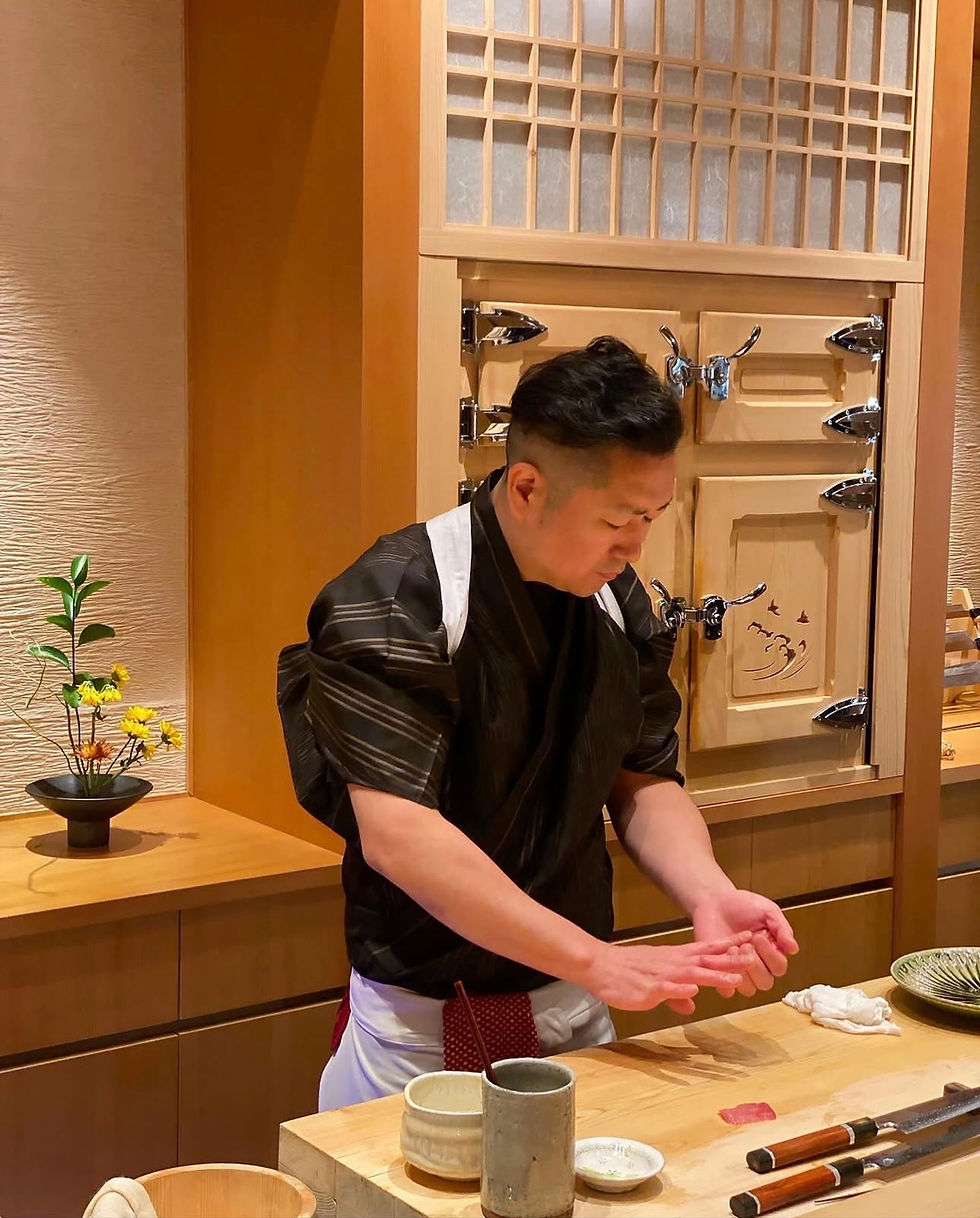
At Sushi Ayumu by Masa Ishibashi, that sense of authorship is central to the pleasure. A chef-led experience is not about ceremony for its own sake. It is about being guided with precision.
Common mistakes first-time diners make
The most common mistake is treating the menu as a test. It is not. You do not need specialist knowledge to enjoy a serious sushi meal. Curiosity and attention are enough.
Another mistake is over-ordering around the course menu. If you have chosen a tasting experience, trust its scale. Adding extra items too early can distort the progression and leave later courses feeling heavier than intended. If you are still hungry at the end, that is the right moment to ask whether an additional piece is possible.
Some diners also focus too heavily on prestige ingredients. Toro, uni and caviar have their place, but luxury alone does not make a course memorable. Sometimes the most revealing bite is a restrained piece of squid, a perfectly judged mackerel, or an egg omelette that closes the meal with surprising grace.
How to read quality in a sushi course menu
Quality is not always loud. It often shows in discipline.
Look for a sense of balance across the menu rather than a parade of expensive ingredients. Notice whether cooked and raw elements support one another. Pay attention to the rice - its temperature, texture and seasoning tell you as much as the fish. Consider whether the meal feels composed from beginning to end, or whether it reads as a collection of attractive parts.
The best course menus leave room for restraint. Not every dish needs to impress in the same way. Some should calm the palate. Some should deepen it. Some should simply prepare you for what follows.
For the guest, that is the real value of understanding a sushi course menu. You begin to see the meal less as a series of individual bites and more as an expression of judgement. Once you notice that, choosing well becomes easier, and enjoying the experience becomes instinctive.
The finest sushi dinners do not ask you to perform expertise. They ask only that you arrive ready to pay attention.


Comments