Sushi Bar (Counter) vs Dining Room: Which to Choose?
Some evenings call for the quiet theatre of the counter. Others ask for a little more distance, a little more privacy, and room for conversation to unfold at its own pace. When guests weigh up sushi bar vs dining room, they are rarely choosing only a seat. They are choosing the kind of experience they want the meal to become.
In a serious Japanese restaurant, that distinction matters. Where you sit shapes what you notice, how you speak, what you order, and how directly you engage with the chef’s work. Neither option is inherently better. The right choice depends on the occasion, the company, and the style of evening you have in mind.
Sushi bar (counter) vs dining room: the real difference
At first glance, the choice seems simple. The sushi bar places you close to the craft. The dining room offers a more conventional restaurant setting. In practice, the contrast is more nuanced.
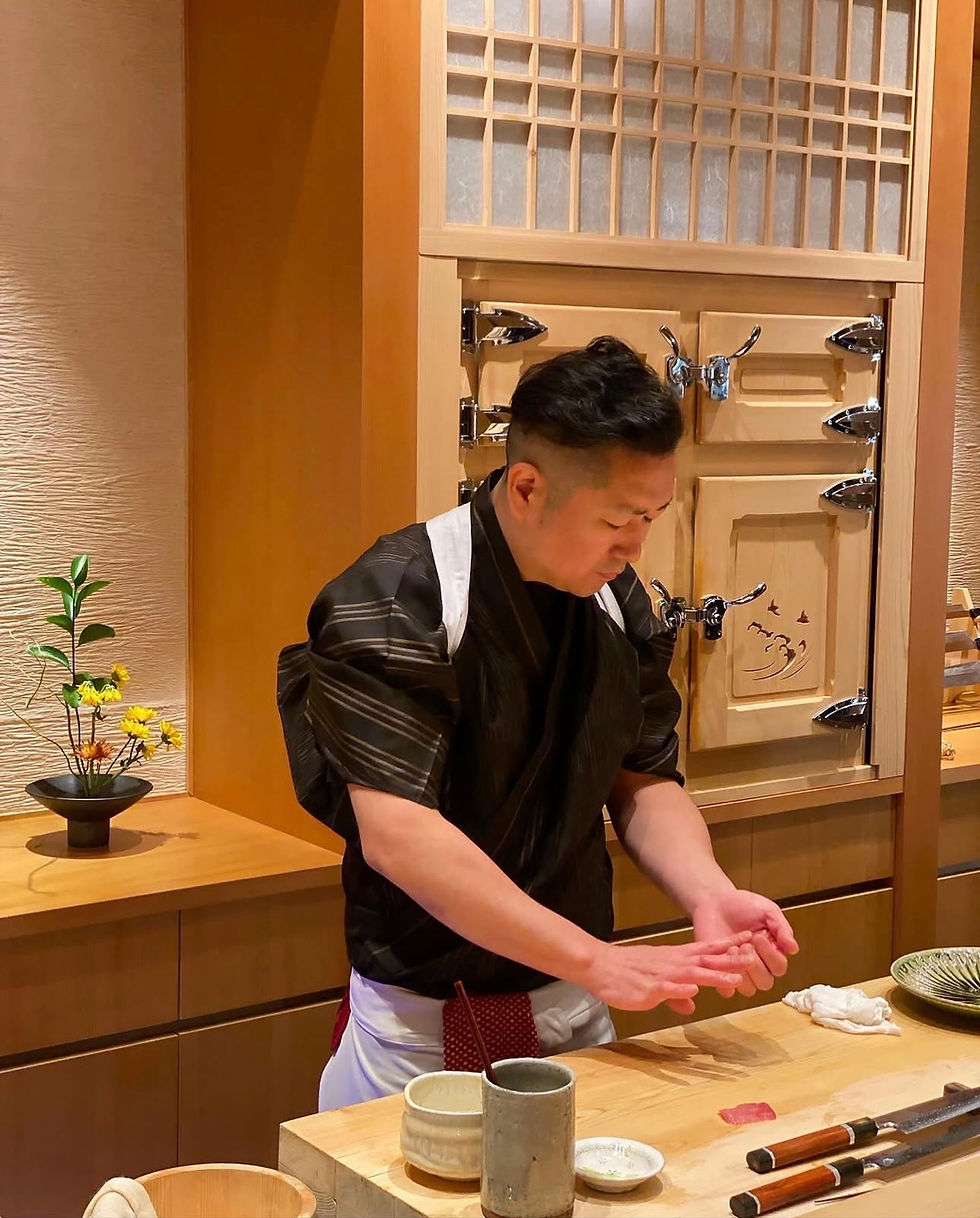
A seat at the counter is immersive. You are near the rhythm of service, the precision of each movement, the textures and colours of ingredients before they reach the plate. There is a certain immediacy to the experience. Courses often feel more alive because you see them take shape in real time.
The dining room creates a different kind of refinement. It gives the meal space. Conversation becomes more private, the setting more composed, and the pace often feels less exposed to the energy of the counter. For many guests, this is not a lesser experience at all. It is simply a more discreet one.
If you care deeply about sushi as a craft, the bar often feels intuitive. If the meal is as much about the people at the table as the food itself, the dining room may be the better setting.
Why the sushi counter bar appeals to serious diners
The best sushi counter are defined by proximity. You are close enough to observe details that vanish in a standard dining room - the knife work, the pressure used to shape rice, the order in which a course is prepared, even the chef’s judgement about timing.
For guests who value authorship in cuisine, this can be the most compelling seat in the house. You are not simply receiving a dish. You are watching the chef’s decisions as they happen. That creates a stronger sense of trust, and often, greater appreciation.
There is also an element of pace. Counter dining tends to feel more directed. Courses may arrive with sharper timing, and the meal can feel almost conversational even when few words are exchanged. This suits diners who enjoy focus and attention rather than a long, leisurely drift through the evening.
That said, the bar is not always ideal. It can feel more formal to some guests, especially if they are unfamiliar with Japanese dining customs. There is less room to disappear into your own conversation. You are part of the performance of the room, whether you mean to be or not.
When the bar is the better choice
A sushi counter seat often suits solo diners, couples with a genuine interest in sushi, and guests celebrating through food rather than spectacle. It also works well if you enjoy asking occasional questions about a course, a cut, or a seasonal ingredient.
For many first-time visitors to an excellent sushi restaurant, the counter offers the clearest expression of what makes the experience special. If your priority is the chef’s craft, this is usually where you feel it most directly.
What the dining room does better
The dining room brings ease. That may sound simple, but in hospitality, ease is a serious luxury.
A table allows conversation to broaden naturally. You can settle in without feeling observed, and the meal can support many purposes at once - pleasure, business, celebration, reunion. This is why dining rooms remain the preferred choice for many guests, even in restaurants known for their sushi counters.
There is practical comfort too. A group of three or four will usually engage more naturally around a table than in a line at the bar. If you are ordering beyond sushi alone, perhaps with shared dishes or a longer sequence across the menu, the dining room often accommodates that style of dining more gracefully.
For business dinners, it is usually the stronger option. Privacy matters. So does the ability to maintain eye contact across a table and hold a conversation without competing with the energy of the counter. The same applies to family occasions or celebrations where the social side of the evening carries equal weight.
When the dining room is the better choice
Choose the dining room when the meal is about gathering as much as gastronomy. It suits date nights where intimacy matters more than interaction with the chef, client dinners that require discretion, and small groups who want a polished setting without the formality of a private room.
It is also the safer option for guests new to premium sushi. A table provides familiarity. You can enjoy the meal at your own pace without feeling that you need to know how counter dining works.
Occasion changes everything
The most useful way to decide between sushi bar vs dining room is to think about purpose, not preference in the abstract.
For a date, it depends on the kind of evening you want. A bar seat can feel intimate in a focused, almost cinematic way. You share the same view, notice the same details, and the food becomes a natural centre of attention. A dining room table feels softer and more private. If uninterrupted conversation is the priority, a table generally wins.
For entertaining clients or colleagues, the dining room is often more appropriate. It signals care and polish while keeping the setting comfortable for discussion. If the dinner is meant to impress through culinary seriousness and your guest already appreciates sushi at a high level, the bar can be memorable. But that is a narrower scenario.
For solo dining, the sushi bar is hard to beat. It can feel purposeful rather than lonely. There is something deeply satisfying about sitting at the counter, letting the chef’s work set the pace, and giving the meal your full attention.
For celebrations, group size matters. A pair might enjoy the bar. A larger party will usually feel better served in the dining room, or in a private space if available. Atmosphere should support the occasion, not complicate it.
The trade-offs many guests overlook
The bar offers closeness, but less privacy. The dining room offers comfort, but sometimes less immediacy. That is the essential trade-off.
Noise can factor in as well. Depending on the room, the bar may feel energetic and focused, while the dining room may be calmer or, in a lively service, the reverse. There is no universal rule. The layout and style of the restaurant matter.
Pacing differs too. Counter seating can encourage a more chef-led rhythm. Some guests love that sense of momentum. Others prefer the elasticity of a table, where conversation can stretch and the meal can breathe.
Then there is expectation. At the bar, guests often feel more connected to the discipline of the cuisine. That can heighten enjoyment, but it can also create a slight pressure to perform sophistication. In a well-run restaurant, that pressure should disappear, yet some diners still feel more at ease in the dining room.
How to choose well before you book
Start with one question: what is this meal for?
If your answer is to experience the craft as directly as possible, book the bar. If your answer is to host, celebrate, talk, or simply relax into a longer evening, choose the dining room.
Then consider your guest. Someone who loves omakase, seasonal fish and the finer details of technique may be thrilled by a counter seat. Someone who values comfort, conversation and a slightly more spacious evening may prefer a table, even if they care deeply about food.
It is also worth thinking about how often you dine this way. If premium sushi is a rarity, the bar can make the evening feel singular. If you are planning a trusted favourite for business or a polished night out, the dining room may offer exactly the right balance of elegance and ease.
At Sushi Ayumu by Masa Ishibashi, either setting should feel deliberate rather than incidental. That is the standard refined hospitality ought to meet. The seat is part of the experience, not an afterthought. Hence unlike many high end sushi-yas where sushi bar dining is the only choice available, we offer both sushi bar (Counter) and dining room to meet the needs of different occasions.
A good choice is not about chasing the more prestigious option. It is about matching the room to the moment, so the meal feels effortless from the first course to the last.



Comments