Private Room vs Main Dining: Which Fits?
A reservation can set the tone before the first course arrives. When deciding between private room vs main dining, the question is not simply where to sit. It is what kind of evening you want to create, how you want guests to feel, and how much the setting should shape the meal.
For some occasions, the energy of the dining room is part of the pleasure. For others, privacy is the luxury. The right choice depends on purpose, pace and the kind of hospitality you value.
Private room vs main dining: the real difference
Main dining offers atmosphere in its most open form. You are part of the rhythm of the restaurant - the quiet movement of service, the sound of conversation, the visual theatre of a full room in motion. For couples, smaller parties and guests who enjoy the ambience of an excellent restaurant, this often feels natural and complete.
A private room changes the experience. It gives your table its own perimeter, its own tone and, in many cases, its own level of discretion. That distinction matters more than many guests expect. Privacy does not only reduce noise. It creates focus.
This is why the decision is rarely about one option being better than the other. It is about fit. A celebratory dinner may feel more alive in the main dining room, while a business discussion, family milestone or hosted event may benefit from the quiet control of a private setting.
When the main dining room is the better choice
There is a reason many discerning diners prefer the main room even when a private option is available. A great dining room has presence. It allows guests to enjoy the restaurant as it was intended - its atmosphere, flow and shared sense of occasion.
For a date, the main dining room can feel more relaxed and less formal. The environment carries some of the evening for you. There is a gentle sense of occasion without the pressure that a secluded space can sometimes create, especially for just two or four guests. In that setting, service feels attentive but unforced.
The main room also suits diners who come primarily for the restaurant itself rather than for a hosted gathering. If your goal is to enjoy the chef's work, absorb the ambience and be part of the wider experience, an open dining setting often feels more authentic. The room has movement. The evening breathes.
There is also a practical side. Smaller bookings generally sit more comfortably in the main dining room unless privacy is essential. A private room can be magnificent, but if the party is too small or informal for the scale of the space, it may feel unnecessarily structured.
When a private room earns its value
A private room is not only for large celebrations. It is for occasions where control matters.
Business dinners are the clearest example. If conversation includes client discussion, sensitive figures or strategic planning, privacy is not indulgence. It is useful. Guests can speak naturally without lowering their voices, and the host can focus on the table rather than on the room around them.
Family occasions also benefit from this setting. Birthdays, anniversaries, engagement dinners and multigenerational meals often have their own emotional pace. A private room gives you the freedom to shape it. Toasts feel easier. Conversation can move between warmth and seriousness without self-consciousness. Older relatives hear more clearly. Children, where appropriate, can be included without the sense of being on display.
Then there is the matter of presence. Hosting in a private room sends a different signal. It communicates care, forethought and generosity. For corporate entertaining, this can be especially valuable. It tells guests they are not simply joining you for dinner. They are being hosted.
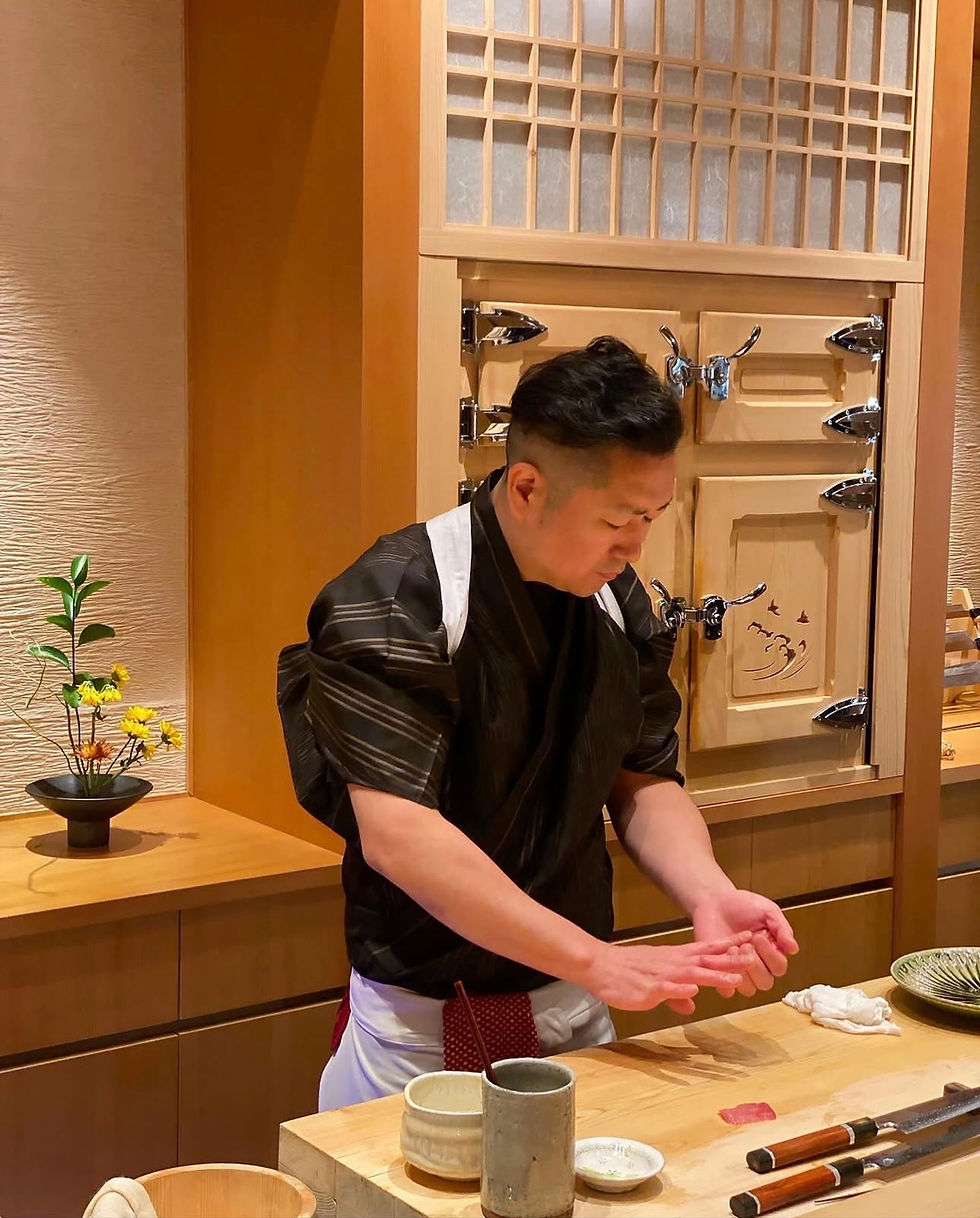
At a restaurant such as Sushi Ayumu by Masa Ishibashi, where the experience is built around precision and restraint, that distinction becomes sharper. Privacy allows the meal to feel more curated, particularly for a group with a clear purpose.
How group size changes the answer
Group size should influence the decision, but not mechanically. A larger group does not always require a private room, and a smaller one may still benefit from it.
For groups of two to four, main dining is often the more natural choice unless discretion is a priority. The setting feels proportionate, and the energy of the room can enhance the meal. For groups of six to eight, the answer becomes more dependent on the occasion. If the group is social and easy-going, the main room may still suit beautifully. If the evening has speeches, gifts, business conversation or a host who wants more command over the experience, a private room begins to make more sense.
For larger parties, privacy often improves comfort. It becomes easier to hear everyone, easier to manage the pace of the meal and easier for the restaurant to deliver a more coherent experience to the table. This is particularly relevant with refined Japanese dining, where timing, sequence and attention to detail matter.
Atmosphere or discretion
This is often the true choice behind private room vs main dining.
If you want to feel the pulse of the restaurant, choose the main dining room. There is pleasure in a shared atmosphere, especially in a polished space where lighting, service and room tone have been carefully considered. The meal feels part of a larger occasion.
If you want conversation to take precedence, choose the private room. Guests tend to settle differently when they know they will not be overheard. Discussion deepens. Celebrations become more personal. Business feels more composed.
Neither mood is superior. They simply serve different evenings.
Cost, expectations and perceived value
Guests sometimes hesitate at the idea of a private room because they assume it is only justified for lavish events. That is too narrow a view. The better question is whether the added privacy materially improves the experience.
If your dinner depends on conversation, hosting confidence or a more intimate atmosphere, then the value is clear. If your evening is spontaneous, compact and centred on enjoying the restaurant's ambience, the main room may offer the better return.
It is also worth considering expectations within your group. Some guests enjoy the visibility and energy of the main dining room. Others place a premium on calm and exclusivity. A thoughtful host will weigh not only the budget, but the comfort and preferences of the people at the table.
A few occasions, considered properly
For a date night, main dining usually feels more elegant than isolated. For an anniversary with close family, a private room often adds warmth and ease. For a client dinner, private dining is usually the more assured choice, especially if discussion matters as much as the meal. For a birthday with a lively group of friends, it depends - some parties want the room's energy, others want a space that feels entirely their own.
That is the point. The setting should support the intent of the evening, not compete with it.
What to ask before you book
A good reservation decision starts with a few honest questions. Are you hosting or simply dining? Will conversation be central? Does the group want atmosphere or privacy? Is the occasion better served by being part of the restaurant, or slightly apart from it?
You should also think about pace. In a private room, the meal can feel more structured and self-contained. In the main dining room, the evening often feels more fluid. One is not better. One may simply feel more suitable.
If you are uncertain, the safest rule is simple. Choose the main dining room when the restaurant itself is part of the pleasure. Choose the private room when the people, the purpose or the conversation need greater focus.
The best table is not always the most secluded one. It is the one that allows the occasion to feel exactly as it should.



Comments