Japanese Business Dinner Etiquette Explained
- adminayumu
- Jun 19
- 6 min read
A business dinner can turn on details so small they barely register until the moment has passed - where you sit, when you pour, how quickly you begin eating. Japanese business dinner etiquette is not about performing rigid rules. It is about showing awareness, respect and composure in a shared setting where hospitality carries meaning.
For guests hosting Japanese clients, dining with Japanese colleagues, or preparing for a formal meal in a Japanese restaurant, that distinction matters. The aim is not to appear theatrical or overly studied. It is to move through the evening with quiet confidence, avoiding the few errors that feel careless while understanding the gestures that are genuinely appreciated.
Why Japanese business dinner etiquette matters
In many business cultures, dinner is a softer extension of the meeting. In Japan, it can also be a place where trust is observed rather than announced. Courtesy, modesty and consideration tend to speak louder than display. That does not mean every meal is highly formal, nor that every host will expect textbook behaviour. Much depends on the company, the seniority of those attending and whether the setting is traditional or contemporary.
Still, certain patterns remain consistent. A guest who notices hierarchy, handles sake properly and avoids putting others in awkward positions will usually be remembered well. A guest who dominates the table, drinks before others are served or treats the meal as purely transactional may not intend offence, but can seem ungenerous.
Before the evening begins
Good etiquette starts before anyone sits down. Punctuality is expected. Arriving five minutes early is sensible. Arriving late without clear notice places pressure on the host and can disrupt the order of the meal.
Dress should lean polished rather than expressive. If the dinner follows meetings, business attire is usually appropriate. If the venue is notably refined, understated elegance is safer than anything conspicuous. Strong fragrance is best avoided, especially in a setting where food is treated with precision.
If you are the guest, let the host lead key decisions. That includes where to wait, when to enter the dining room and, in some cases, whether shoes should be removed. In more traditional spaces, staff will guide this discreetly. Follow their lead without fuss.
Seating, hierarchy and first impressions
One of the more visible parts of Japanese business dinner etiquette is seating. The most senior guest is often placed in the seat of honour, usually furthest from the door. The less senior seats are closer to the entrance. In private rooms, this may be carefully observed. In more relaxed restaurants, it may be looser, but hierarchy still tends to shape the arrangement.
If you are unsure where to sit, pause and wait to be shown. Choosing your seat too quickly can look presumptuous. The same principle applies to ordering and starting the meal. Let the host begin the rhythm of the evening.
Introductions are typically restrained. A light bow is appropriate, and a handshake may follow depending on context and familiarity. If business cards are exchanged, receive the card with both hands or with your right hand supported by the left, take a moment to read it, and place it neatly on the table or in a card holder. Putting it straight into a pocket, especially a trouser pocket, can seem dismissive.
How to begin the meal well
Do not start eating or drinking the moment something arrives. Wait until everyone has been served and the host indicates it is time to begin. Often there will be a brief toast, commonly with “kampai”. Join in, raise your glass, and take a sip after the group toast.
If alcohol is served, there is a custom around pouring that is worth understanding. You generally do not pour your own drink first when dining in a traditional business setting. Instead, notice others’ glasses and offer to pour, especially for senior guests. Hold the bottle with both hands if the setting is formal. Others may then pour for you. In very modern or international contexts this may be relaxed, but the gesture is still seen as thoughtful.
Moderation matters. Drinking can be part of business hospitality, but composure should remain intact. Declining alcohol is acceptable if done politely and without fanfare. A simple, gracious refusal is enough.
Chopsticks, shared dishes and table manners
Chopstick etiquette is one area where avoidable mistakes stand out. Never stick chopsticks upright into rice, as this resembles a funerary ritual. Do not pass food from one pair of chopsticks directly to another for the same reason. Avoid pointing with chopsticks, waving them about, or using them to spear food.
If a shared dish is presented, use the serving utensils provided. If none are offered, the situation becomes more nuanced. In some settings, using the opposite end of your chopsticks may be acceptable, but it is best to follow the lead of the host or senior diners rather than improvising.
Small gestures count. Lift bowls neatly when appropriate, particularly rice or soup bowls held close to the mouth. Slurping noodles is not automatically rude in Japan and can simply signal enjoyment, but context matters. In a high-level business dinner, restraint is still the better register. The aim is ease, not performance.
Conversation at a Japanese business dinner
A successful dinner conversation is usually measured, not relentless. Business may be discussed, but a meal is rarely the place for hard pressure, aggressive negotiation or overt self-promotion. The wiser approach is to be engaged, informed and pleasant, allowing rapport to build naturally.
Safe topics include food, travel, culture, the area, and thoughtful questions about the guest’s experience. If work arises, keep the tone light unless the host clearly steers the conversation in a more substantive direction. Humour can work, but broad irony or sarcasm may not travel well across cultures.
Silence should not be feared. In British settings, people often rush to fill it. In Japanese company, a quieter pause can feel entirely comfortable. Over-talking can read as nervousness or lack of sensitivity.
Reading the room on ordering and pace
At a formal business dinner, the host often orders, or at least signals how ordering will be handled. If menus are presented individually, it is still wise to avoid choosing the most expensive items unless encouraged. Equally, ordering the cheapest thing on the menu to appear modest can create an awkward contrast if the meal is clearly intended as a generous occasion.
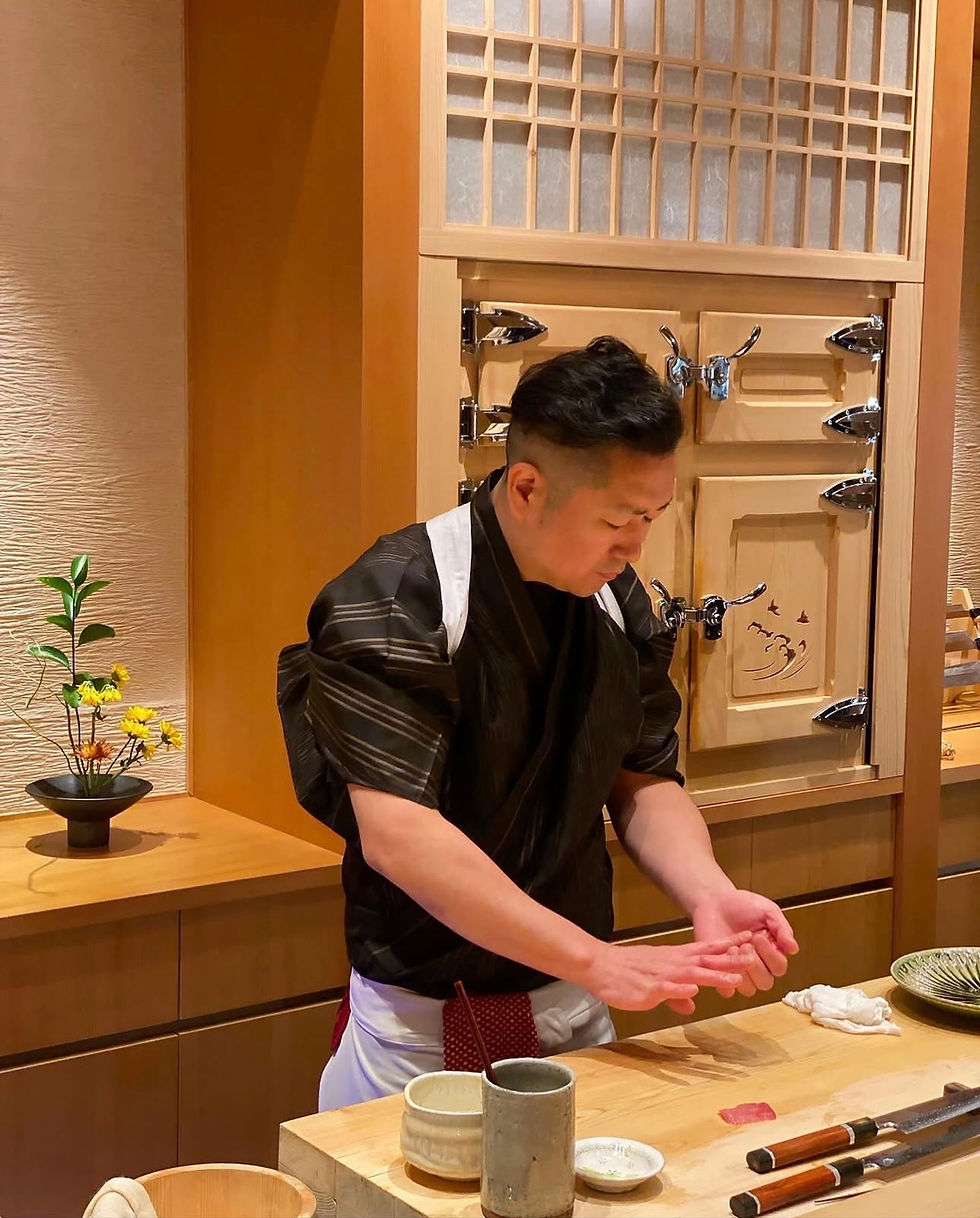
Follow the room. If others are ordering a tasting sequence or omakase-style meal, that is usually the most graceful path. In a chef-led setting such as Sushi Ayumu by Masa Ishibashi, trusting the kitchen’s direction can itself be a mark of respect when the occasion calls for it.
Pace matters too. Eating too quickly can suggest impatience. Eating far more slowly than the group can interrupt service. Aim to move with the table, noticing when others begin, pause and finish.
Paying the bill and expressing thanks
The bill is usually handled by the host, often discreetly. If you are the invited guest, do not insist theatrically on paying. A polite offer is acceptable in some situations, particularly if the relationship is ongoing, but one courteous gesture is enough. Repeated resistance can force the host into an uncomfortable public exchange.
If you are hosting, settle the bill quietly and efficiently. It is better not to turn payment into a spectacle. The tone should remain composed to the end.
Thanks should be clear and sincere. Thank the host directly at the close of the evening. If the dinner was significant, a follow-up message the next day is a strong professional courtesy. Keep it concise, warm and specific.
Common mistakes worth avoiding
Most missteps come from trying too hard or paying too little attention. Correcting everyone’s pronunciation, overusing Japanese phrases, or treating the meal like a cultural test can feel strained. So can speaking too loudly, filling every pause, topping up your own glass without noticing others, or beginning before the host.
It is also worth avoiding assumptions. Not every Japanese diner will follow every custom closely, particularly in international business settings. Age, industry, geography and personal style all make a difference. Etiquette is not a checklist to impose on others. It is a way of showing that you are alert to the setting and considerate in how you occupy it.
The best presence at the table is calm, observant and generous. If you bring that, most of the finer points will fall into place. And when they do, the dinner becomes what it should be - not a performance of manners, but a gracious space in which business can quietly deepen.


Comments