How to Enjoy Sushi Etiquette with Ease
The moment sushi arrives, the room tends to quieten. A well-made piece asks for attention - not ceremony for its own sake, but a little awareness. If you have ever wondered how to enjoy sushi etiquette without feeling self-conscious, the good news is that the rules are fewer, gentler, and more practical than many diners assume.
Good etiquette is not about performing expertise. It is about respecting the chef, the ingredients, and the pace of the meal. In a refined setting, that restraint matters. It allows the craftsmanship to speak.
How to enjoy sushi etiquette without overthinking it
The first principle is simple: notice what is in front of you. Sushi is precise food. Rice is seasoned to a particular balance, fish is cut for a particular texture, and each piece is often intended to be eaten in one bite. Etiquette begins there, with attention rather than anxiety.
A common mistake is to treat sushi like a collection of interchangeable bites. In reality, nigiri, sashimi and hand rolls ask for slightly different handling. Nigiri is shaped to hold together just long enough to reach the mouth. Sashimi has no rice, so soy sauce and accompaniments play a different role. Hand rolls are at their best when eaten promptly, before the nori softens.
If you remember one thing, let it be this: the most polished diner is usually the least fussy. They do not dismantle, soak, or over-season. They eat with care and let the food remain itself.
Chopsticks, hands, and what is actually correct
One of the most persistent questions around how to enjoy sushi etiquette is whether chopsticks are mandatory. They are not. Nigiri may be eaten with chopsticks or with clean hands. Both are acceptable in traditional practice.
Hands can be especially practical for nigiri because the rice is delicate. Using your fingers may help you turn the piece lightly and place it fish-side down against the tongue. Chopsticks are often preferable for sashimi, where precision is easier and there is no rice to disturb.
What matters is control. If chopsticks make you clumsy, using your hands for nigiri is more respectful than dropping the piece or crushing it. If you do use chopsticks, avoid rubbing disposable ones together. It suggests poor quality and reads as discourteous in an elegant dining room.
There are also a few habits worth avoiding. Do not spear food, wave chopsticks while talking, or pass pieces from one pair of chopsticks to another. Rest them neatly when not in use. Small gestures create the overall impression.
Soy sauce, wasabi, and the art of restraint
Nothing overwhelms fine sushi faster than too much soy sauce. The purpose of soy is seasoning, not saturation. With nigiri, if seasoning has already been balanced by the chef, extra soy may not be necessary at all. If you do use it, dip lightly.
The detail many diners miss is where the soy should touch. For nigiri, the fish rather than the rice should meet the sauce. Rice absorbs liquid quickly and can fall apart. It also throws the balance off, making the first taste saltier than intended.
Wasabi follows the same principle. In many high-quality sushi settings, the chef has already added the proper amount between fish and rice. Mixing a large mound of wasabi into soy sauce may be familiar, but it blurs flavour and can mask nuance. If you prefer more heat, add a small amount directly to the piece instead.
This is where confidence and flexibility meet. If your taste genuinely runs stronger, there is no need for rigid performance. The better approach is moderation. Enhance; do not dominate.
Ginger is not a topping
Pickled ginger aka GARI is often misunderstood. It is not designed to sit on top of sushi like garnish. Its role is to refresh the palate between different pieces, especially when moving from one flavour profile to another.
Used this way, ginger sharpens attention. You notice the difference between a rich cut of tuna and a clean white fish, or between brushed glaze and a simple seasoning of salt. When placed on the sushi itself, it can distract from the chef's intended composition.
The same idea applies across the meal. Sushi rewards pacing. A quiet pause between bites is not hesitation. It is part of tasting well.
Eating sushi in the right order
There is no need to turn dinner into a formal exam, but order does affect enjoyment. Lighter flavours are usually best first, followed by richer or more intensely seasoned pieces. Delicate white fish can disappear if eaten after oily tuna or eel with sauce.
If you are ordering freely, build gradually. Start clean, then move deeper in flavour. If you are being guided through an omakase-style experience, the sequence has already been considered for you. In that case, avoid requesting major changes midway unless there is a dietary need. Trust is part of the experience.
Rolls create a slightly different situation. They are often more complex and can carry stronger ingredients or sauces. If both nigiri and rolls are on the table, many diners find it more satisfying to begin with nigiri and finish with rolls rather than the reverse.
None of this is dogma. Preference matters. But understanding the logic helps you enjoy the meal at a higher level.
How to enjoy sushi etiquette in a refined restaurant setting
A refined sushi meal is shaped as much by atmosphere as by food. Arriving on time matters, particularly when a reservation anchors the rhythm of service. If you are dining with others, keep phones discreet and conversation measured enough that the table remains part of the room rather than separate from it.
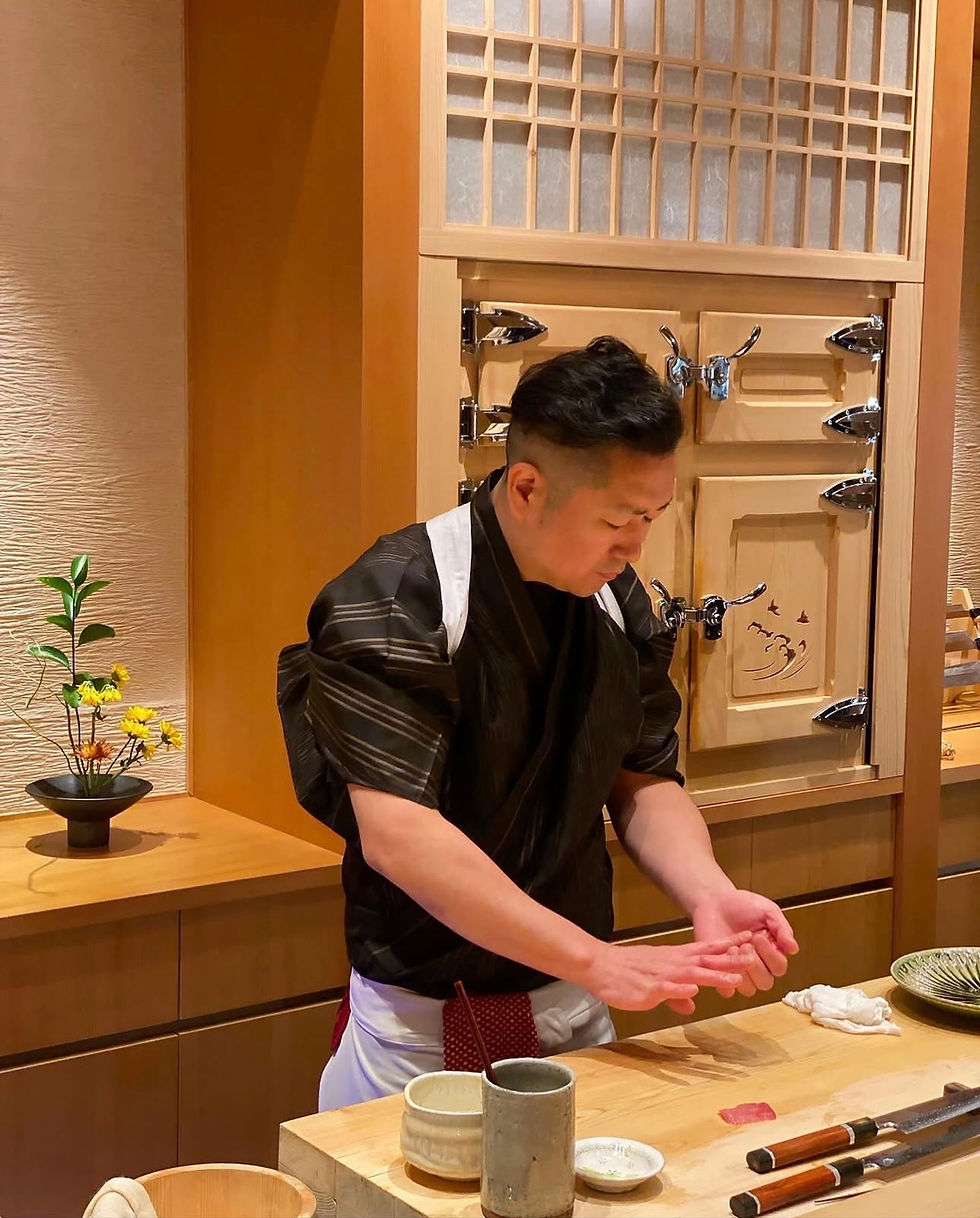
If seated at the counter, the etiquette becomes a little more direct. You are closer to the chef's work, and the exchange deserves attention. This does not mean forced conversation. In fact, restraint is often the more elegant choice. A sincere thank you, a thoughtful question, or quiet appreciation travels further than overfamiliar chatter.
Fragrance matters as well. Strong perfume or aftershave can interfere with taste and with the experience of nearby guests. In sushi dining, subtlety extends beyond the plate.
If sake, wine, or tea is part of the meal, follow the same principle that guides the food. Choose pairings that support rather than overpower. Richer drinks can suit richer fish, but delicacy usually rewards a lighter hand.
Common mistakes that are easy to avoid
Most errors come from enthusiasm rather than disrespect. Overloading soy sauce, taking nigiri apart, adding extra ginger on top, or letting a hand roll sit too long are all common. So is cutting a piece in half unless it is genuinely too large to manage comfortably.
Another mistake is assuming more choice equals a better experience. In premium sushi, curation has value. A smaller selection of expertly prepared pieces often offers more pleasure than a crowded order designed to cover every possible craving.
Takeaway changes the etiquette slightly. You still want to treat the sushi with care, but timing matters even more. Eat promptly, keep sauces light, and recognise that temperature and texture are part of quality. A considered takeaway order can still be excellent, but it will not behave exactly like sushi served moments after preparation.
Confidence matters more than perfection
The most appealing way to approach sushi etiquette is with composure. You do not need to know every custom. You need to pay attention, avoid excess, and respond to the meal in front of you.
That is especially true if you are introducing clients, colleagues, or guests to a higher-end sushi experience. Formality alone does not create sophistication. Ease does. Knowing when to pause, when not to add more seasoning, and when to let the chef's judgement lead are all signs of a diner who understands quality.
At Sushi Ayumu by Masa Ishibashi, that spirit is central to the experience. Fine sushi is not about rigid rules. It is about being present enough to appreciate detail.
If you are ever unsure, choose the quieter option. Eat the piece as served. Season lightly. Observe the pace of the table. Good etiquette, at its best, is simply good taste.



Comments