Chef Tasting vs A La Carte: Which to Choose?
Updated: May 12
You sit down, open the menu, and the real decision is not between tuna and scallop. It is chef tasting vs a la carte. One asks you to place your evening in the chef’s hands. The other gives you the freedom to shape the meal course by course, piece by piece.
Neither is inherently better. The right choice depends on why you are dining, how much time you have, how adventurous you feel, and whether you want to be guided or in control. In a serious Japanese restaurant, that distinction matters. The format changes not only what you eat, but how the entire meal unfolds.
Chef tasting vs a la carte: the core difference
A chef tasting menu is a curated progression chosen by the kitchen. You are trusting the chef to decide sequence, balance, portion, and rhythm. In Japanese dining, that often means a meal built around seasonality, texture, temperature, and the subtle rise and fall of flavour across several courses.
A la carte is more open. You choose individual dishes according to appetite, preference, and budget. You may order lightly, build a full dinner, or focus on favourites. The experience can still be refined, but it is directed by the guest rather than the chef.
That is the simplest version. In practice, the difference runs deeper.
A tasting menu is often about intention. It presents the restaurant’s point of view in its clearest form. The chef can introduce a sequence that would be difficult to replicate through independent ordering - beginning with something delicate, moving towards richness, then returning to restraint. With a la carte, the pleasure lies in precision of another kind: selecting exactly what you want, when you want it.
What a chef tasting offers that a la carte cannot
At its best, a chef tasting menu feels composed rather than merely served. Each course has a role. One may sharpen the palate, another may reveal the quality of a single ingredient, another may bring warmth or fat or a deeper savoury note. The meal is designed as a whole.
This is especially compelling in Japanese cuisine, where restraint is part of the craft. A guest may notice small calibrations that would otherwise pass unremarked - the change in rice temperature, the progression from lean fish to richer cuts, the shift from raw to lightly cooked preparations, the way vinegar, soy, citrus and salt are used with discipline rather than excess.
There is also the advantage of access. A tasting format often includes ingredients or preparations that are not presented in quite the same way on the standard menu. The chef can respond to what is at its peak that day and shape the experience around market quality rather than fixed expectation.
For diners who value authorship, this is the appeal. You are not simply ordering dinner. You are seeing how the chef thinks.
Why a la carte still matters
A la carte is sometimes treated as the less ambitious option. That misses the point. For many guests, it is the more intelligent choice.
If you know what you love, a la carte allows you to order with clarity. Perhaps you want pristine sashimi, a few pieces of nigiri, and one cooked dish to finish. Perhaps you prefer to avoid a longer progression. Perhaps you are dining before the theatre, meeting a client with limited time, or want a lighter meal with a glass of something cold and clean.
A la carte also gives you greater control over pace and spend. You can order conservatively or generously. You can revisit a favourite. You can keep the table varied if guests have different appetites. For business dinners and group occasions, that flexibility can be useful. Not every table wants to surrender the evening’s structure entirely.
In the right restaurant, a la carte is not a compromise. It is a different kind of luxury: choice without pressure.
Chef tasting vs a la carte on value
Value is not only about price. It is about whether the format suits the experience you actually want.
A chef tasting menu can represent strong value when you want the restaurant’s most considered expression. You are paying for curation, sequencing, and often a wider range of ingredients and techniques than you might confidently assemble on your own. If your aim is to experience the kitchen at full strength, the spend often makes sense.
A la carte can offer better value when your appetite is specific. If you want six exceptional pieces of sushi and little else, a tasting menu may feel excessive. If you are selective with raw fish, or you simply prefer a shorter meal, paying for the chef’s full progression may not be the best use of your evening or budget.
There is also a hidden value question: waste. Guests who commit to a long tasting when they are not especially hungry, not comfortable with certain ingredients, or not prepared for the pacing may enjoy less of what they are served. A smaller, well-chosen a la carte meal can feel far more satisfying.
Which suits the occasion?
The occasion often decides the answer before the menu does.
A chef tasting works beautifully for anniversaries, milestone birthdays, serious food-led evenings, and any dinner where the meal itself is the event. It invites attention. It asks for time. It rewards curiosity. If the purpose of the reservation is to be immersed in the restaurant’s craft, this is usually the stronger choice.
A la carte suits a broader range of moments. It works for spontaneous dinners, pre-arranged business meetings, weekday plans, and guests who want elegance without committing to a long format. It can also be the better option when one diner is enthusiastic and another is cautious. Everyone can order at their own comfort level.
For couples, the decision comes down to mood. If you want to settle in and let the evening unfold slowly, tasting is persuasive. If you want conversation to lead and food to support it, a la carte often feels more natural.
The question of trust
One of the clearest differences between chef tasting vs a la carte is trust.
A tasting menu asks you to trust the chef’s judgement. That includes ingredients you may not have chosen, combinations you might not have predicted, and a pacing you do not control. In a restaurant with a strong point of view, that trust can be richly rewarded.
A la carte places trust elsewhere. You trust your own preferences. That can be sensible, particularly if you have dietary concerns, stronger dislikes, or a very clear sense of what you want from Japanese dining.
Neither form of trust is more sophisticated than the other. They simply reflect different diners. Some guests take pleasure in surrendering the decision. Others take pleasure in making it well.
How to decide before you book
If you are unsure, ask yourself three quiet questions.
First, do you want to be surprised? If yes, a chef tasting is likely to suit you. If not, a la carte will feel more comfortable from the start.
Second, how much time do you want to give the meal? A tasting asks for patience and attention. A la carte can be shaped around your schedule.
Third, what is the purpose of the evening? If dining is the central event, choose the format that expresses the kitchen most fully. If dinner sits alongside conversation, work, or other plans, flexibility may matter more.
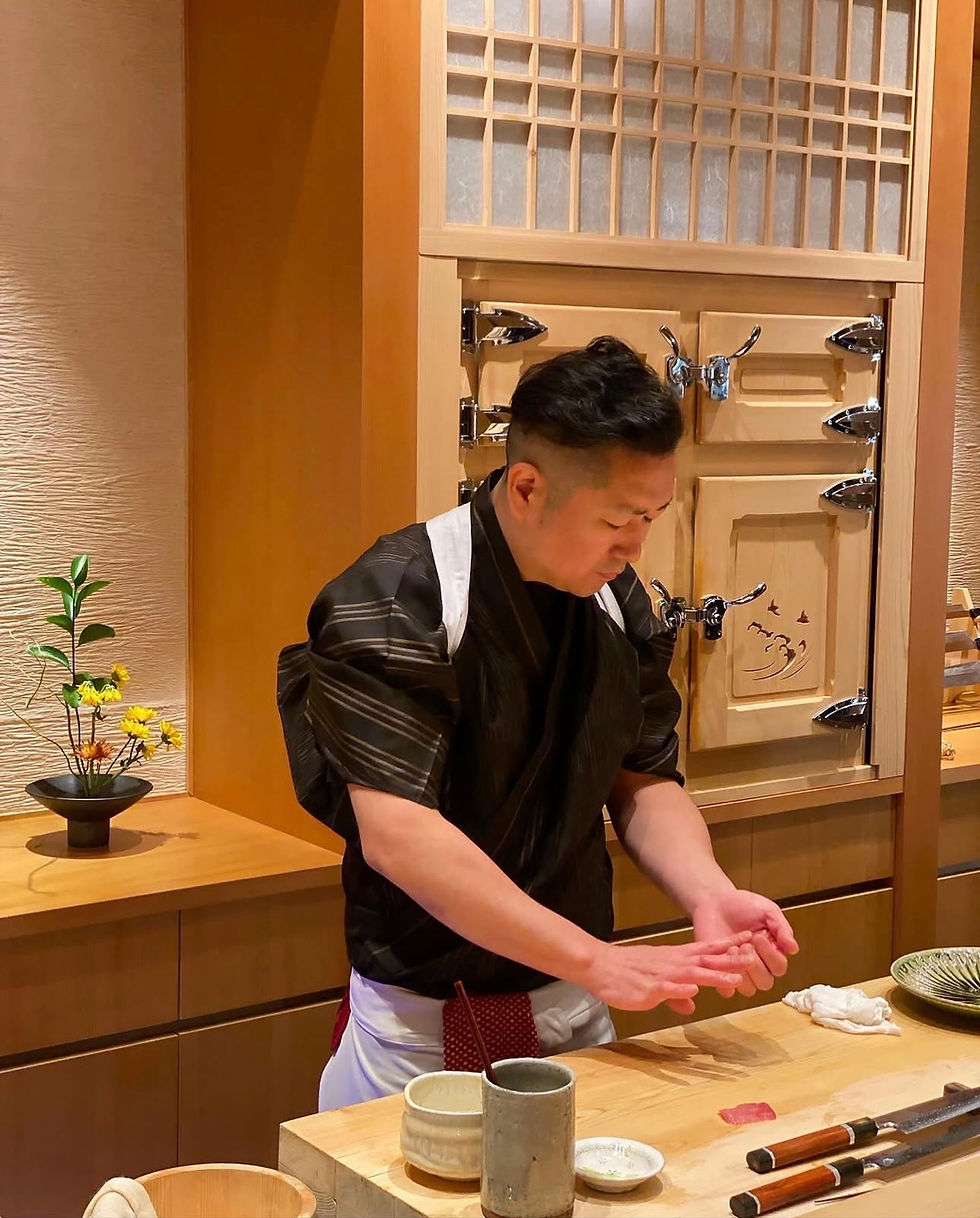
At a restaurant such as Sushi Ayumu by Masa Ishibashi, where the chef-led identity is part of the experience, a tasting menu can be an especially strong way to understand the kitchen’s discipline and style. But that does not diminish the appeal of ordering a la carte with intention and restraint.
A final thought on choosing well
The best decision is rarely the most ambitious one. It is the one that fits the evening. Some nights call for complete trust in the chef. Others call for the quiet confidence of choosing exactly what you want. When the restaurant is exceptional, both paths can lead to a memorable table.



Comments