What Defines a Seasonal Japanese Tasting Menu?
A truly memorable seasonal Japanese tasting menu does not begin with abundance. It begins with restraint. The chef chooses what belongs on the counter at this moment, what should wait, and what should be left out entirely. That discipline is what gives the experience its clarity.
For diners who value precision, seasonality in Japanese cuisine is not a decorative concept. It is the structure underneath the meal. The sequence, the temperature, the cut of fish, the balance between raw and cooked courses, even the pace of service are shaped by the time of year. When done properly, a tasting menu feels less like a collection of signature dishes and more like a measured conversation with the season.
Why Season Matters in Japanese Dining
Seasonality in Japan is often discussed through the idea of shun - the brief period when an ingredient is at its natural best. This is not simply about freshness. It is about timing. An ingredient can be available for months and still only be exceptional for a short window.
That distinction matters in a tasting menu. Premium Japanese dining is built on nuance, and nuance depends on ingredients that do not need excessive handling. A sweet prawn at its peak needs very little intervention. The same is true of early spring bamboo shoot, autumn chestnut, or winter yellowtail with the right depth of fat. The chef's role is not to impose complexity where none is needed, but to recognize when simplicity is the more exact choice.
This is also why seasonality creates anticipation. A dish that appears all year loses some of its meaning. A dish that arrives for a few weeks, disappears, and returns in another form the following year carries a different kind of value. It rewards attention.
What to Expect from a Seasonal Japanese Tasting Menu
A seasonal Japanese tasting menu is usually structured to reveal progression rather than spectacle. The meal may open with something cool, clean, and light, then move towards richer flavors, warmer preparations, and a more rounded finish. The order is deliberate. Delicacy first, intensity later.
In spring, the menu may lean towards bitterness, softness, and new growth. You might notice mountain vegetables, tender shellfish, young herbs, and subtle broths. Summer often calls for sharper contrast - chilled dishes, cleaner cuts, brighter acidity, and preparations that feel composed rather than heavy.
Autumn tends to carry greater depth. Mushrooms, richer fish, roasted notes, and slightly sweeter elements begin to appear. Winter invites warmth and concentration, whether through simmered dishes, fuller-bodied stocks, or seafood with more pronounced richness.
Not every menu follows a strict seasonal stereotype, nor should it. Geography, sourcing, and the chef's own style all matter. A disciplined restaurant will reflect the season without becoming predictable.
The Role of Sushi within the Menu
For many guests, sushi is the center of the experience. In a tasting format, however, sushi often works best as one movement within a broader composition. It may arrive after smaller seasonal dishes have prepared the palate, allowing each piece to be understood more clearly.
The rice itself changes with the weather. Humidity affects texture. Temperature alters perception. The same fish can read differently in winter than in late summer, and the seasoning of the rice may be adjusted accordingly. These decisions are subtle, but they are not minor.
A well-judged progression of nigiri rarely aims for excess. The chef may choose only a few pieces, each selected for contrast in fat, texture, and finish. Lean fish can sharpen attention. A richer piece later in the sequence can create a sense of quiet culmination.
Small Plates, Soup, and Cooked Courses
One of the pleasures of a tasting menu is that it allows Japanese cuisine to show its full range. Sushi alone cannot express everything seasonality has to offer. A clear soup, a lightly steamed dish, a charcoal-grilled course, or a restrained fried element can reveal ingredients in ways that raw preparation cannot.
This is where craft becomes especially visible. A broth should taste precise rather than forceful. Grilling should deepen an ingredient without obscuring it. Frying, when used, should bring lift and contrast, not weight. The menu works because each technique has a purpose.
What Separates a Refined Menu from a Crowded One
A premium tasting menu should leave a clear impression, not a blurred one. More courses do not always mean a better experience. In fact, too many can flatten the distinctions between them.
The stronger approach is editorial. The chef removes what does not earn its place. That might mean a shorter menu with better pacing, or a more focused selection of ingredients treated with greater care. The result feels more composed and, often, more luxurious.
This is especially relevant in Japanese dining, where precision is easy to disturb. If every course is rich, the palate tires. If every plate tries to surprise, surprise loses effect. The best menus understand tension and release. They know when to sharpen attention and when to let the room fall quiet.
The Seasonal Japanese Tasting Menu and the Guest Experience
A tasting menu is not only about what is served. It is also about how the guest receives it. Pace matters. So does setting. In a refined dining room, the meal should feel uninterrupted, calm, and exact.
This is one reason tasting menus suit occasions that ask for more than a standard dinner. A business meal, an anniversary, a private celebration - each benefits from a format that is already curated. There is less negotiation at the table, less distraction, and more space to focus on the company and the experience.
How Chefs Build Seasonality without Theatrics
There is a temptation in modern dining to make seasonality feel performative, as though every course must announce its provenance or arrive with explanation. In Japanese cuisine, confidence often appears in the opposite direction.
A chef may express the season through a single garnish, a shift in knife work, a warmer serving temperature, or a more restrained seasoning. These choices can be easy to miss if one is looking for overt drama. Yet they are often the choices that stay with you.
This restraint is part of what makes chef-led Japanese dining so distinctive. The point is not to overwhelm the guest with information. It is to create an experience so coherent that the reasoning behind it feels self-evident once the meal is underway.
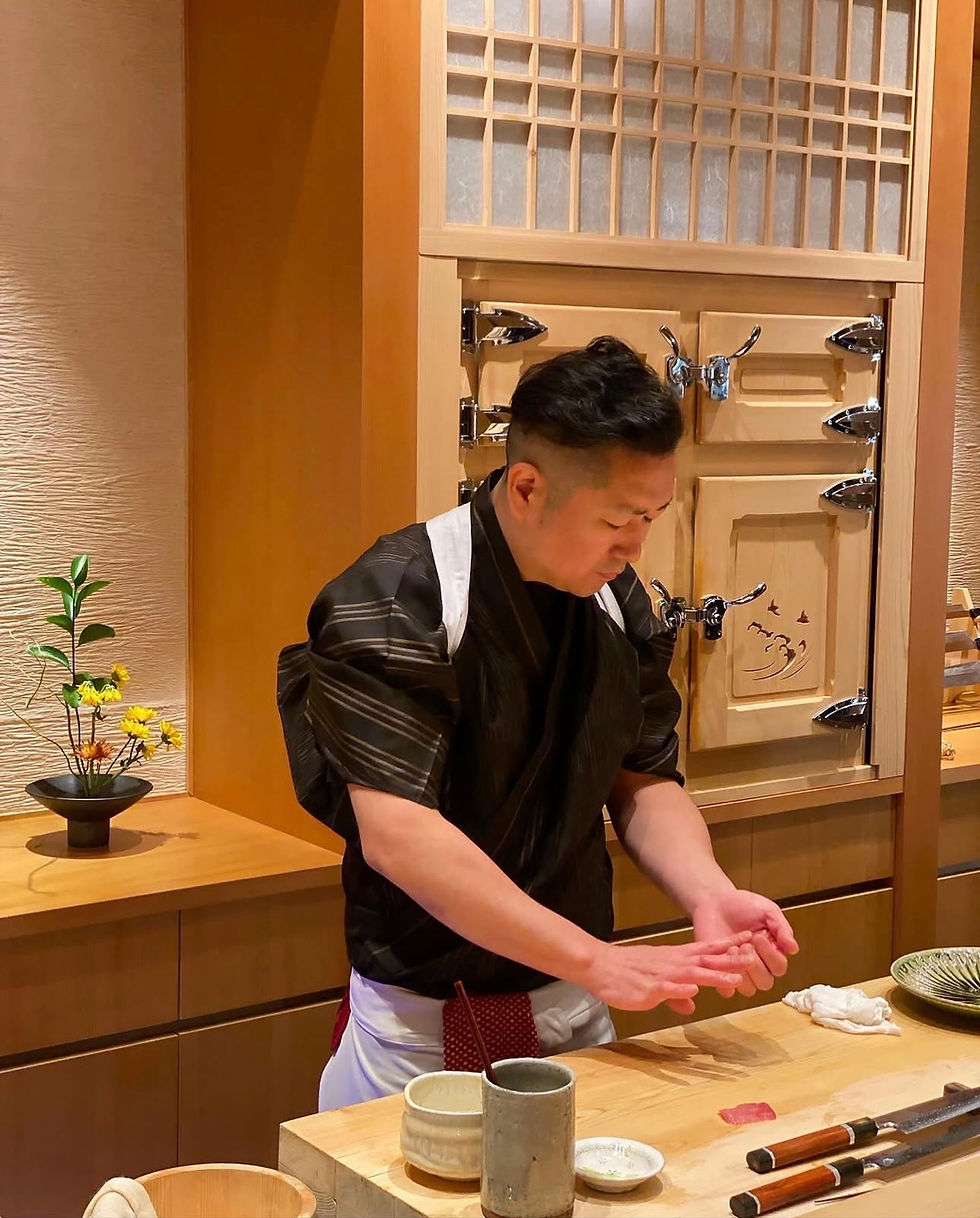
At Sushi Ayumu by Masa Ishibashi, that philosophy sits naturally within the broader idea of hospitality: a meal shaped with intention, presented without excess, and remembered for its precision.
Choosing the Right Moment to Book
If you are considering a seasonal Japanese tasting menu, timing matters in more ways than one. The obvious reason is the produce itself. Certain ingredients are simply better at certain times of year, and the menu may be at its most distinctive during those narrower windows.
The less obvious reason is the rhythm of the occasion. A tasting menu asks for attention. It suits an evening when the table is not rushed and the guests are willing to follow the chef's pace. For a long-awaited dinner with clients, friends, or family, it can be exactly right.
Private dining can make that experience even more considered, particularly for small groups who want the calm of a more discreet setting. The menu has space to land properly when the room itself supports it.
Why This Style of Dining Continues to Matter
A seasonal Japanese tasting menu offers something increasingly rare: a meal that does not try to satisfy every possible preference at once. It is selective by design. It asks the guest to trust the judgment of the chef and, in return, offers coherence, timing, and depth.
That exchange is part of its appeal. In a culture of constant availability, there is quiet luxury in a meal shaped by what is fleeting. The ingredient is here now. The course exists in this form now. The experience belongs to this particular evening.
That is what makes seasonality more than a theme. It becomes a way of paying attention - to the ingredient, to the craft, and to the company at the table. If you are choosing how to spend a significant evening, that kind of attention is rarely misplaced.
The Essence of Seasonal Dining
In conclusion, seasonal dining is about more than just food; it is an experience that engages all the senses. It invites us to slow down and appreciate the subtleties of each dish. The beauty of a seasonal Japanese tasting menu lies in its ability to connect us with nature and the changing seasons. Each bite tells a story, reflecting the chef's dedication to quality and authenticity.
As I reflect on my experiences, I realize that the joy of dining is not just about the meal itself. It is about the journey we embark on with each course. It is about savoring the moment, the flavors, and the company. In a world that often rushes by, a seasonal tasting menu offers a rare opportunity to pause, reflect, and indulge in the art of fine dining.
At Sushi Ayumu by Masa Ishibashi, we strive to create that experience for every guest. We invite you to join us on this culinary journey, where each season brings new flavors and stories to the table. Together, let us celebrate the beauty of Japanese cuisine and the art of seasonal dining.



Comments