Discovering the Art of Chef's Signature Sushi Experience
Updated: Aug 4
What Defines a Chef’s Signature Sushi Experience?
Chef-led sushi begins with authorship. The chef is not merely preparing a fixed selection; they are reading the ingredients, the season, and the pace of the room. A lean white fish may be paired with a touch of citrus. Richer tuna may be balanced with a precise brush of nikiri. Rice may be formed more gently for a delicate topping or with a little more structure for fish with greater character.
These choices are often subtle, but they are the point. Sushi is a cuisine of restraint. A heavier hand with soy, wasabi, or garnish can obscure a fish that took considerable care to source and prepare. The chef’s signature lies in knowing what to leave untouched as much as in knowing what to add.
At Sushi Ayumu by Masa Ishibashi, the experience is shaped around this principle: Japanese dining as an expression of craft, not spectacle. The result should feel gracious and exacting while still allowing guests to relax into the evening.
The Rice is the Foundation
Exceptional fish receives the attention, yet shari, the seasoned rice, determines whether nigiri feels complete. Its temperature should complement the topping, not chill it. Its seasoning should provide lift without becoming sharp. Its texture must hold long enough to reach the guest, then separate cleanly when eaten.
This is why sushi is best appreciated piece by piece, as it is served. A plate of nigiri may look simple from a distance, but its balance is fleeting. Rice cools. Fish changes in texture. A chef who serves each course in sequence is protecting the intention behind it.
Seasonality Creates Variety Without Excess
A signature menu should not chase rarity for its own sake. The finest choice is often the fish that is at its peak now, handled with sensitivity. One evening may favour sweet, translucent shellfish; another may centre on deeply flavoured, aged fish. Preparation can be raw, lightly torched, cured, marinated, or gently simmered, depending on what reveals the ingredient most clearly.
This makes every visit distinct. It also asks for a degree of trust. Diners accustomed to ordering the same roll each time may find that a chef-selected progression offers a more complete view of Japanese technique. That said, the best hospitality makes room for preference. A considered menu can accommodate genuine dislikes, allergies, and dietary requirements when they are shared in advance.
The Counter Changes the Meal
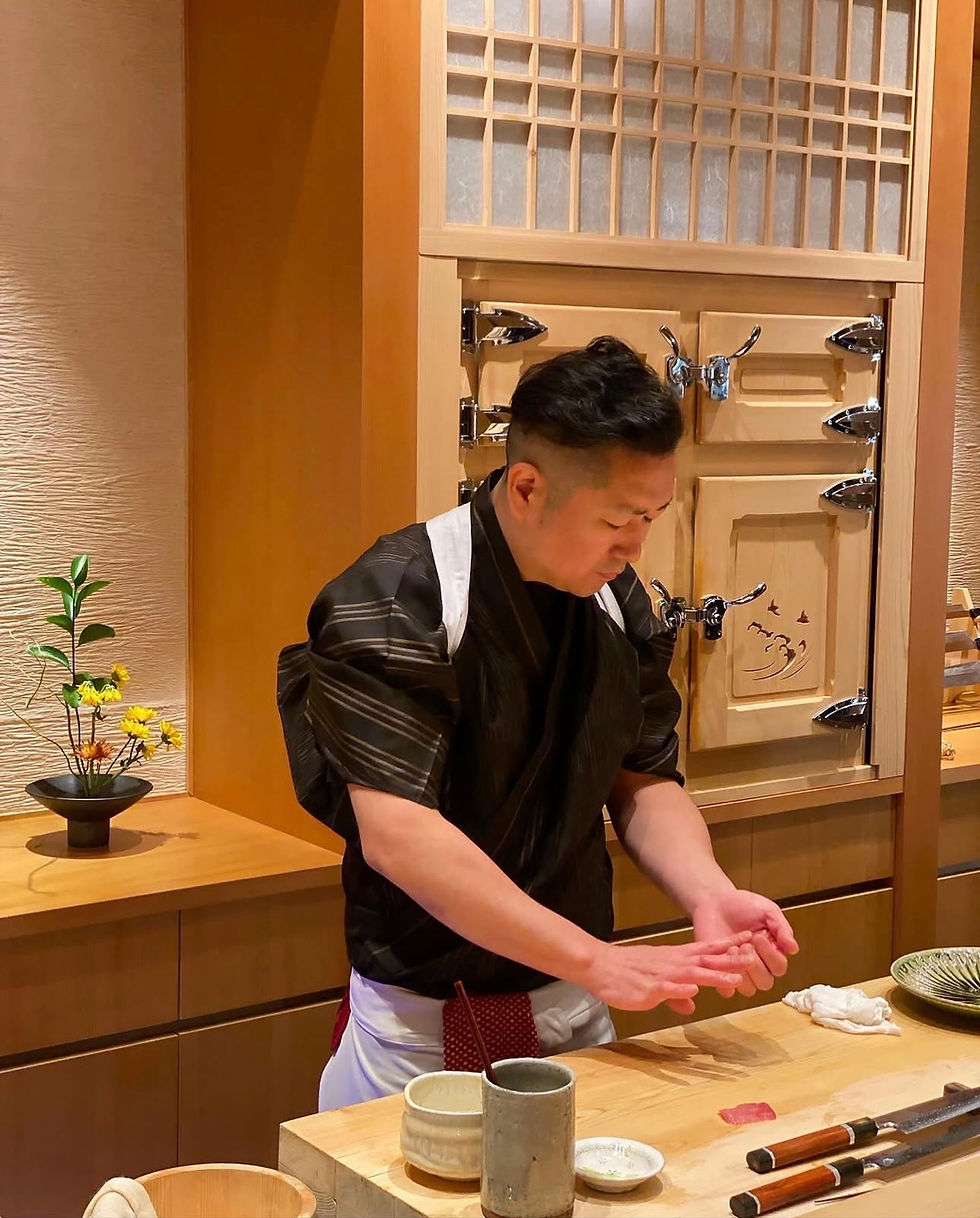
Sitting at the counter offers a perspective that a table cannot quite replicate. You see the pace of the work: fish sliced against the grain, rice shaped in a brief movement, a finishing touch applied just before serving. There is no need for performance. The appeal is the assurance of watching skilled hands work with calm concentration.
The counter also enables a more responsive kind of service. The chef can judge whether guests are ready for the next course, explain an unfamiliar fish if welcomed, or leave space for conversation when the occasion calls for privacy. For a date, an intimate celebration, or a dinner with a discerning client, that attentiveness can give the meal its lasting character.
A counter table remains the better choice for some evenings. Larger conversations, group celebrations, and formal business dinners often benefit from more room and a different rhythm. Premium sushi should not demand a single way of dining. It should offer the right setting for the reason you have gathered.
How to Enjoy the Experience Well
There is no need to arrive with a set of rules. Good sushi hospitality should never make a guest feel examined. A few small considerations, however, allow the chef’s work to come through.
Begin with the piece as presented. If it has already been seasoned, soy sauce may not be needed. If you do use soy, touch the fish lightly rather than soaking the rice, which can cause it to fall apart and overwhelm the balance. Pickled ginger is best treated as a palate refresher between different flavours, not as a topping.
Sake, Champagne, and restrained wines can all suit sushi, though the pairing depends on the meal. Crisp, mineral styles tend to sit well beside delicate fish, while richer preparations may welcome more texture. Those who prefer not to drink alcohol should not settle for an afterthought. Chilled or warm tea or a carefully selected non-alcoholic accompaniment can bring the same sense of refreshment and restraint.
Most importantly, allow the meal its pace. Sushi rewards attention, but it does not require solemnity. Ask questions when curious. Share what you enjoy. Let the chef know if a particular course stands out. The exchange is part of the pleasure, provided it remains natural.
Beyond Nigiri: The Value of a Full Japanese Meal
A chef’s signature sushi experience is often strongest when nigiri is given context. A small starter may introduce the season through texture or warmth. Sashimi can show the purity of an ingredient before rice and seasoning enter the picture. A cooked course may offer contrast, bringing smoke, broth, or gentle richness to the progression.
This broader approach also prevents a common misunderstanding: that luxury sushi is defined by abundance. It is more accurately defined by judgement. The meal should know when to be delicate, when to be generous, and when to stop. A memorable final course may be a hand roll served at its crispest, a bowl of soup with quiet depth, or a light sweet ending that does not compete with what came before.
For private dining, that sense of progression becomes especially valuable. A chef-led menu can create a shared occasion without becoming overly formal, giving hosts confidence that guests will be well looked after. The key is advance planning: guest numbers, dietary needs, timing, and the desired level of formality all influence the most suitable format.
Why Craft Matters More Than Display
Premium ingredients are essential, but they do not guarantee a premium meal. Fish must be selected well, stored correctly, and prepared with knowledge of its individual qualities. Some varieties benefit from ageing to develop umami and soften texture; others are best served with immediate freshness. Seaweed must be crisp. Knife work must respect the structure of the fish. Service must be attentive without intruding.
These disciplines are easy to overlook because the finished piece is so small. Yet that smallness is precisely what makes sushi demanding. There is nowhere for poor balance to hide. Each element is exposed, and each decision is felt.
The most satisfying sushi dinners leave guests with more than a memory of an expensive ingredient. They leave an impression of care: a sequence that made sense, flavours that felt clear, and hospitality that understood the occasion. Choose the setting that suits your evening, arrive with curiosity, and let each piece be enjoyed in the moment it was made.
The Journey of Flavors: A Seasonal Exploration
Japanese cuisine is deeply rooted in the seasons. Each season brings its own unique ingredients and flavors. Spring might showcase delicate cherry blossoms and fresh greens, while summer offers vibrant seafood and refreshing dishes. Autumn brings rich, earthy flavors, and winter invites warmth and heartiness.
At Sushi Ayumu, we embrace this seasonal philosophy. Our menu evolves with the changing seasons, allowing guests to experience the best of what Japan has to offer throughout the year. This commitment to seasonality not only enhances the dining experience but also reflects our respect for the ingredients and the traditions of Japanese cuisine.
The Importance of Presentation
While taste is paramount, presentation plays a crucial role in the overall experience. Each piece of sushi is crafted with care, not just for flavor but also for visual appeal. The colors, shapes, and arrangement on the plate are all thoughtfully considered.
A beautifully presented dish elevates the dining experience. It engages the senses and sets the stage for the flavors to come. At Sushi Ayumu, we believe that the art of sushi extends beyond taste; it is a holistic experience that encompasses sight, smell, and taste.
Conclusion: A Culinary Journey Awaits
In conclusion, the experience at Sushi Ayumu by Masa Ishibashi is more than just a meal; it is a culinary journey through Japan's rich traditions and seasonal offerings. Each piece of sushi tells a story, crafted with care and intention.
We invite you to join us on this journey. Experience the art of sushi in a setting that values craftsmanship, hospitality, and the beauty of simplicity. Your table awaits, and we are here to guide you through an unforgettable evening of authentic Japanese cuisine.



Comments