What Makes a Seasonal Fish Tasting Menu
The difference is often visible before the first bite. A winter slice of yellowtail carries more richness. Early summer sea bream tastes cleaner, firmer, almost brighter. In a seasonal fish tasting menu, these shifts are not treated as background detail. They are the point.
For diners who value Japanese cuisine at its highest level, seasonality is not a trend or a marketing phrase. It is a discipline. Fish changes through water temperature, diet, fat content and spawning cycle. The chef’s role is to recognise that moment of balance, then shape a sequence that allows each ingredient to speak with precision.
Why a seasonal fish tasting menu matters
A tasting menu built around seasonality asks more of the kitchen and gives more to the guest. It requires restraint. Rather than forcing the same fish onto the plate throughout the year, the menu evolves with availability and condition. That means greater variation, but also greater responsibility in sourcing and preparation.
This matters because premium sushi is not defined by rarity alone. It is defined by judgement. The best piece of fish is not always the most expensive one. Sometimes it is the fish that has reached its ideal condition in that particular week, handled with exacting care, and served in a form that suits its character.
There is also a quieter form of luxury at work. A seasonal menu cannot be fully standardised. It resists sameness. For guests, that creates a more distinctive experience, especially for celebrations, business dinners and return visits when memorability matters.
Seasonality is more than availability
Many restaurants use the word seasonal when they mean fresh. The two are related, but they are not identical.
Freshness concerns time and handling. Seasonality concerns peak expression. A fish may be impeccably fresh and still not be at its best point in the year. Likewise, a deeply considered tasting menu does not simply buy what arrived that morning and improvise. It considers whether that fish has the structure, fat and flavour to earn its place in the progression.
Fat, texture and balance
Fish changes materially across the seasons. Colder months often produce higher fat content in species such as buri, or Japanese amberjack, which gives a more rounded mouthfeel and deeper finish. Leaner fish in warmer periods can deliver a cleaner, more mineral expression. Neither is inherently better. It depends on how the course is designed.
A refined menu builds contrast from these differences. A rich cut may be followed by something taut and translucent. A lightly cured piece may prepare the palate for a warmer course with smoke, broth or grilled skin. The sequence matters as much as the individual fish.
The role of Japanese culinary sensibility
In Japanese dining, seasonality carries cultural weight. It reflects attention, timing and respect for natural rhythm. That often appears in small decisions rather than theatrical ones - the cut of the fish, the temperature of the rice, the style of garnish, even the order in which the guest receives each bite.
That is why a truly seasonal approach feels composed rather than decorative. It does not need excessive flourishes. The ingredient arrives with confidence, and the chef adjusts only what is necessary.
How chefs build a seasonal fish tasting menu
At the highest level, a tasting menu is edited with the same care as it is cooked. The challenge is not adding more courses. It is deciding what to leave out.
A chef may begin with the current condition of key fish, then build a progression around weight, aroma and finish. The opening courses often favour delicacy. White fish, shellfish or lightly dressed crudo can sharpen the appetite without overwhelming it. Mid-menu, richer fish may appear - perhaps mackerel, chutoro or a lightly torched piece with more oil and savour. Later courses can introduce warmth and greater depth before the menu closes on clarity.
This progression is not fixed. It depends on the catch, the season and the chef’s point of view. A colder-weather menu might tolerate more richness across the centre. A spring menu may feel more linear and restrained.
Technique changes with the season
Preparation is rarely static. The same fish may be sliced differently, aged for a different period, or paired with a different seasoning depending on the time of year.
Lean fish may benefit from careful ageing to develop umami and soften texture. Richer fish might need a cleaner cut and less intervention. Some species respond well to kobujime, where kelp gently draws out moisture and adds savoury depth. Others are better left almost untouched, seasoned only with nikiri or a trace of citrus.
These are not cosmetic decisions. They shape the fish into its best seasonal expression.
What guests should expect from the experience
A strong tasting menu does not announce itself course by course with unnecessary explanation. It allows the guest to feel the logic of the meal.
The first expectation should be variation without confusion. Each course should bring a clear shift in taste, texture or temperature, yet still feel part of one composed experience. If every piece tastes merely rich, or merely delicate, the menu loses tension.
The second expectation is confidence in sourcing. Premium diners are right to ask where quality begins. In Japanese cuisine, provenance matters, but handling matters just as much. A beautifully sourced fish can be diminished by poor storage, rushed prep or ill-judged seasoning. The best restaurants honour both origin and execution.
The third expectation is timing. Sushi and sashimi are unusually sensitive to temperature and texture. Rice that is too cool, fish served too cold, or pauses that are too long between courses can flatten flavour. A tasting menu should feel paced for the food, not for operational convenience.
The trade-offs behind seasonality
Seasonality sounds effortless when described well, but it introduces real constraints.
The first is consistency. Guests often return hoping to revisit a memorable course, yet a chef committed to the season may not repeat it. That can be disappointing if one expects a signature line-up. On the other hand, it is precisely what keeps the experience alive and credible.
The second is availability. A menu guided by peak condition cannot promise unlimited supply. Certain fish may appear briefly, in small quantity, or not at all if quality falls short. For serious diners, this is a strength. It signals standards. But it also requires flexibility.
The third is price. Working with premium seasonal fish, often in limited volumes, can raise cost. A higher menu price is not justified by rarity alone. It must be justified by discernment, technique and service. When those elements align, the value is felt in the precision of the experience rather than the number of courses.
Seasonal fish tasting menu choices across the year
No responsible chef would reduce seasonality to a neat calendar, because weather, waters and supply can shift. Still, broad patterns help diners understand what they may encounter.
In winter, menus often lean towards richer species and deeper flavours. Fatty tuna cuts, yellowtail and certain shellfish can show beautiful fullness. The meal may feel slightly more enveloping, with greater emphasis on texture and umami.
Spring often brings elegance and lift. Sea bream, needlefish and tender shellfish may show a cleaner profile. This is a season where subtlety matters, and where over-seasoning can quickly become intrusive.
Summer can favour brightness and delicacy, though it depends entirely on the species and source. The best menus in warmer months feel precise and refreshing rather than austere.
Autumn frequently offers one of the most compelling transitions. Fish can begin to show more depth again, and menus often gain structure without losing clarity.
Why the setting matters as much as the plate
A tasting menu built on nuance needs the right environment. Noise, delay and inattentive service can blur distinctions that the chef has worked carefully to create.
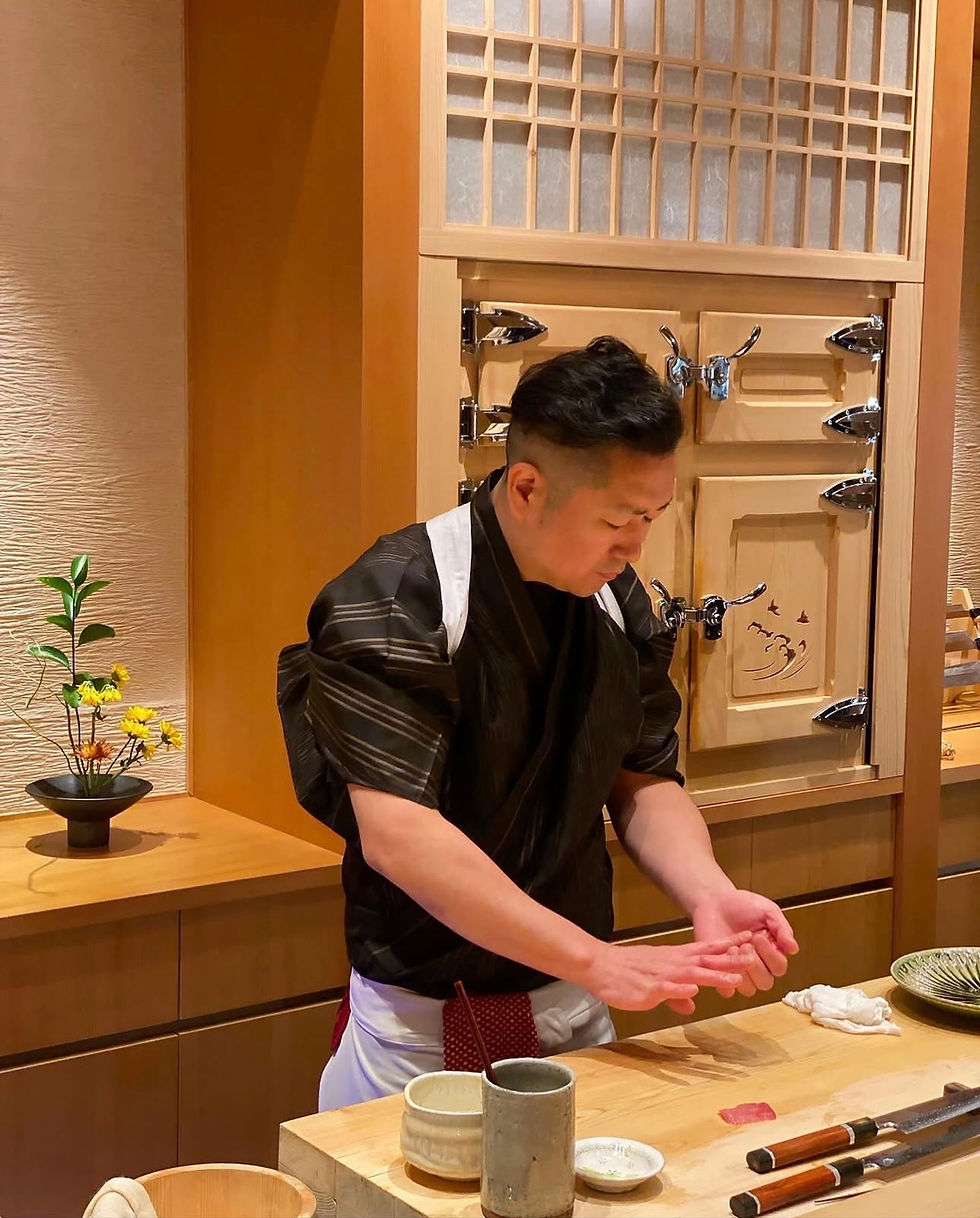
For this reason, the setting is not secondary. It should support concentration without feeling formal for its own sake. Guests come not only to eat well, but to experience hospitality that understands pacing, discretion and timing. In a chef-led room such as Sushi Ayumu by Masa Ishibashi, that alignment between cuisine and service is part of the appeal.
A private dinner, a client meal or an intimate evening benefits especially from this format. The menu gives structure to the occasion, while the season gives it character. No two visits feel exactly alike, which is often what discerning diners are seeking.
Choosing the right moment to book
If your aim is to understand a chef’s approach, a seasonal tasting menu is one of the clearest ways to do it. It reveals priorities quickly. You can taste how the kitchen balances restraint against creativity, and whether luxury comes from ingredient quality alone or from the confidence to do less.
The best advice is simple. Book when you want to experience the season rather than control it. Arrive with curiosity instead of a checklist. A thoughtful seasonal fish tasting menu rewards that mindset, because its finest moments are often the ones you did not expect.
The pleasure, finally, lies in catching something at exactly the right time - not just the fish, but the judgement behind serving it then and not later.



Comments