How to Find an Authentic Japanese Restaurant Near Me
Updated: Apr 14
Type authentic Japanese restaurant near me into a search bar and you will usually be shown everything from grab-and-go sushi counters to polished dining rooms. They are not the same thing. If you are looking for a restaurant that reflects the discipline, balance and care of Japanese cuisine, the real question is not what is nearest. It is what is genuinely worth your time.
Japanese dining at a high level is defined by restraint. The rice should be properly seasoned, not overloaded with sugar. Fish should taste clean and precise, not hidden beneath sauces. Service should feel attentive without performance. An authentic experience is rarely the loudest option on the page. More often, it is the restaurant that lets its standards speak quietly and clearly.
What authentic Japanese restaurant near me should really mean
For many diners, authenticity is reduced to décor cues or a long menu. Neither tells you very much. A room can borrow visual references without understanding the cuisine, and an oversized menu often suggests the kitchen is trying to be everything at once.
A better measure is whether the restaurant has a point of view. In serious Japanese cooking, that usually begins with the chef. Who is leading the kitchen? Is there a visible respect for technique, seasonality and ingredient quality? Does the menu feel edited and deliberate? These details matter more than paper lanterns or novelty rolls.
Authenticity also does not mean rigidity. Japanese cuisine has always valued adaptation, but thoughtful adaptation is different from dilution. A restaurant can serve a modern audience and still remain grounded in Japanese culinary principles. The balance lies in knowing what should be preserved and what can evolve.
Signs you have found an authentic Japanese restaurant near me
The first sign is menu discipline. A refined Japanese restaurant tends to present a focused offering, whether that centres on sushi, sashimi, grilled dishes, tempura or a seasonal omakase-style progression. When every page is crowded with unrelated items, quality control becomes harder to trust.
The second is ingredient integrity. Premium fish in season, properly prepared rice, fresh wasabi where appropriate, balanced soy, and careful knife work are not luxuries in this category. They are foundations. Even a simple piece of nigiri reveals whether the kitchen understands proportion and temperature. Rice that is too cold, fish cut without precision, or heavy-handed garnishes all suggest a lack of discipline.
The third is how the service is structured. Reservations are often a useful signal. They do not guarantee excellence, but they can indicate that the restaurant values pacing and guest experience rather than pure volume. In higher-end Japanese dining, rhythm matters. Courses should arrive with intention, and staff should be able to guide rather than merely deliver.
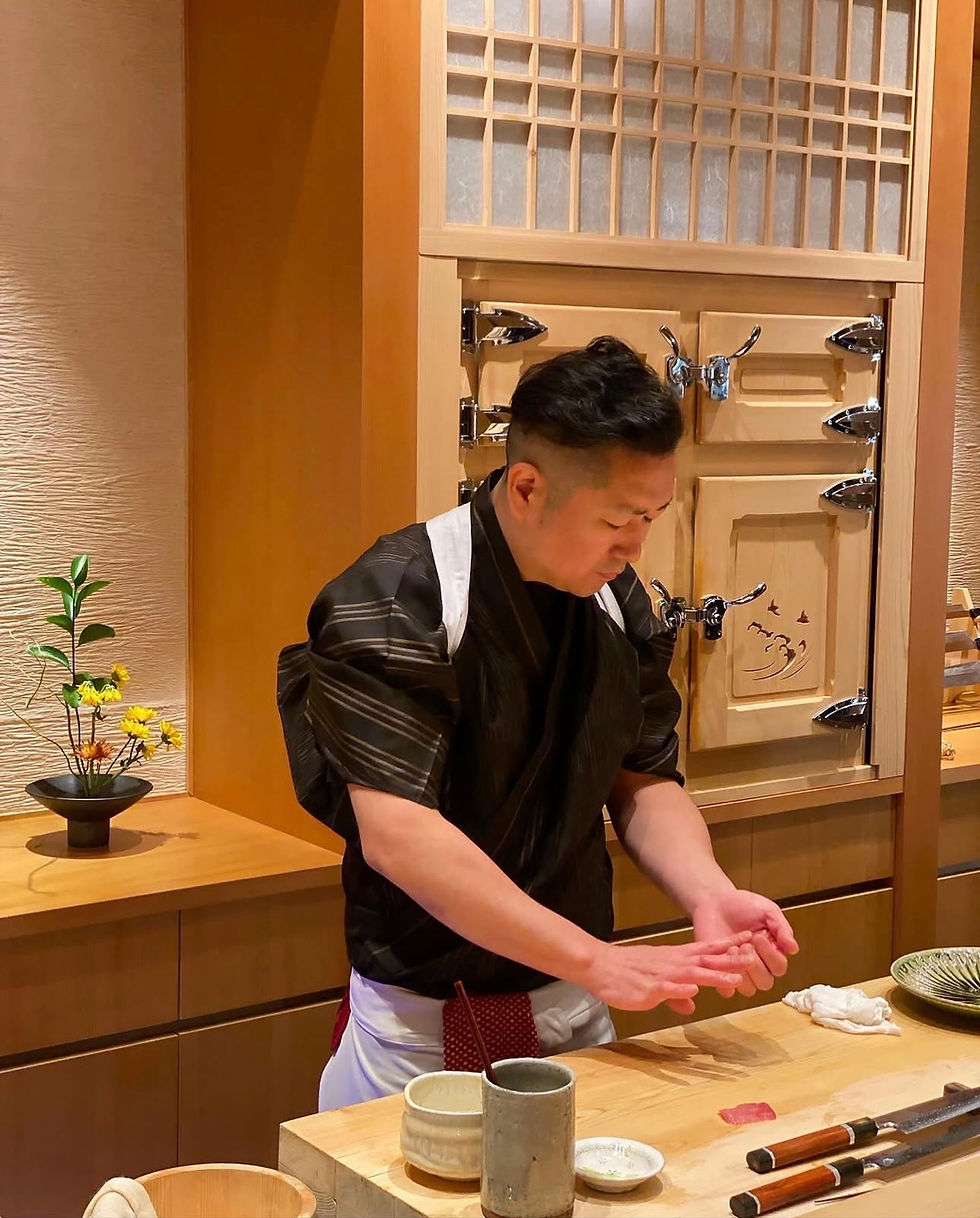
Chef identity matters as well. A chef-led restaurant tells you there is authorship behind the menu. That is particularly relevant in Japanese cuisine, where years of practice shape not only technique but judgement. When a restaurant stands behind a chef's name, it often reflects confidence in craft.
Why ingredient quality matters more than variety
Many diners still judge a Japanese restaurant by how many rolls it offers. In practice, the opposite is often true. A shorter menu can be a sign of seriousness because it allows the kitchen to focus on sourcing, preparation and consistency.
This is especially true for sushi. The quality of the fish is only one part of the equation. Rice preparation is central, and it is where weaker restaurants are often exposed. Rice should be warm or close to body temperature, lightly seasoned and shaped with precision. It should support the topping, not dominate it or fall apart before it reaches the table.
Seasonality matters too. An authentic Japanese restaurant pays attention to what is at its best, rather than treating every ingredient as permanently interchangeable. That may mean certain dishes rotate, or that a chef highlights a particular fish at one time of year and not another. For diners who value excellence, that is a strength, not an inconvenience.
The role of atmosphere in authenticity
A serious Japanese dining room does not need to be austere, but it should feel considered. Good atmosphere is less about spectacle and more about proportion. Noise levels, spacing between tables, lighting, plating and the pace of service all shape whether the meal feels elevated.
This matters because Japanese hospitality is not only about food. It is also about how the guest is received. The best restaurants make the evening feel composed from the moment you arrive. There is no need for excess. Precision in hospitality is often more persuasive than extravagance.
For business dinners, celebrations or a more private occasion, the setting becomes even more important. A private room, if offered, suggests the restaurant understands different forms of dining and can accommodate them without compromising quality. That flexibility is valuable for guests who expect both refinement and convenience.
Takeaway and authenticity are not mutually exclusive
There is still an assumption that premium Japanese food only works in the dining room. Often, yes, the full experience is best enjoyed on site. Sushi, in particular, is sensitive to timing and temperature. But that does not mean takeaway cannot be excellent.
What matters is whether the restaurant has designed its takeaway offering with the same care as its dine-in service. Some dishes travel well. Others do not. A thoughtful restaurant knows the difference and curates accordingly. Clean packaging, precise preparation and a selective menu make a significant difference.
For quality-conscious diners, takeaway should feel like an extension of the restaurant rather than a lesser version of it. When managed properly, it offers convenience without sacrificing standards.
How to judge a restaurant before you book
Look first at how the restaurant presents itself. Does the menu read with confidence and clarity, or is it padded with familiar crowd-pleasers? Is there an identifiable chef or culinary direction?
Then consider the booking structure. A restaurant that encourages reservations often cares about flow and guest attention. If private dining is available, that may indicate the venue is equipped for more polished hosting. If takeaway ordering is streamlined but the overall positioning remains premium, that is usually a good sign rather than a contradiction.
Reviews can be useful, but only to a point. Many diners praise quantity, speed and novelty over refinement. It is worth reading between the lines. Comments about rice quality, fish freshness, service pacing and consistency are more revealing than excitement over oversized rolls or discounts.
What affluent diners should expect from an authentic Japanese experience
If you are choosing a Japanese restaurant for an important dinner, authenticity should translate into confidence. You should expect calm service, immaculate ingredients, a room that supports conversation, and a menu that feels curated rather than crowded.
You should also expect restraint. Luxury in Japanese dining is rarely loud. It appears in the quality of the tuna, the texture of the rice, the sharpness of the knife work, the elegance of the ceramics and the timing of each course. That kind of experience does not need to announce itself. You notice it immediately once it arrives.
This is where many generic search results fall short. They may satisfy a casual craving, but they do not offer the same level of craft or hospitality. If your standard is higher, your criteria should be too.
At restaurants shaped by a chef's authorship, such as Sushi Ayumu by Masa Ishibashi, that distinction becomes clear. The meal is not built around trend or volume. It is built around judgement - what to serve, what to omit, and how to let each element speak with precision.
The right restaurant is not always the nearest
Convenience matters, and proximity has its place. But when you search for an authentic Japanese restaurant near me, distance should not be your only filter. A restaurant that is a little further away but markedly better in technique, hospitality and atmosphere will usually justify the journey.
That is especially true when the meal carries weight - a client dinner, a celebration, an evening you have genuinely been looking forward to. In those moments, authenticity is not an abstract ideal. It shapes the entire experience.
The best choice is rarely the one trying hardest to look Japanese. It is the one that understands why the details matter, and honours them with quiet confidence. When you find that, nearby becomes secondary.



Comments