What to Expect at Sushi Counter Dining
Updated: May 6
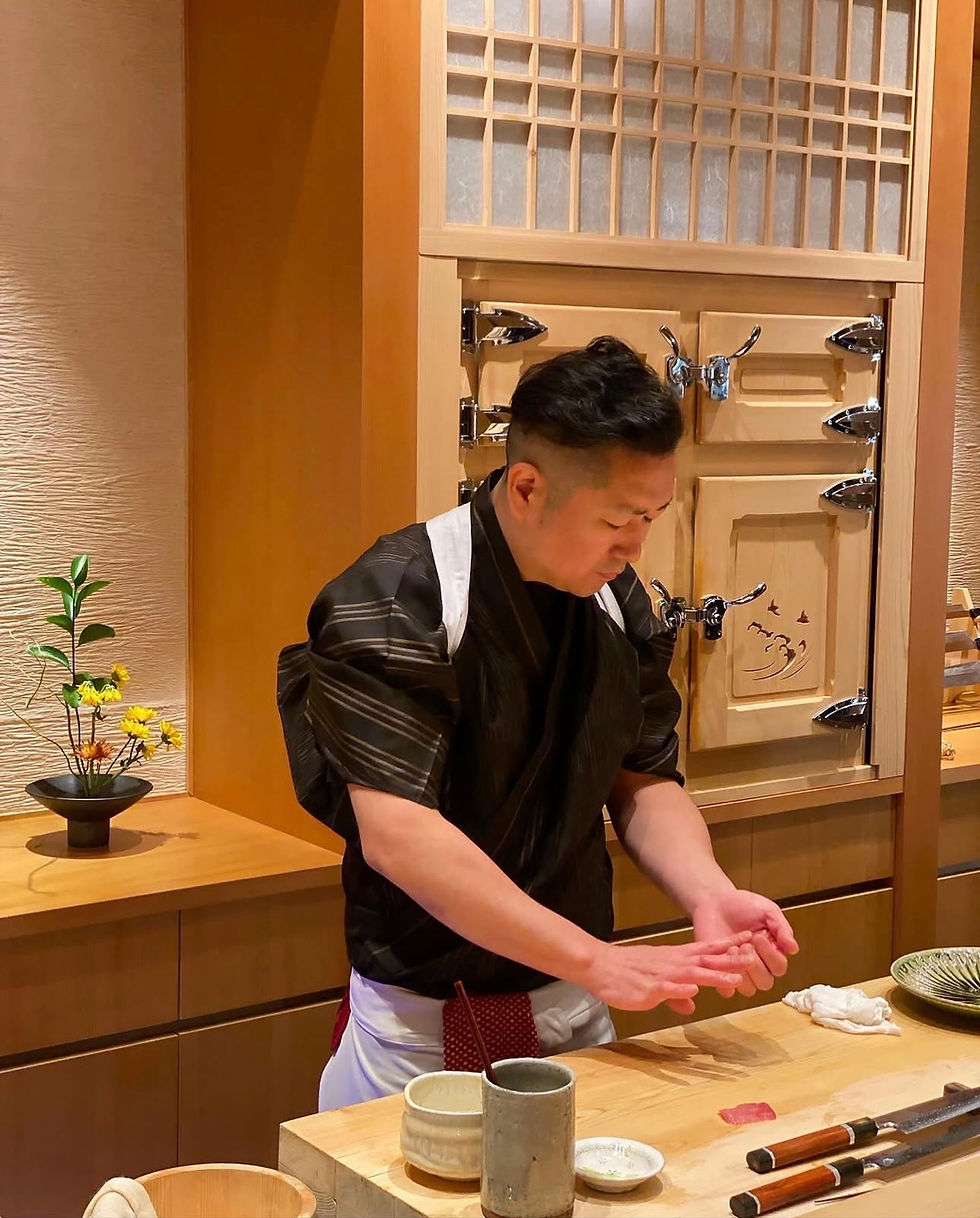
The first surprise for many guests is how calm the room feels once they sit at the counter. If you are wondering what to expect at sushi counter dining, the answer is not performance for its own sake. It is precision, timing and attention. Every movement has a purpose, and your place at the counter brings you closer to the craft rather than simply closer to the food.
For diners used to ordering several rolls from a menu and eating at their own pace, a counter experience can feel more intimate and more deliberate. That is part of its appeal. You are not only being served a meal. You are being guided through a sequence shaped by season, ingredient quality and the chef's judgement in the moment.
What to expect at sushi counter service
The counter changes the relationship between guest and chef. In a dining room, service often arrives in broad intervals. At the sushi counter, each piece may be prepared specifically for you and placed before you at the point it should be eaten. Temperature, texture and timing matter. Rice should still be gently warm. Fish should land at the moment its flavour is most expressive. Even a short delay can alter the balance.
That is why the pace may feel different from other forms of dining. Courses or individual pieces are often served one at a time or in small groupings. There can be pauses. These are not gaps in service. They are part of the rhythm. A thoughtful sushi counter does not rush to fill every second. It allows room for attention.
You may also notice that the chef says little at first. This is not distance. It is focus. Some chefs are naturally conversational, others more reserved, but most will read the guest before setting the tone. A warm greeting, a quiet explanation or a brief recommendation is often enough to begin.

The seat itself matters
Not every seat in a restaurant has a point of view. A counter seat does. From there, you see the preparation, the handling of the fish, the pressing of the rice, the brushing of nikiri and the final gesture before each piece is served. This closeness tends to sharpen appreciation. It also invites a certain level of presence from the guest.
That does not mean formality in a stiff sense. It means paying attention. Strong perfumes can interfere with the aromas of the food. Constant mobile phone use breaks the intimacy of the setting. Loud conversation can shift the mood for everyone nearby. A refined counter experience works best when guests bring the same care to the table that the chef brings to the board.
Expect a more personal pace
At a sushi counter, one diner may eat slightly faster, another may prefer more explanation, and a third may have a lighter appetite. A good chef and front-of-house team will notice. The service can be adjusted discreetly. That flexibility is one reason the experience often feels so considered.
It also means there is no single script. Some evenings are highly conversational. Others are quieter, with the food leading. Both can be excellent. The measure of quality is not how theatrical the service feels but how well it is tuned to the guest and the ingredients.
Omakase, a la carte and the question of control
Many guests associate the sushi counter with omakase, where the chef selects the progression. This is often the purest expression of the counter because it allows the meal to unfold according to season and judgement rather than a fixed craving. You surrender a degree of control, but you gain coherence.
That said, not every counter meal must be omakase. Some guests prefer a la carte ordering, especially if they are familiar with certain fish or have dietary preferences. Neither choice is inherently better. Omakase tends to offer the clearest sense of the chef's point of view, while a la carte can suit diners who want more agency.
If you are unsure, ask. A well-run restaurant will guide you without making the decision feel daunting. At Sushi Ayumu, for example, the chef-led approach naturally suits guests who value curation, but the best hospitality never makes refinement feel inaccessible.
How the meal usually unfolds
A counter meal often begins gently. You may start with a small appetiser, sashimi or a composed bite that prepares the palate. From there, nigiri is usually served in a sequence that builds in depth and richness. Delicate white fish may come earlier, followed by silver-skinned fish, then fuller, more fat-forward cuts such as chutoro or otoro if they are featured.
This order is not rigid law. Seasonality, sourcing and the chef's style all shape the progression. Some meals include cooked elements, soup or tamago near the close. Others remain almost entirely focused on nigiri. What matters is that the sequence should feel intentional rather than random.
One piece at a time is normal
Guests unfamiliar with the format sometimes wait for several pieces to arrive before beginning. At the counter, it is usually best to eat each piece soon after it is placed in front of you. That is when the rice temperature, fish texture and seasoning are aligned. The chef has already decided how much soy, nikiri, salt or citrus the piece requires, so adding more is not always necessary.
This can feel unfamiliar at first, particularly if you are used to mixing wasabi into soy sauce or heavily dipping each piece. Counter sushi asks for a lighter hand. Seasoning is often integrated into the construction of the bite rather than left entirely to the guest.
Etiquette without anxiety
Good etiquette at the sushi counter is mostly a matter of respect, not rules for their own sake. Arrive on time, especially if your reservation is for omakase, where pacing affects the entire service. If you have dietary restrictions, share them in advance when possible. Last-minute changes can limit what the chef is able to offer at the level intended.
You may eat nigiri with chopsticks or with clean hands, depending on the style of the restaurant and your comfort. Either can be acceptable. What matters more is handling the piece carefully and eating it in one bite where possible. Breaking it apart tends to disturb the balance.
When speaking with the chef, keep it natural. Questions are welcome when they are thoughtful and timed well. Most chefs appreciate genuine interest in a fish, a preparation or a seasonal detail. A long monologue while they are serving several guests at once is less considerate. The room will usually show you its own tempo.
The role of trust
The finest counter experiences rely on trust from both sides. The guest trusts the chef's judgement on sequence, seasoning and selection. The chef trusts the guest to meet the meal with attention. When that exchange is in place, the counter becomes one of the most rewarding seats in any restaurant.
This is also why value at the counter is not measured only by quantity. A premium piece of sushi may take seconds to eat and years to understand fully. Sourcing, ageing, knife work, rice preparation and service timing all sit behind that single bite. Guests who come expecting abundance alone may miss the point. Guests who come ready to notice often leave with a different sense of what Japanese dining can be.
What if you are new to it?
You do not need specialist knowledge to enjoy a sushi counter well. Curiosity and openness matter more than vocabulary. If you are unfamiliar with certain fish, let the chef lead. If you prefer a slower explanation, say so politely. If there is something you truly do not eat, mention it early and without apology.
The only real mistake is trying to perform expertise. Counter dining can be refined without becoming self-conscious. The best rooms make space for both seasoned regulars and first-time guests, provided each arrives with consideration.
A sushi counter is, at heart, a conversation conducted through craft. Some of that conversation is spoken, much of it is not. If you come prepared to notice the details, trust the pace and eat with attention, the experience tends to reveal itself one piece at a time.



Comments